
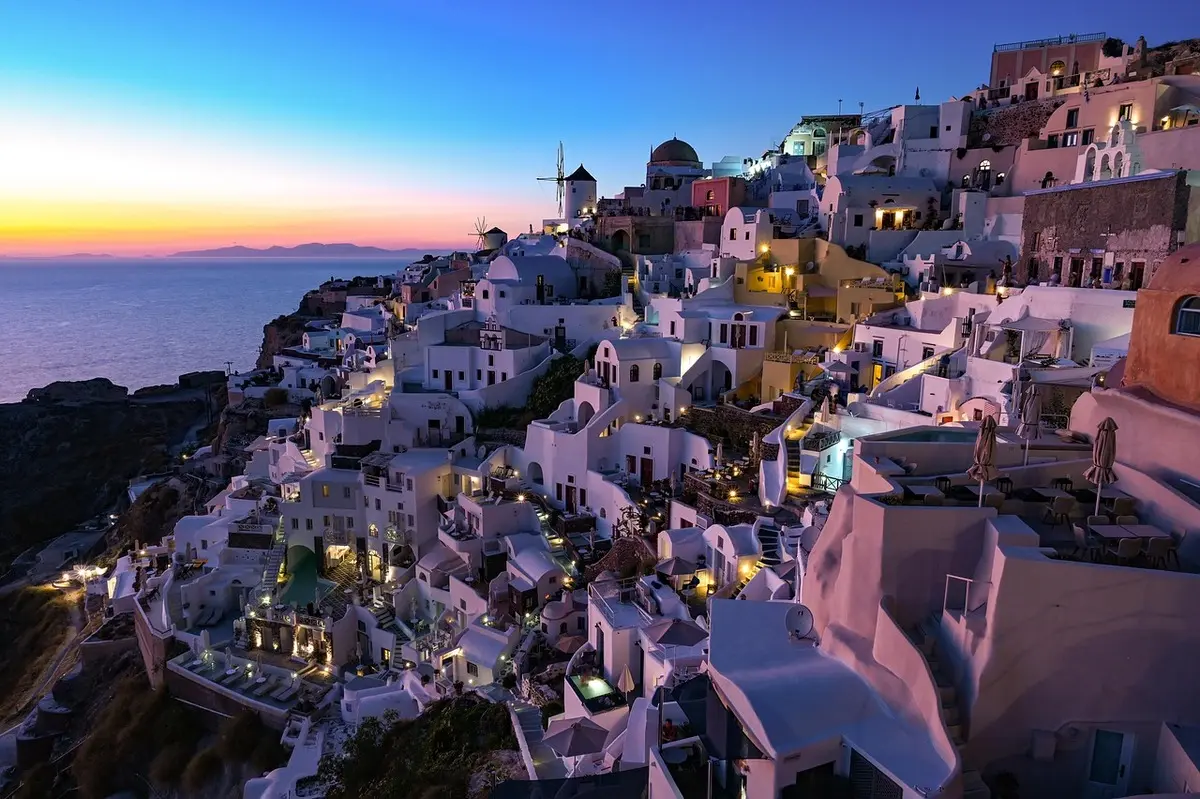
Scientists have discovered a massive magma chamber containing approximately 300 million cubic meters of molten rock beneath the Greek island of Santorini. The conclusion is based on an analysis of seismic data, and experts emphasize that the magma could begin to rise at any moment, reports TwojaPogoda.pl, citing the journal Nature.
Modern methods have made it possible to track the magma’s movement in near real time. The magma has moved up from the depths of the Earth’s crust and has come to rest approximately four kilometers below the seafloor, between Santorini and the underwater volcano Kolumbo, where it is exerting intense pressure on the surrounding rock.
The study followed a seismic crisis that, according to the publication, began in the summer of 2024 and lasted until February 2025. At that time, the island experienced more than 28,000 earthquakes, the strongest of which exceeded magnitude 5. Authorities declared a state of emergency, closed schools, and evacuated thousands of tourists by ship.
Waves up to 20 meters high
Although the magma has not reached the surface, the risk of an eruption remains real. An underwater explosion at Colombo could trigger a tsunami up to 20 meters high, which would reach the coasts of Greece, Turkey, and Crete within 30 to 60 minutes. Islands as far as 100 kilometers from the volcano could also be affected, and experts estimate that the destruction would extend across the entire eastern Mediterranean.
Colombo is considered the most active underwater volcano in Europe. Its magma chamber is completely separate from that of the Santorini volcano, notes Kathimerini.
History has already shown us a scenario for such a catastrophe. In 1650, the Colombo eruption left a crater 2.5 km in diameter and 500 meters deep, and waves up to 20 meters high crashed onto the coast. Researchers at the GEOMAR center have determined that such a destructive tsunami could only have occurred due to a combination of a partial collapse of the cone followed by an eruption. According to geophysicist Jens Carstens, the instability of the volcano—composed partly of pumice with very steep slopes—played a decisive role.
“When one of the volcano’s slopes gave way, the effect was similar to uncorking a bottle of champagne: the sudden release of pressure allowed the gas in the magmatic system to expand, causing a massive explosion,” explains Carstens, as quoted by GEOMAR.
48 hours for evacuation
Greece has stepped up monitoring of the region: more than 50 seismographs, floating buoys, and satellites are operating on the island, detecting even the slightest changes in the terrain. In the event of an alert, residents will have 48 hours to evacuate.
Evacuating people will pose a serious logistical challenge, as up to 50,000 tourists may be in the region at the same time during peak season. Authorities plan to use ferries, as air travel may be disrupted by ash emissions. Currently, the situation on Santorini is stable, and tourists have returned; however, scientists are urging caution.