
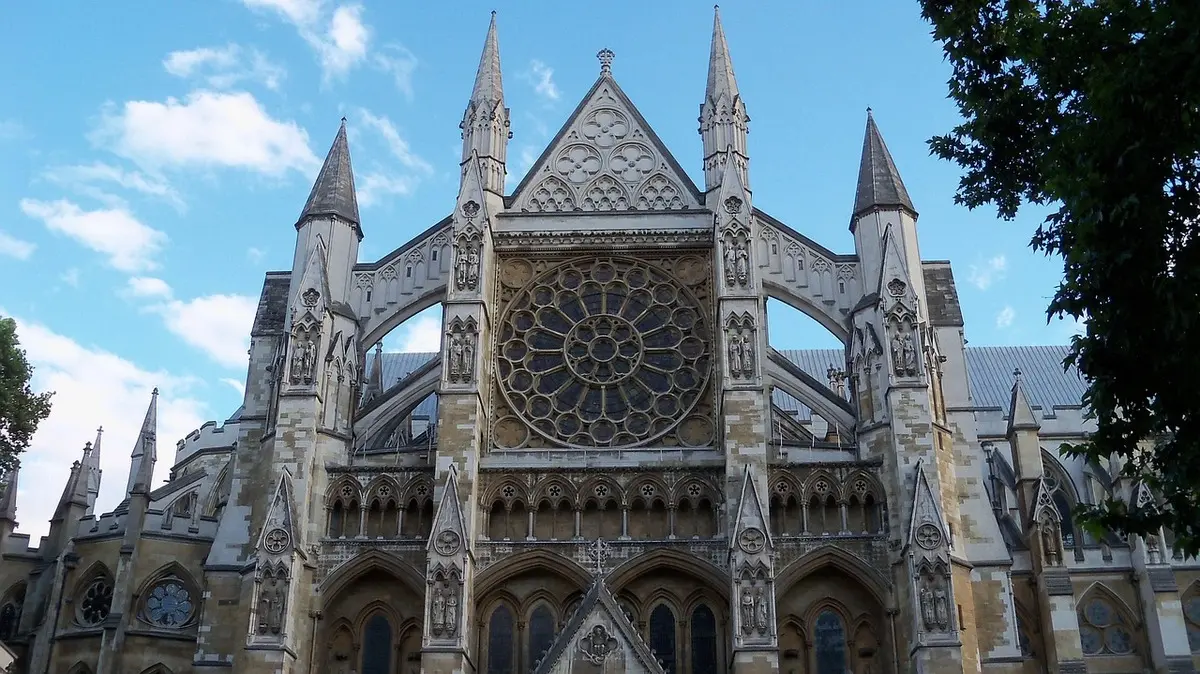
British archaeologist Warwick Rodwell has determined who most likely owned the skeleton found in a Roman sarcophagus discovered at Westminster Abbey in 1869. According to his findings, the late-antique coffin contained either the medieval abbot of Westminster, Elfwig, who died around 1020, or his successor, Wulfnot. The study is based on radiocarbon dating and osteological analysis and was published in the Journal of the British Archaeological Association, according to Futura-Sciences.
An analysis conducted by Rodwell’s colleague James Langton revealed that the sarcophagus contained the remains of a man approximately 1.75 m tall, between the ages of 35 and 49, who died between 987 and 1052. These findings contradict previous estimates, which suggested he was shorter and did not live past the age of 30.
Historians lack precise biographical data on both abbots, so the researcher checked whether their possible lifespans were consistent with the analysis results.
“We have two real candidates for the person lying in the sarcophagus. We don’t know the date of birth for either of them. But each is equally plausible, assuming the abbot was appointed in his early thirties and died around age 50,” Rodwell notes, as quoted by Smithsonian Magazine.
A Roman Coffin for the Abbot
Originally, the limestone coffin belonged to the Roman Valerius Amandinus: a Latin inscription states that it was made for his father by his sons. Martin Henig, an archaeologist at the University of Oxford, dates the burial to the early 4th century. Three of the sarcophagus’s four sides are undecorated, which is why Rodwell believes it originally stood in a wall niche of a mausoleum elsewhere and was brought to the abbey much later.
In the Middle Ages, the lid was altered to include a carved Latin cross nearly 1.8 meters tall. The researcher is convinced that this detail indicates the deceased’s high status.
“No one of lower rank would have been buried in something like this,” Rodwell emphasized in an interview with The Guardian.
In the article, the author clarifies that the body was placed in a wooden coffin, covered with lime, and placed in a sarcophagus, which was completely buried in the eastern part of the Anglo-Saxon church: the carved lid became a floor slab. When Henry III began rebuilding the abbey in the 1240s, the burial was exhumed and, around 1258, moved to the courtyard of the new sacristy, according to a publication in the Journal of the British Archaeological Association.
A Trail of Treasure Hunters
The researcher also drew attention to a forgotten pencil sketch from 1820: 49 years before the official excavations, workers accidentally stumbled upon the sarcophagus and broke the lid, likely while searching for valuables. In 1869, the bones were found to have been moved, and the skull was lying at the foot of the sarcophagus.
“The disorder observed when the sarcophagus was next opened in 1869 is typical of a robbery, but we will never know whether there were any metal or other valuable objects inside and whether they were stolen,” Rodwell warns.
The sarcophagus is currently on display in the Queen’s Diamond Jubilee Galleries at Westminster Abbey, which opened to the public in 2018.