
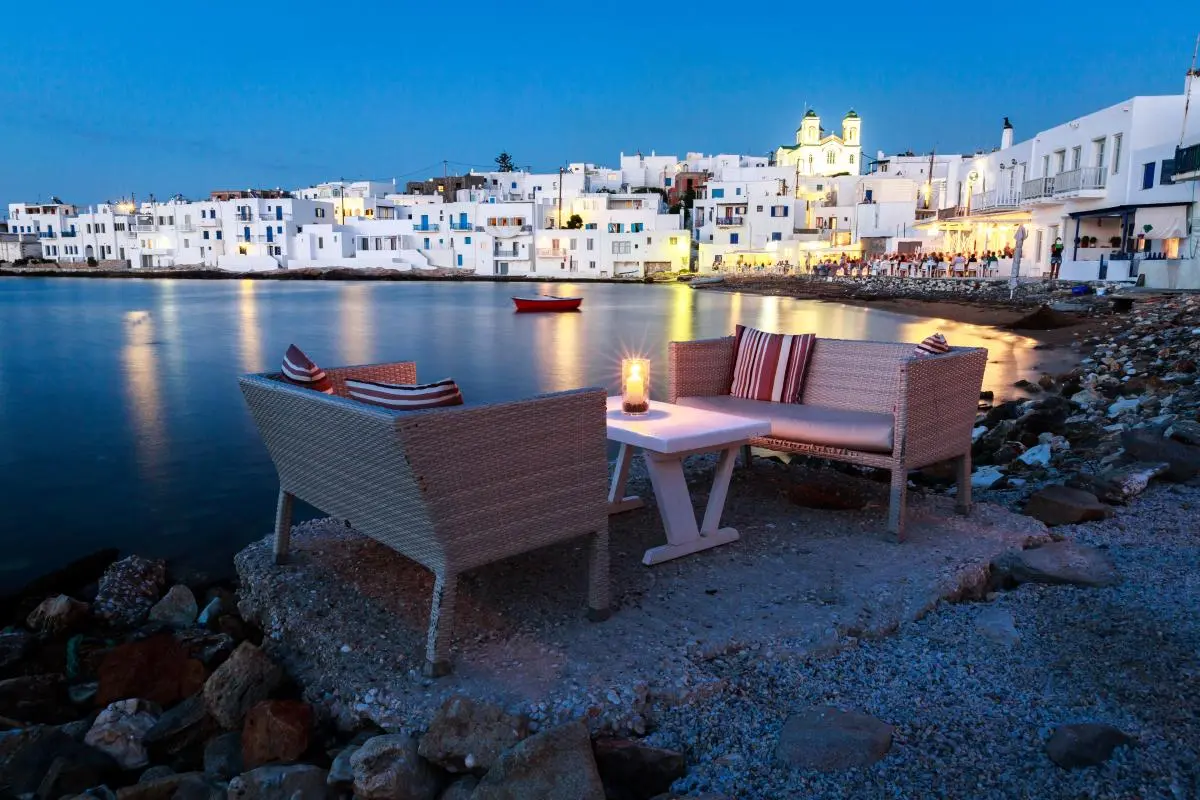
Paros surpassed Mykonos and Santorini in the number of new building permits issued among the islands of the Cyclades archipelago. In 2025 alone, local authorities issued 305 such permits. At the same time, the island is preparing for a major airport modernization project that could open it up to direct international flights before the end of the decade, according to Travel Off Path.
For a long time, Paros was a favorite destination primarily for Greek tourists. Foreign visitors, however, have only begun to actively discover the island in recent years. The island attracts visitors with its fishing villages, turquoise coves, and family-friendly atmosphere. It occupies a niche between party-centric Mykonos and the nearly untouched Folegandros.
According to the publication’s assessment, by 2028 Paros may look completely different from how it does now. Therefore, tourists are advised not to put off their trip.
“In other words, these may be the last few years when you can still enjoy one of Greece’s once-best-kept secrets before it becomes unbearably overcrowded,” warns the article’s author, Vinícius Costa.
The Airport as the Key to Mass Tourism
The island’s infrastructure has long been its main limiting factor. Paros Airport (PAS) primarily handles small turboprop aircraft. As a result, most tourists fly with a layover in Athens or travel by ferry: the journey takes 3–4 hours from Piraeus, while a high-speed ferry covers the distance from Mykonos in 35–45 minutes. Some charter airlines operated flights from Graz and Klagenfurt in Austria, but some of them had stopovers.
The modernization project is set to change this situation. The island will get a new terminal with an area of 12,117 square meters, and the runway will be extended from 1,400 to 1,799 meters, allowing it to accommodate larger aircraft. There are also plans to expand the aircraft parking area, build a fire station, and construct a new control tower.
Passenger traffic is already on the rise. In 2025, Paros welcomed approximately 66,000 more passengers than the previous year, taking into account both ferry and air traffic. In the first half of 2026, ferry traffic increased by approximately 7% year-over-year. By 2028, the island could become a full-fledged competitor to Mykonos and Santorini.
The Price of Rapid Growth
The construction boom on Paros is taking place against the backdrop of a long-standing debate about the limits of tourism development in the Cyclades. As early as April 2024, a two-day conference was held on the island dedicated to strategies for transitioning to a different development model for Paros and the archipelago. During the conference, Yiannis Spilanis, director of the Aegean Observatory for Sustainable Tourism and the Laboratory for Local and Island Development, pointed out the conflict between government policy and the very nature of the islands. According to him, the government is banking on large-scale investments and economies of scale, whereas the identity of the Cyclades is rooted in small-scale operations and limited resources, writes Digital Paros.
The professor is convinced that it is precisely this uniqueness that is the archipelago’s main competitive advantage. If it is lost, the islands will find themselves in a standardized global market with fierce competition. Spilanis warns that maintaining the current approach will lead local communities into a dead end. He urges residents to change course before it’s too late and to pressure higher levels of government to abandon this destructive policy.
Despite rising prices, Paros remains more affordable than Mykonos and Santorini for now. A main course at a simple taverna costs about $17–25, and a glass of local wine runs $4–6. A room in a guesthouse during the off-season costs $55–70 per night, while prices at a boutique hotel range from $130 to $220. Nausa is considered the most commercial part of the island. For those seeking a more peaceful getaway, it’s recommended to choose the former capital, Lefkes, where there are about half as many people during the day.