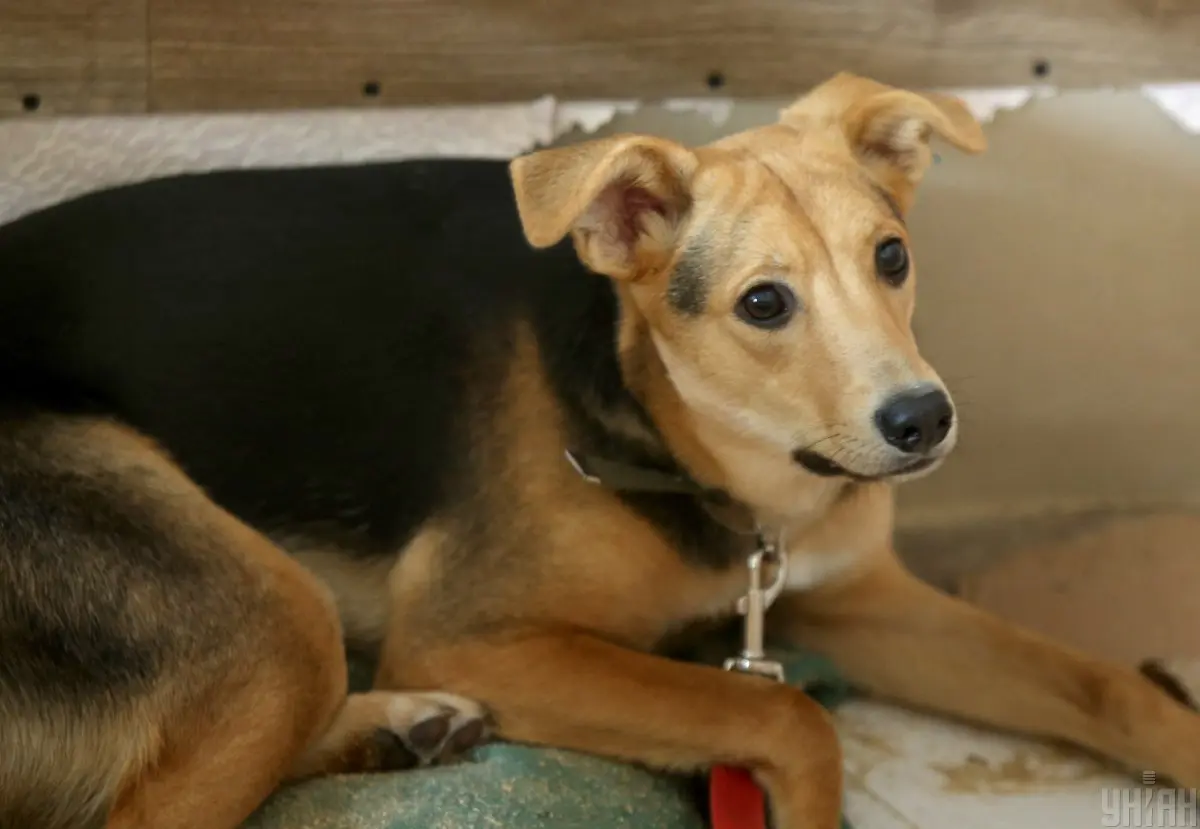
Just like the human brain, a dog’s brain reacts more strongly to consonants than to vowels when processing continuous speech. These findings were reported by researchers at Eötvös Loránd University (ELTE) in Budapest, who compared the brain activity of humans and pet dogs, according to We Love Dogz.
The study involved 20 people and 20 pet dogs. Their brain responses were recorded using electroencephalography (EEG) while the participants listened to artificially generated sound sequences without pauses or other cues indicating where a “word” began or ended.
In some sequences, a repeating pattern of consonants formed the basis of the three-syllable units, while the vowels varied. In others, the opposite was true: the vowels were repeated. The control sequences had no recognizable structure.
In humans, this pattern is known as consonant dominance. Vowels are more acoustically prominent, yet in many languages, it is the consonants that carry more information for word recognition. It turned out that dogs’ brains are also more active in tracking patterns based on consonants.
According to the publication, this suggests that detecting statistical patterns in speech does not necessarily require innate language abilities similar to those of humans. In dogs, living in constant proximity to human speech may play a role.
Should You Rename Your Pet?
The study did not examine the names themselves. Psychologist and dog researcher Professor Stanley Coren suggested a possible practical application of the study’s findings in an article for Psychology Today. For a dog, a name is an important auditory cue that the following words or commands are directed specifically at it. Therefore, according to Koren’s hypothesis, a name with more consonants may stand out more easily from the flow of speech than one composed primarily of vowels.
At the same time, there is currently no scientific evidence that a particular sound pattern is better suited for all dogs. Learning a name and responding to it also depend on consistent use, proper training, and the experiences the animal associates with its name. So there’s no need to give up on a favorite name just because it has a lot of vowels.
The Department of Ethology at ELTE is home to the Family Dog Project, which brings together groups researching the behavior, brain, cognitive abilities, and evolution of domestic dogs. The first such group was founded in the 1990s by Vilmos Csányi and was later led by Ádám Miklósy. Today, the project is considered one of the world’s leading research teams in the field of canine behavior and cognition, according to the ELTE website.