
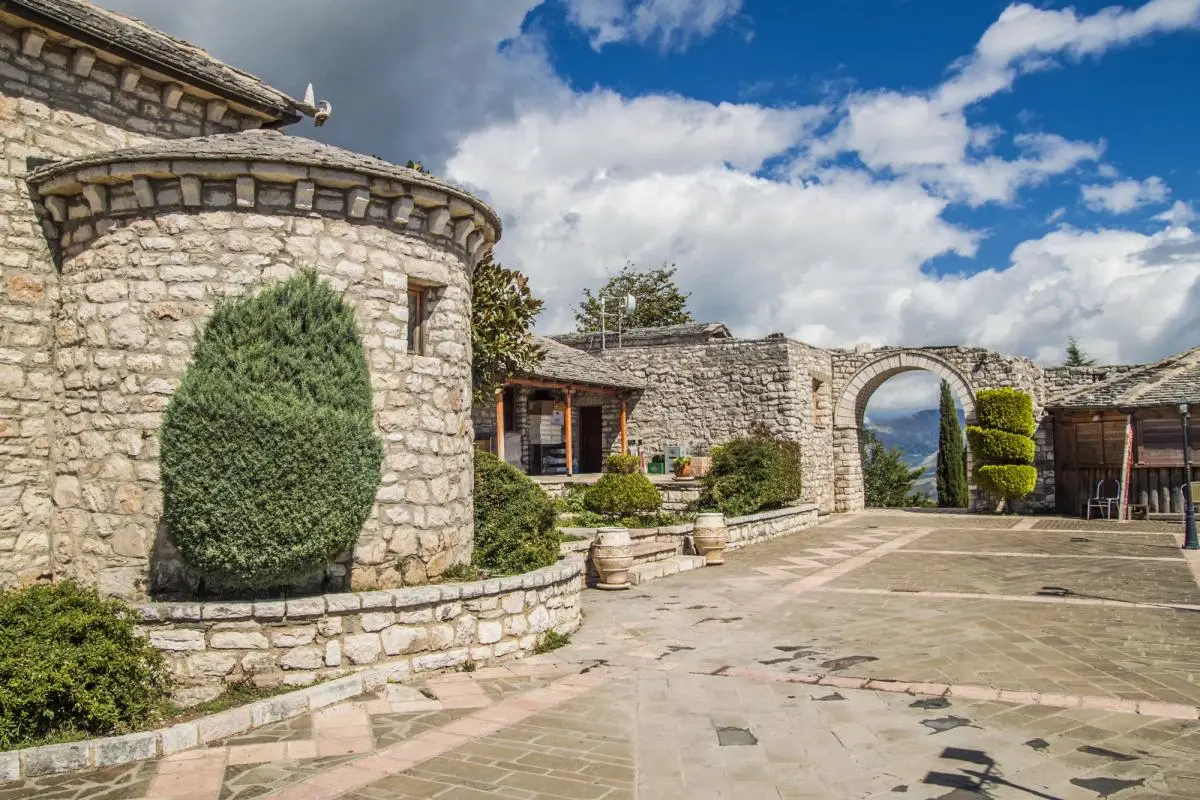
A new multi-day hiking trail called the Tower Trail has opened in northeastern Albania. It introduces tourists to restored stone tower houses known as “kullas.” The route was developed by the Albanian Agritourism Association to restore some of the neglected structures and showcase a region largely untouched by tourism, according to The Guardian.
The trail, which is over 160 km long, runs through the regions of Mirdita, Mat, Bulqiza, and Dibra. It is designed to take nine days with a guide, and there are plans to eventually add cycling and off-road routes. Overnight stays are available in guesthouses, on farms, and in kullas. A double room in a kulla costs approximately 35 pounds per night.
For centuries, these limestone and wood kullas protected families during times of conflict and provided shelter to travelers on trade routes. During the communist regime from 1944 to 1991, many of them were confiscated, and the owners got their homes back in a state of disrepair. Following the mass migration of rural residents to cities in the 1990s and 2000s, many of the towers now stand empty.
In many villages along the route, only one or two families remain. Nick Nicolli, director of the Infokulla Cultural Center in Rubik, hopes the route will encourage locals to open their homes and farms to guests and earn additional income.
“We’re losing our traditions because people aren’t staying here,” Nicolli emphasizes.
At the same time, tourism in the region is developing slowly: charging guests for their stay goes against local customs of hospitality.
From Mine to Guesthouse
One of the most striking examples of this revival is Kulla Hupi in the village of Dushai. Former miner Luli Hupi spent years restoring his family’s tower, room by room, and in 2021 opened a guesthouse there. More than ten local families supply food for the restaurant and also take tourists on hikes and horseback rides. The owner deliberately limits the number of visitors and has no interest in mass tourism.
“People say I’m crazy because I don’t have 50 tables in my restaurant,” laughs Hupi.
Hupi, 39, undertook the restoration to fulfill a promise he made to his grandfather. His kulla is part of a project that brings together nine towers in northern Albania. The German agency GIZ, commissioned by the German Federal Ministry for Economic Cooperation and Development and co-funded by the United Kingdom and Switzerland, supported the pilot project and the development of an agritourism app, according to GIZ.
As a board member of the Albanian Agritourism Association, Hupi encourages young people to invest in the region’s tourism potential. “The region’s future lies in the land: in its heritage, landscape, and people. Kulla Hupi is just the beginning,” he says.
Towers Are Being Registered
The government has also taken on the task of addressing the kulla towers. The State Cadastral Agency is formalizing ownership rights for approximately 550 towers across the country. The idea is that these legal documents will pave the way for investment and restoration in accordance with cultural heritage protection standards, as well as for the development of agricultural and cultural tourism. This process is proceeding in parallel with the national program for the revival of the towers, according to ATA.