
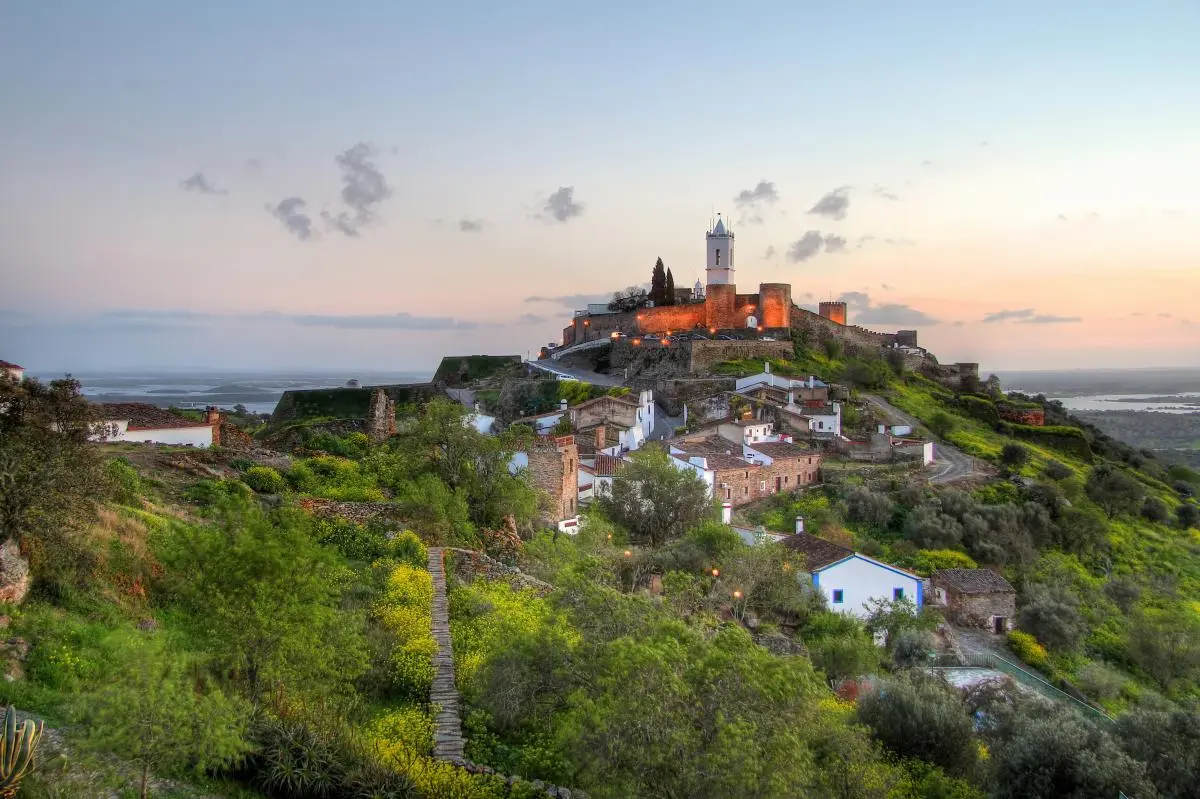
A British publication advises travelers looking for a Portugal free of crowds to head south from Lisbon to the Alentejo. The region covers about one-third of the country’s territory, but is home to just over 5% of the population. According to the author, it resembles Tuscany before it became famous: vineyards, olive groves, cork oaks, and medieval castles—all without the tourist crowds, reports The Independent.
The route begins in Viana do Alentejo. There, a former grain mill has been converted into the Moagem Industrial Lodge hotel and restaurant, preserving the concrete, steel, and old machinery. The route then leads to the family-run Ervideira winery near Reguengos de Monsaraz. The family owns 120 hectares of vineyards and grows 30 grape varieties, while 30,000 bottles are aged at the bottom of a reservoir, at a depth of about 30 meters.
Other stops along the route include Évora, with its Roman temple and palace, which has belonged to the same ducal family for nearly six centuries. The author also recommends visiting the Alqueva Reservoir, Europe’s largest man-made lake, and the medieval hilltop town of Monsaraz. The journey ends in the fortified town of Marvão, with its 10th-century walls, home to only about forty residents.
Wine, Just Like in Roman Times
A separate focus of the article is the ancient tradition of winemaking in large clay vessels called “talias.” Teresa Caeiro, 32, from the Gerações da Talha winery, became the first woman in Portugal to lead wine production in talhas. There, the grapes are crushed and transferred directly into clay jars, without the use of steel tanks.
In the remote corners of the Alentejo, this wine is still made almost exactly as it was in Rome 2,000 years ago: from ungrafted vines and without irrigation. Local winemakers acknowledge that the world knows almost nothing about this heritage. “It’s trendy all over the world right now to make wine in clay jugs, but no one knows about us because we haven’t been very good at telling our story,” emphasizes José Piteira, a winemaker at the Granja cooperative, in a conversation with wine-pages.
The Land of Cork Oaks
The cork that the author of The Independent sees in souvenirs at every turn in Évora is the backbone of the local economy. Portugal produces about half of the world’s cork and is home to one-third of the planet’s cork oaks, most of which grow in the Alentejo. The bark is harvested by hand with axes once every nine years, and the trees themselves are not cut down; they can live for over 200 years, according to the BBC.