
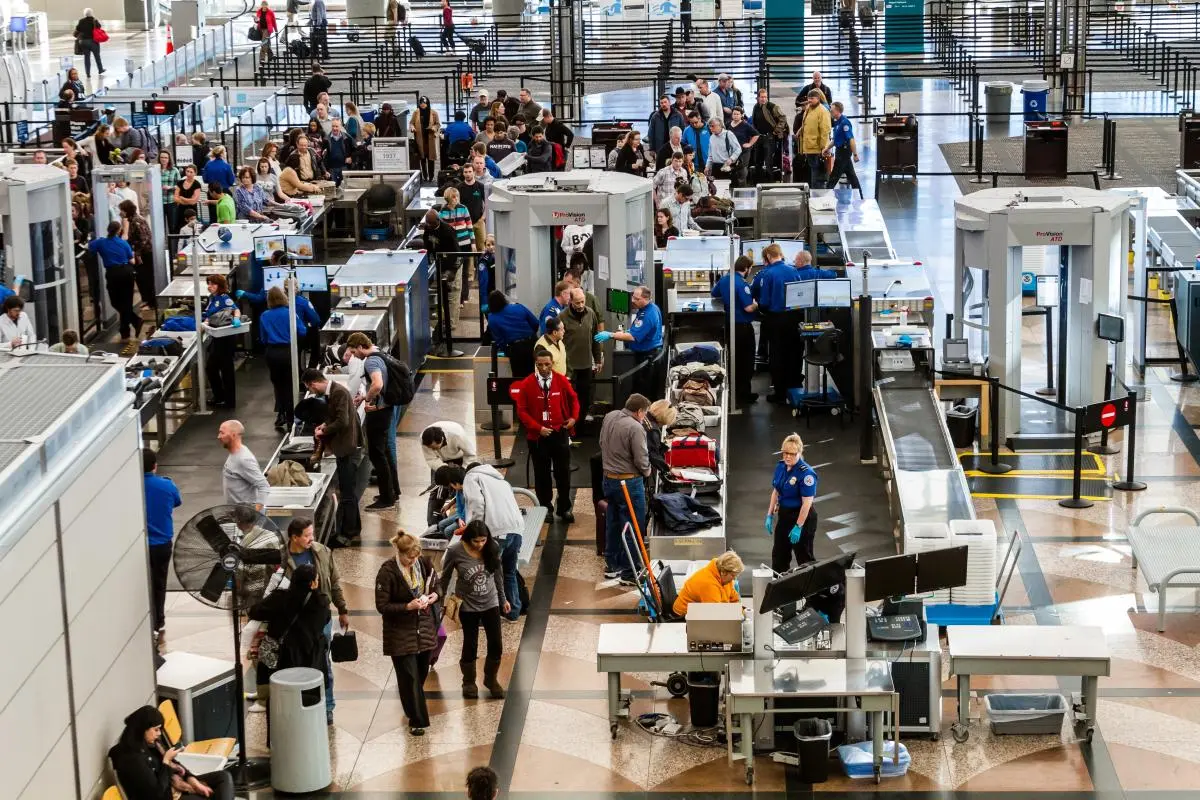
Every winter, U.S. Transportation Security Administration (TSA) officers most often refer five categories of holiday items in carry-on luggage for a manual screening: gel-like and liquid foods, wrapped gifts, snow globes, dense baked goods wrapped in foil, and alcohol. Wait times at security checkpoints peak from late November through New Year’s, and these items are the ones that slow down the screening process the most, according to Travel Off Path.
Despite reports that liquid restrictions have been lifted at some European airports, the 100 ml (3.4 ounces) rule is still fully in effect in the U.S. The TSA considers anything that can be poured, smeared, sprayed, squeezed, or dispensed to be a liquid, so cranberry sauce, gravy, jams, peanut butter, soft cheeses, and maple syrup in larger containers immediately attract attention. Gel ice packs will only be allowed through if they are frozen solid.
Snow globes are allowed in the cabin only if, together with their base, they are smaller than a tennis ball and fit inside a clear liquid bag. Pies, cakes, cookies, and prepared meats are allowed, but thick foil blocks X-ray screening, and chunks of cheese, fruit cake, or fudge appear on the screen as suspicious organic masses. In that case, the package is opened and swabbed for traces of explosives.
Full-size bottles of wine, champagne, or eggnog will not pass through security unless purchased in the post-security area. Mini-bottles of 50 ml are allowed in the liquid bag, but drinking your own alcohol on board is prohibited, and beverages with an alcohol content of over 70% cannot be carried even in checked baggage.
Wrapping paper is at risk
Wrapped gifts are not formally prohibited; however, if the contents cannot be seen on the scanner, an officer must cut open the ribbon and wrapping paper. The TSA has previously urged passengers to prepare for this in advance, according to the TSA.
“We understand how upsetting it is for travelers when their gifts are unwrapped before they even arrive at their destination. However, when an item raises a red flag, our officers must investigate and ensure that it is not dangerous or prohibited on board the aircraft. We recommend using gift bags or boxes, or simply wrapping gifts at your destination,” said David Durgan, the TSA’s federal security director for North Dakota.
A Loophole for Holiday Leftovers
It is still possible to bring more homemade food into the cabin than the liquid limit allows, provided it is prepared correctly, according to Yahoo Travel.
“If it’s a completely frozen, solid block when it goes through the scanner, you’re good to go,” says Upgraded Points analyst Jamie Larunis.
However, he notes that this will only work for those who live close to the airport. The TSA warns that if the food has partially thawed or there is liquid at the bottom of the container, the usual restrictions apply. A passenger can give a prohibited item to a friend who isn’t flying, check it as luggage at the check-in counter, or leave it at the security checkpoint.