
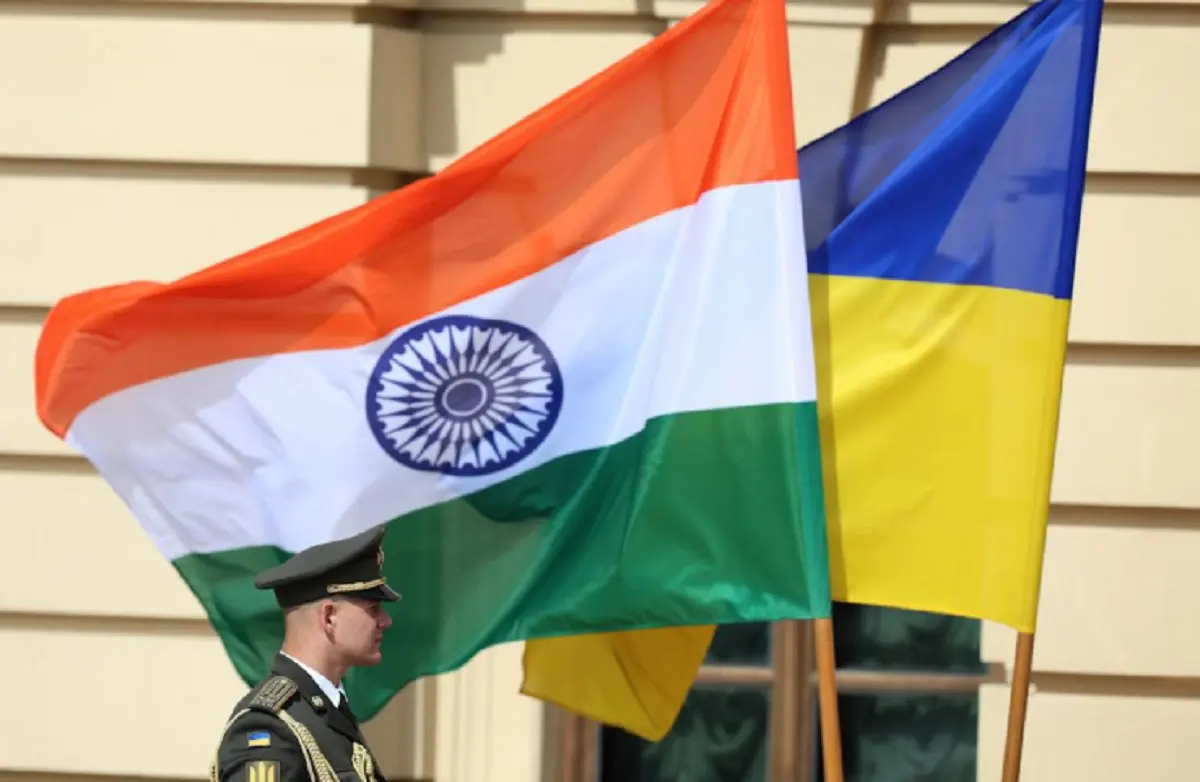
Since the start of Russia’s full-scale invasion of Ukraine, India has increased its ammunition exports to Europe by more than 1,600%. Since 2022, Indian manufacturers have supplied at least $872 million worth of ammunition to European countries supporting Kyiv. Four years before the invasion, this figure stood at just $49.2 million, according to Dzerkalo Tyzhnia, citing Bloomberg.
The calculations are based on trade statistics from India’s Ministry of Commerce and Industry, obtained by Trade Data Monitor. Demand for artillery shells and propellant charges has grown the most. After the war began, European countries urgently replenished their arsenals and sought resources to provide military aid to Ukraine. In terms of volume, India still lags significantly behind the U.S. and other leading exporters, but this growth is in line with Prime Minister Narendra Modi’s policy of developing domestic arms production.
These deliveries have an obvious political dimension. Since the Cold War, Moscow has remained New Delhi’s primary arms supplier: more than half of the Indian Air Force’s combat aircraft are of Russian origin. Since 2022, India has become one of the largest buyers of Russian oil, and Modi and Putin have already met twice in 2026.
Walter Ludwig, a political scientist at King’s College London who specializes in South Asian defense policy, points out that in international politics there is “a certain degree of plausibility in denying one’s involvement,” and that states are willing to accept this from one another. In his view, the commercial benefits for New Delhi outweigh the diplomatic awkwardness in relations with the Kremlin.
“Russia itself has created market demand, to which Indian defense companies are now responding. In a sense, this is a business decision—from a financial standpoint, it is entirely justified,” Ludwig emphasizes.
Europe as a New Market for the Indian Defense Industry
On October 23, at an event in New Delhi, Indian Defense Minister Rajeev Kumar Singh linked the growth in exports to the European “ReArm Europe” initiative and the expansion of India’s manufacturing base. The largest buyers have been countries in Central and Eastern Europe: Romania, Slovenia, the Czech Republic, Slovakia, Bulgaria, Croatia, and Poland, according to Defense News.
Analysts estimate that the sharp increase began in 2024. Artillery shells, small-caliber ammunition, mines, propellant charges, and explosives are being supplied to Europe. According to Samuel Rajiv of the Manohar Parrikar Institute for Defense Studies and Analysis, European destinations accounted for 40% of global exports of Indian weapons and ammunition in the past fiscal year.
Indian analysts are optimistic that the current surge will become a sustained trend.
“India will see broader opportunities thanks to Europe’s increased focus on defense, which will mean significant funding for the transformation of its defense industrial base. At the same time, Indian exports will gain momentum not only due to Europe’s needs but also thanks to the steps India is taking to expand its own defense production base,” Rajiv believes.
The free trade agreement between India and the EU should provide an additional boost: once it takes effect next year, it will reduce tariffs on Indian weapons and ammunition. New Delhi is counting on establishing joint ventures with European companies on its territory. Indian firms, in turn, will seek partners in Europe to gain access to government defense procurement contracts.
The Russian Factor
For Brussels, which is diversifying its supply chains, the list of reliable industrial partners in sensitive sectors has proven to be short. This view is expressed by Dinakar Peri of the Carnegie India Security Studies Program.
“India offers scale, size, and an ecosystem, as well as trust, as Europe seeks to build resilience vis-à-vis the United States. Russia is not an option for Europe; that’s a thing of the past. China has its own red flags in many strategic areas and critical domains,” Peri notes.
According to the expert, this rapprochement is also beneficial for India itself, which seeks to reduce its long-standing dependence on foreign suppliers, particularly the U.S. Analysts point out that American, French, and Israeli contractors have already integrated Indian manufacturers into their supply chains, so the EU, too, could make India a hub for procuring a wide range of products.
At the same time, New Delhi’s military ties with Moscow may raise concerns in some European capitals. Peri warns that it remains unclear whether this will prove to be an obstacle. On a bilateral level, India already has strong defense ties, particularly with France, but it is unclear how the EU as a bloc will assess its military cooperation with Russia.
India remains the world’s largest importer of arms and the largest export market for Russian weapons. Bilateral trade has increased nearly sixfold since 2022: from $10 billion to $69 billion in the 2024–2025 fiscal year. However, this growth was almost entirely driven by discounted Russian oil. India’s trade with the U.S. during the same period reached $132 billion, and with China, $128 billion, according to CSIS.
There is a growing consensus among Western experts that Russian-Indian relations are undergoing a “managed decline.” The reasons cited include the deterioration of Moscow’s international standing and its rapprochement with Beijing, New Delhi’s regional rival. Despite this, Indian Foreign Minister Subrahmanyam Jaishankar calls ties with Russia “the only constant in world politics,” and at the UN General Assembly, India typically abstains when voting on resolutions condemning the Kremlin’s actions.