
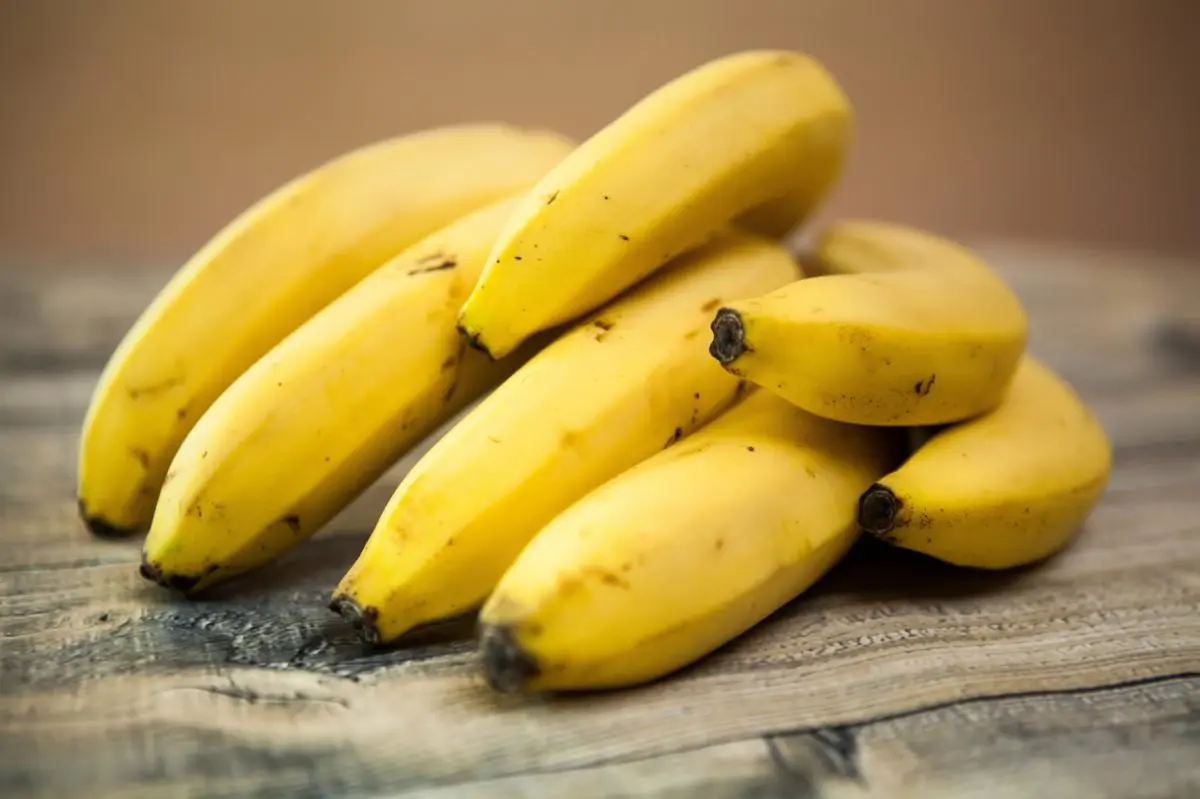
Bananas stay fresh longer and turn brown more slowly not in an open basket or in the refrigerator, but on the kitchen counter with the stem wrapped. Spanish chef Jordi Cruz recommends wrapping the area where the fruit attaches to the stem with plastic wrap or foil, according to Grazia.
The ripening of bananas is driven by ethylene—a natural gas released primarily through the stem. That’s why the chef suggests isolating this area.
“If we want it to ripen more slowly, we’ll cover it with a little plastic,” notes the Catalan chef.
Separately, Cruz warns against a common mistake that irreparably ruins the texture of unripe fruit.
“When it’s green—never put it in the cold. Why? Because its flesh becomes grainy and sandy, and that’s really unpleasant,” the chef emphasizes.
Refrigeration is only appropriate once the banana has ripened: this way, you can keep it for a few more days. Cruz advises peeling overripe bananas, slicing them, and freezing them in an airtight bag, then adding them to baked goods, smoothies, or ice cream. To speed up ripening, on the other hand, leave the stem exposed or place the bananas next to ripe apples or avocados.
Separate the bunch and keep them away from apples
Amanda Diring, a food safety expert at Purdue University, offers similar advice. She recommends separating the bunch, wrapping the stems, and keeping bananas away from apples, avocados, and tomatoes, which also release ethylene, according to Martha Stewart.
“Separating the bananas and wrapping the stems will best extend their shelf life if you keep them at room temperature at home and then move them to the refrigerator once they’re ripe,” Diring advises.
The expert warns that the peel will darken in the cold, but this doesn’t mean the fruit has gone bad. According to her, the flesh inside “should remain normal for several days.” She also advises against storing ripe bananas next to unripe ones, as the former release more ethylene.
Ethylene matters more than cold
Australian scientists also confirm the effect of ethylene. Their study showed that green bananas take longer to ripen at lower temperatures and lower gas concentrations. Previously, the same authors found that at 20 °C, reducing the ethylene content in the air from 0.1 to 0.01 μl/L doubles the time until ripening begins. According to the researchers, controlling ethylene levels makes it possible to reduce or even eliminate the need for cooling bananas during transport, as stated in a publication on ScienceDirect.