
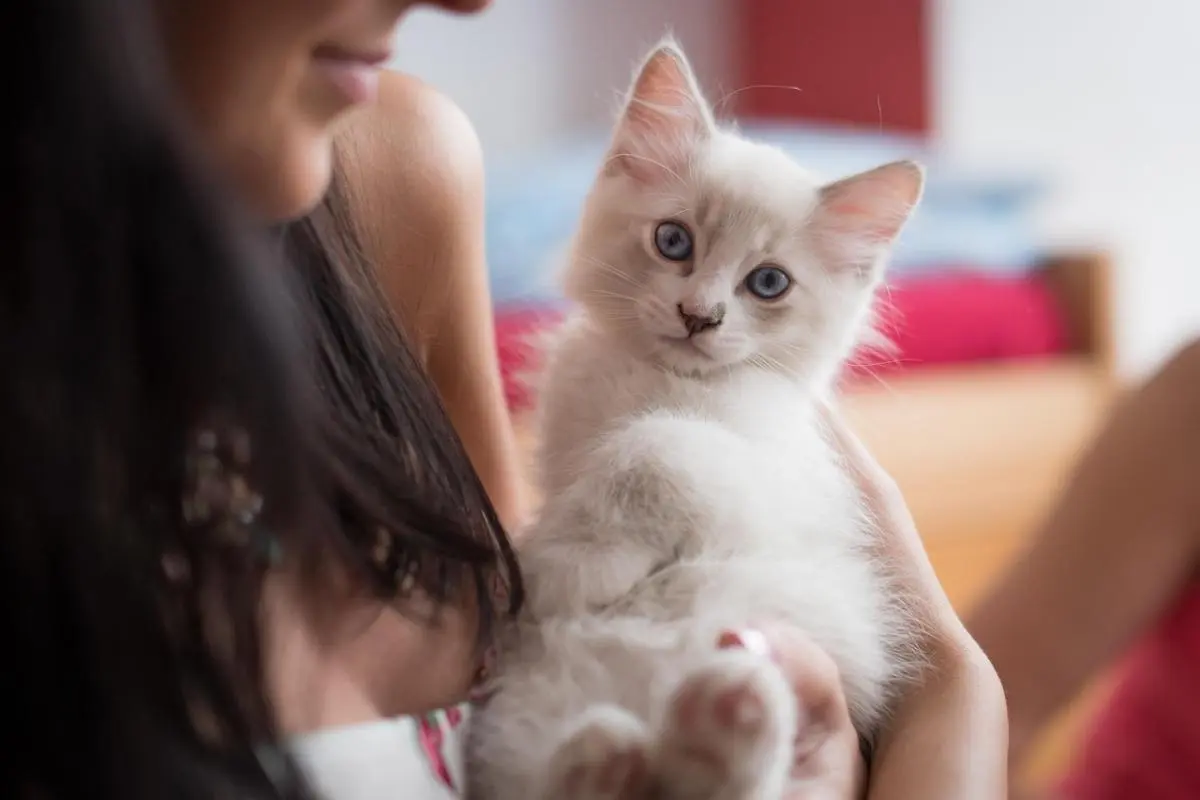
Cats that have broken a vase or knocked something off the table may “apologize” to their owner in their own way: by blinking slowly, rubbing their head against the person, licking them, “kneading” them with their paws, or suddenly jumping up for a hug. The animal may not be bothered by the act itself, but it’s concerned that it has upset its beloved owner, according to YourTango.
The explanation is that cats read their owner’s reaction to their behavior. When the animal senses dissatisfaction, it tries to reestablish contact.
The subtlest signal is an intense gaze and a few slow blinks. This is how a cat shows that it trusts and loves a person, even if that person is angry with it.
More often than not, after doing something wrong, a cat will rub its face against your leg or arm, or even nudge you with its head if you don’t react. By leaving its scent, the cat shows affection and reminds you that it considers you a member of the family.
“They’re letting you know that you’re part of their circle,” notes Mikel María Delgado, a certified cat behavior consultant and zoopsychologist.
Another way to make amends is by licking. According to Daniel Cummings, an expert at Cats Protection, this is how a cat shows affection and seeks to reconnect with a person it has upset. “Kicking” with their paws has a similar meaning, as does a sudden desire to sleep nearby or lie on your lap—even in cats that aren’t usually very affectionate.
Reconciliation Without Remorse
Veterinarian Sandra Mitchell warns against attributing human emotions to cats. In her opinion, most conflicts with animals stem from a “language barrier”: scratching furniture, using the bathroom outside the litter box, bringing home live rodents, or biting while being petted are all normal, instinctive behaviors for a cat—not something “bad,” writes PetMD.
“Cats don’t feel guilt or remorse the way humans do—and if you’re waiting for them to apologize, you’ll be waiting a long time,” Mitchell emphasizes.
At the same time, the veterinarian acknowledges that cats can sense when a person is stressed or unhappy and may extend an “olive branch” to them. Among such signals, she lists head-butting, purring, “kneading,” licking, slow blinking, invitations to play, rolling onto their backs, and even bringing birds or rodents as gifts.