
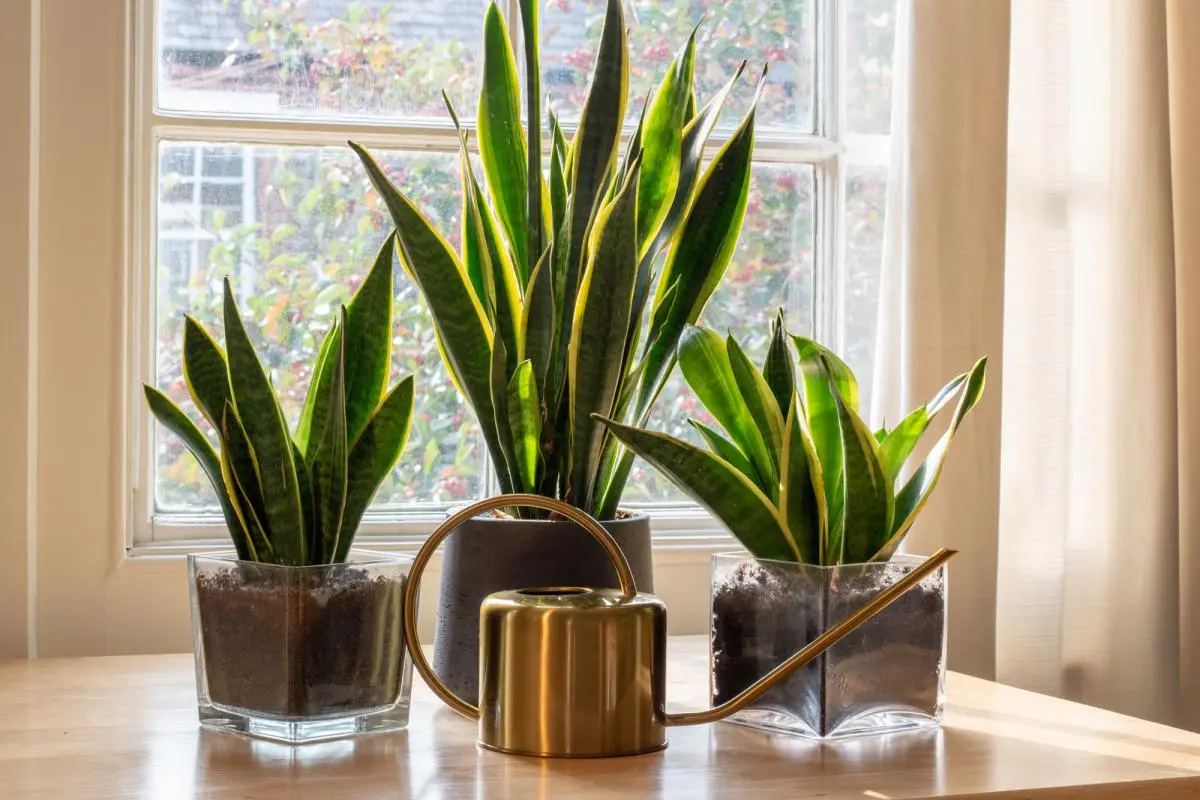
Brown tips on the leaves of a sansevieria most often indicate that the plant is drying out, but they can also be a sign of a fungal disease or overwatering. In both cases, you should clean the plant’s roots and replace the soil, and after repotting, feed it with a mixture of rice water and vitamin B1, according to Deccoria.
Remove the plant from the pot, shake off the soil, and rinse it under running water. Remove dry and rotten roots with sharp, disinfected pruning shears, and trim the dry leaf tips back to healthy tissue. Sprinkle the cut surfaces with cinnamon, which has antibacterial and antifungal properties, and then leave the plant in a dry place to allow the wounds to dry.
Next, clean the roots in a baking soda bath: dissolve one tablespoon of baking soda in 500 ml of warm water and soak the plant for 15 minutes. Afterward, pat the roots and leaves dry with a paper towel.
Light Soil and Rice Fertilizer
Sansevieria is a succulent that stores water in its fleshy leaves and tolerates drought well, but does not respond well to waterlogging. Therefore, the potting mix should be light and well-draining: 60% garden soil, 30% coconut coir, and 10% perlite. Place the roots vertically downward in the pot, water lightly, and leave the plant in a dry, well-ventilated spot out of direct sunlight for three days.
After that, you can fertilize the sansevieria. To do this, pour 500 ml of warm water over three tablespoons of rice and let it steep for an hour; strain the liquid, dissolve three vitamin B1 tablets in it, and dilute with another 500 ml of water. Thiamine stimulates root and leaf growth and helps the plant cope with stress. You can use the mixture to water the plant or spray the leaves and soil.
Why Leaves Turn Brown
However, the cause of the problem isn’t always easy to pinpoint, warns Justin Hancock, a gardener at Costa Farms, in a comment to Homes and Gardens.
“Brown or yellow leaf tips can result from a wide range of factors—too much or too little water, excess fertilizer, exposure to high or low temperatures, and so on. Even aging shows up at the tips, and the discoloration spreads across the leaf as it ages. So, you might have to do a little detective work,” notes Hancock.
The expert considers overwatering to be the most dangerous mistake.
“If you water the sansevieria so that the potting mix remains wet, the roots can start to suffocate and die. As soon as they die, fungal organisms appear that cause rot,” emphasizes Henkock.
Experts advise watering the plant only when the top 2.5–5 cm of soil has completely dried out, and even less frequently in winter. The pot should have drainage holes and be made of a porous material, such as terracotta.