
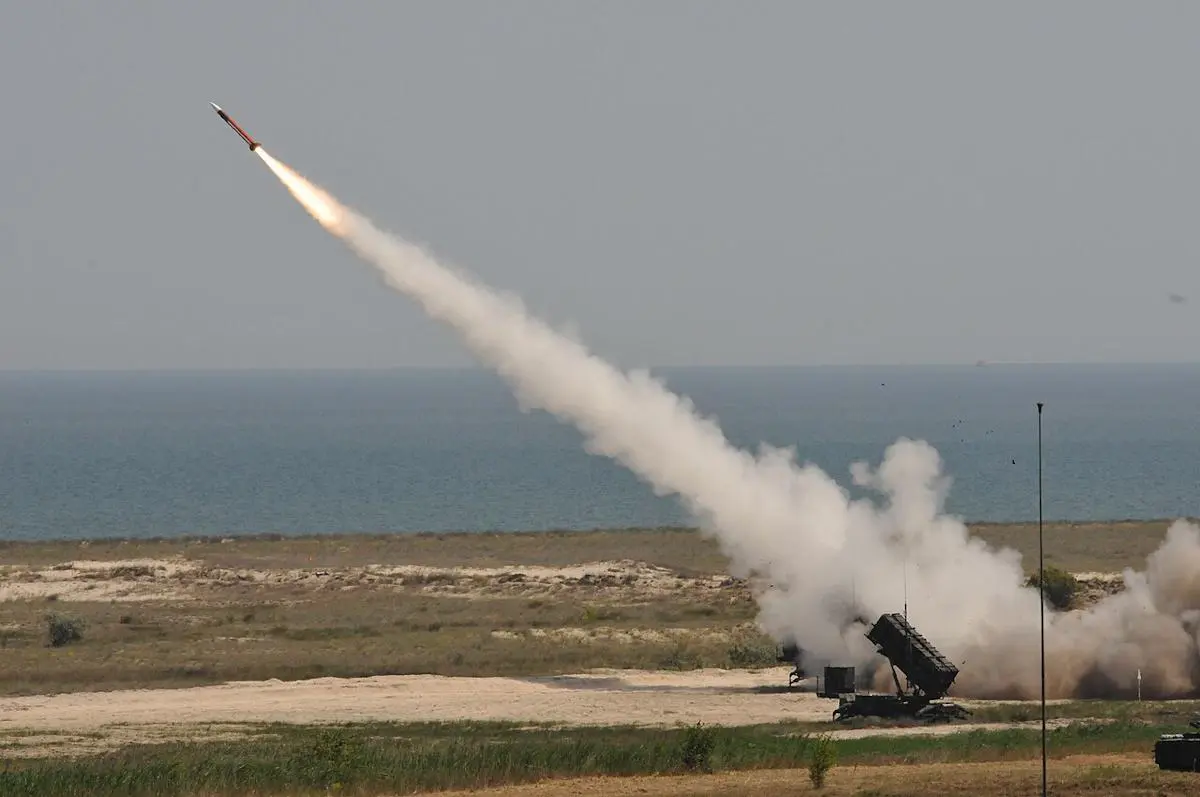
The production of American Patriot anti-aircraft missiles depends on the heat-resistant Raycarb C2®B fabric, which is manufactured by only one plant in the world—the ArianeGroup facility in Le Ayane, near Bordeaux. This dependence came to light as the U.S. seeks to replenish its stockpile of interceptor missiles depleted in the wars in Ukraine and the Middle East, according to ICI.
The material, made from carbonized viscose fiber, can withstand temperatures up to 2,700°C and has higher heat resistance than metals. There are few equivalents to it.
“Raycarb C2®B is a fabric used to protect the nozzles from which the jet stream of the Patriot PAC-3 systems is emitted. This is the part of the missile’s body where extremely high temperatures are reached, and only a few companies in the world produce this technology,” notes Adrien Selvon, head of the aerospace and defense division at Bordeaux Technowest.
From France, the fabric is shipped to a plant operated by the American company Park Aerospace in Kansas. There, it is impregnated with resin, after which it is incorporated into the rocket engines, and Lockheed Martin performs the final assembly of the interceptors. Alexander Le Camus, general delegate of the regional association BAAS, points out that the Americans have offered to finance both the ramp-up of production in Gironde and future production in the U.S. According to him, this technology originates from the space industry: in Le Havre, engineers are working on the engines for the Ariane 5 and 6 rockets and the French M51 ballistic missiles using the same principles. Neither ArianeGroup management nor the company’s labor unions have commented on the situation.
The Pentagon has set its sights on a French plant
The Wall Street Journal reported on the issue. Earlier this year, a high-ranking Pentagon official met with Park Aerospace, the sole supplier of carbonized viscose approved for the most advanced Patriot missiles, and demanded an increase in shipments. However, the company was unable to do so because ArianeGroup had warned that production volumes of the fabric were limited, according to The Wall Street Journal.
New production capacity will not be available until at least 2028
Park Aerospace has already advanced €4.59 million to ArianeGroup for new equipment in France. The production expansion is scheduled to come online in 2028, and the additional output will be divided equally between Park and ArianeGroup’s own programs. According to Park CEO Brian Shore, this will not be enough to meet the planned increase in PAC-3 MSE production to 2,000 missiles per year. In 2025, 620 such missiles were manufactured, according to AeroTime.
Therefore, on July 18, 2026, the companies signed a preliminary agreement to build a plant in the U.S., with all of its output destined for Park. The American side committed to making a $25 million advance payment. The plant’s location has not been disclosed. Development of U.S. equivalents is ongoing, but certifying the new material for the PAC-3 MSE engine could take years.
Meanwhile, demand for interceptors is growing. According to estimates by the Center for Strategic and International Studies (CSIS), the U.S. used up about two-thirds of its pre-war stockpile of Patriot missiles in the war with Iran. Deliveries to Ukraine are also depleting reserves, and in October, the State Department approved the potential sale of 500 PAC-3 MSE missiles to Kyiv.