
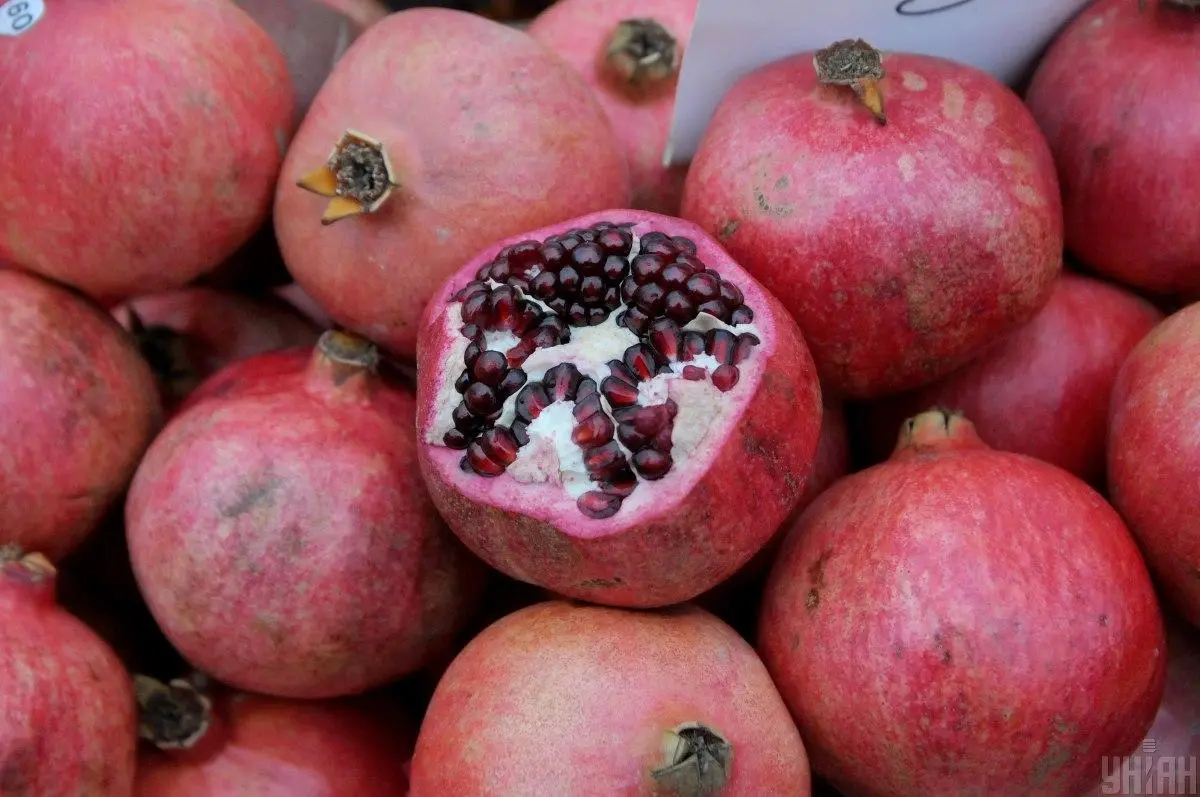
When choosing a pomegranate, you should pay attention not only to the color of the skin but also to the weight of the fruit: of two pomegranates of the same size, the heavier and denser one contains more juice and seeds. This is the advice given by fruit vendors, according to El Español.
This recommendation aligns with advice from the University of California: a ripe and juicy pomegranate should feel heavy for its size, indicating that it is densely packed with juicy seeds. Conversely, a fruit that is too light may have lost moisture or dried out inside.
It’s best to compare fruits of similar size, since a large pomegranate will almost always weigh more than a small one. The easiest way is to hold two identical fruits in your hands and choose the one that feels denser.
Why a red skin doesn’t guarantee ripeness
The skin’s color varies greatly depending on the variety. Some pomegranates turn dark red, while others remain light, yellowish, or pink even when ripe. For example, the Mollar de Elche variety, common in Spain, may have a paler color than other commercial pomegranates, yet it is neither unripe nor of inferior quality.
The shape can also be a clue. An underripe pomegranate is usually quite round, but as the seeds inside grow and fill with juice, they press against the skin, and the fruit becomes slightly angular, with flat sides. You should also choose firm pomegranates without large soft spots, deep dents, or brown, damaged areas.
This is the opinion of Australian fruit expert Thanh Chiong. He advises shoppers not to rely on appearance alone but to assess the fruit by touch, according to ABC News.
“These two factors are more important than color, because a pomegranate may still be green but very sweet and juicy,” Chiong emphasizes, referring to weight and shape.
According to him, a pomegranate with white skin may turn out to be significantly juicier than one with red skin. On the other hand, the expert warns, a perfectly round fruit may still be unripe and tart.
A pomegranate won’t ripen at home
Unlike a banana or an avocado, pomegranates do not ripen noticeably after being harvested, so there’s no point in buying an unripe fruit in the hope that it will “ripen.” Whole pomegranates store well in the cold: according to the University of California, they can last several weeks in the refrigerator. Removed arils spoil much faster, so they should be eaten within a few days.
Thanh Chiong also recommends storing pomegranates in the refrigerator but eating them within a week, as the fruit dries out and loses its flavor over time.