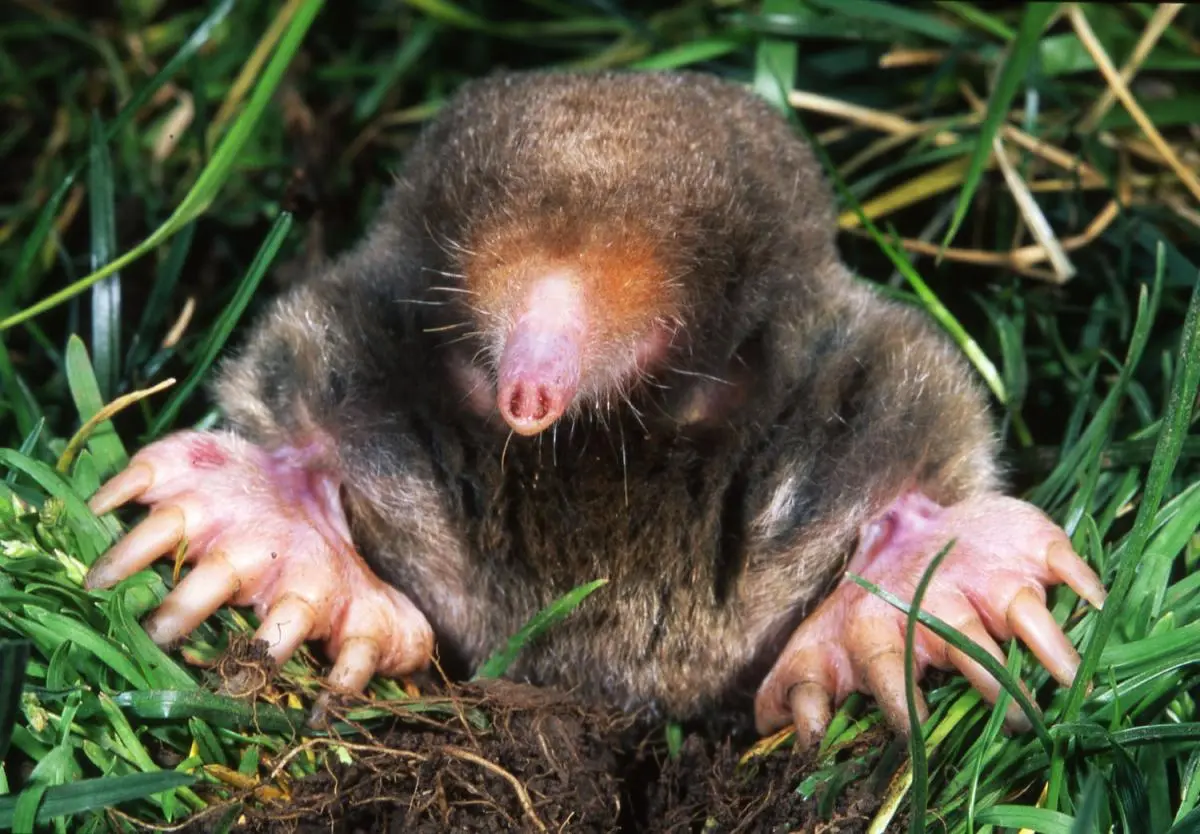
A Polish publication recommends getting rid of moles on your property without traps or chemicals—specifically, by pouring regular cooking vinegar into a mole burrow. Its pungent odor is supposed to irritate the animal, which has a very sensitive sense of smell, and force it to move elsewhere, according to Super Express.
The publication warns that caution is needed: once the acid enters the soil, it harms microorganisms and plants. Therefore, before using it, make sure there are no valuable crops growing near the molehill.
Among other gentle methods, the authors mention devices that create vibrations in the soil, regular removal of molehills, a special mesh placed under the lawn during installation, as well as planting garlic or marigolds. However, according to the publication, none of these methods offers a 100% guarantee.
Expert Skeptical of Home Remedies
David Drake, a professor at the University of Wisconsin–Madison and a wildlife specialist, believes that most natural mole repellents lack reliable scientific evidence. This applies to repellent plants, castor oil, ultrasonic or vibrating devices, and tips such as placing coffee grounds or chewing gum in the tunnels, writes The Spruce.
Moles have extensive underground tunnel systems and easily bypass treated areas. Furthermore, some of these methods can harm the environment.
“Odors travel through the burrow system only a certain distance, and if you have poor or sandy soil, they’ll likely seep through it pretty quickly,” Drake points out.
The expert cites trapping as the most effective and practical method. Another option, which does not involve killing the animals, is to reduce the number of larvae in the soil that moles feed on, although this disrupts the soil’s natural ecosystem.
Moles Are Not the Enemy of the Garden
The British Society for the Protection of Endangered Species (PTES) is convinced that moles’ reputation as pests is not entirely deserved. They consider catching them with scissor-style traps to be inhumane and ultimately futile, since neighboring moles will simply move into the vacated territory. Instead, they recommend living alongside them: the soil from the molehills contains almost no weed seeds and is perfect for potted plants, while the animals themselves eat larvae that damage lawns and loosen the soil, according to the PTES.
“Unless you have livestock or something similar—where there’s a risk that an animal could step on the top of a molehill, fall through, and break a leg—the mounds are mostly just unsightly,” Drake notes.