
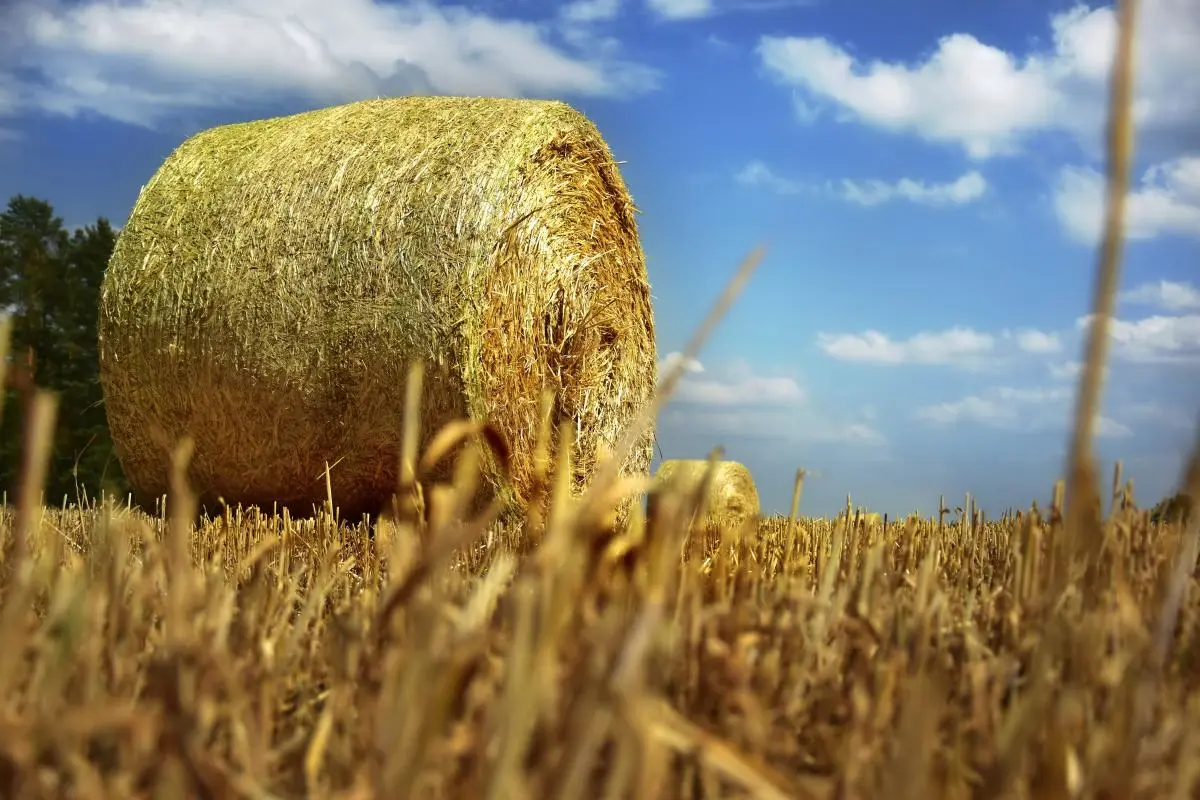
Ordinary straw is becoming a cheap alternative to pavers and gravel for garden paths. A bale costing about 5 euros allows you to lay a path between garden beds in about 20 minutes without any digging, according to Mon Jardin Ma Maison.
Interest in this material has grown following a widely discussed article by the American website HouseDigest, published in November 2026. This option is primarily for gardeners who simply need to walk between their garden beds without getting stuck in the mud and who don’t want to spend several hundred euros on full-scale paving.
According to data cited by HouseDigest, a small bale of straw costs as little as $5 and covers about 14 m² with a layer 2–5 cm thick. The same area covered with concrete pavers from a home improvement store would cost over $580, while a layer of fine, rounded gravel would cost about $173. This total does not include the sand and soil leveling required for mineral-based surfaces.
Why Straw Is Better Than Dirt Under Your Feet
Straw quickly forms a soft surface that protects your shoes from dirt even after a heavy downpour. By completely covering the ground, it prevents weeds from sprouting between the garden beds and protects the soil from erosion. Gardeners have long used it for this purpose in the winter on bare patches of ground.
As it decomposes, this mulch enriches the soil with organic matter, which will be needed for future crops.
How to Lay the Path and What to Watch Out For
Preparation is minimal. First, mark out the path, mow the grass short, and remove large clumps of perennial weeds. Next, lay down plastic-free cardboard in overlapping layers so that it blocks out light, and water it generously. Then spread straw from unpacked bales in a 5–10 cm layer, lightly tamp it down, and water it again. For a long-lasting path, a 10–15 cm layer is sufficient, along with an annual top-up.
Experts recommend buying straw rather than hay, as it contains fewer seeds. It’s also worth checking to make sure it hasn’t been treated with persistent herbicides that could harm your garden. The best choice is straw from grain crops that haven’t been treated with chemicals.
This mulch can provide shelter for rodents and slugs, and it catches fire easily during dry spells. Therefore, keep it away from wooden siding and open flames. When the layer compacts too much, replenish it, and send the old straw to the compost pile.