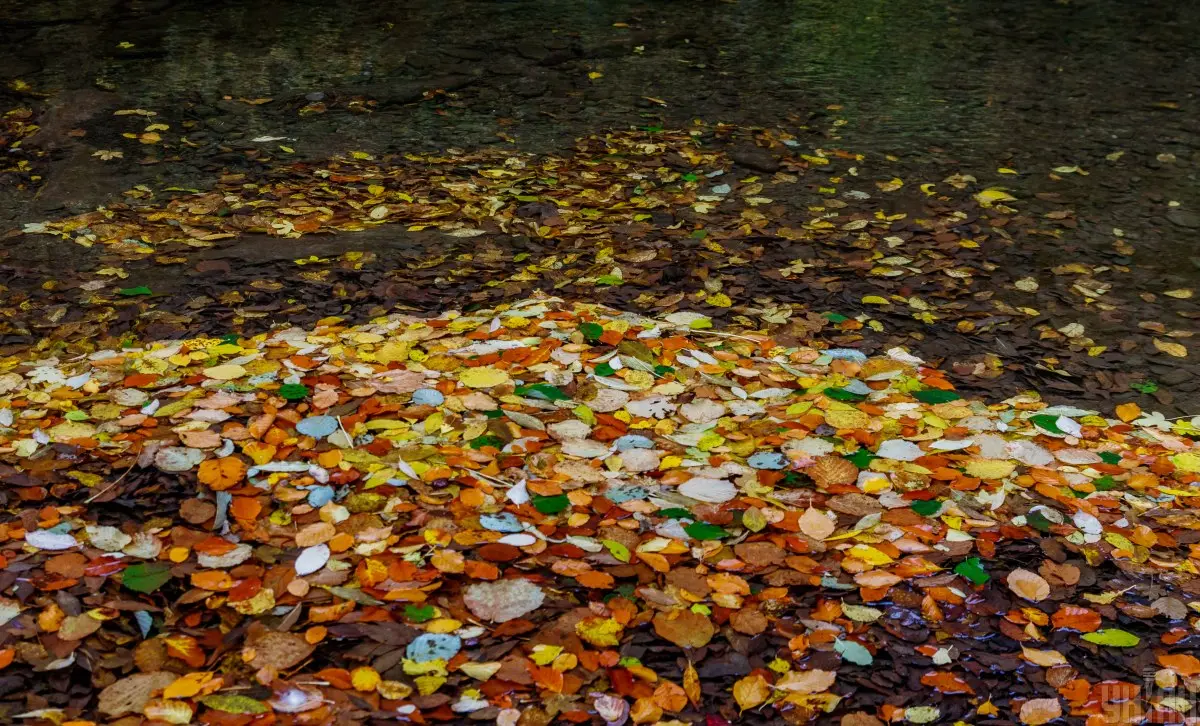
A layer of wet fallen leaves that remains on the lawn for several days after rain creates conditions conducive to fungal diseases, weeds, and pests. Many grass diseases begin when blades of grass remain wet for 12–24 hours, and a solid layer of leaves does exactly that—it traps moisture, according to Mon Jardin Ma Maison.
Under a thick layer of leaves, light and air cannot reach the grass, photosynthesis slows down, and the soil does not get enough oxygen. Instead of entering winter dormancy, the lawn weakens and dies in patches. In a humid microclimate, fungal diseases such as brown patch, dollar spot, and leaf spot actively develop, leaving brown or beige circles. Beetles, click beetles, and wireworms overwinter under the leaves, as do rodents, while dandelion and sundew seedlings are protected from frost.
The publication advises letting the soil dry out for a day after a heavy downpour, and then raking up the still-slightly-damp leaves: they’re easier to lift. A continuous layer of wet leaves should not be left on the lawn for more than a few days. You should mow only dry or slightly damp grass. If using a mulching mower, the grass height should be no more than 8–10 cm, and at least 80% of the lawn should be visible after mowing.
How Many Leaves Can You Leave for the Winter
The acceptable limit was determined in a three-year study by the University of Wisconsin–Madison. Researchers compared layers of whole and shredded leaves 5 and 10 cm thick that remained on the lawn throughout the winter. According to preliminary data, a 5-cm layer of shredded leaves is acceptable, while a 10-cm layer is highly likely to cause winter damage, including the development of snow mold, according to UW–Madison Extension.
Experts at the University of Michigan have long studied the process of mulching leaves directly on the lawn. Depending on the mower model, a layer up to 15 cm thick can be mulched in a single pass. Over time, such lawns required less fertilizer, and after three years of this practice, the amount of dandelions and chickweed decreased by nearly 100%, according to MSU Extension.
The Risks of Shredding Everything
Gardening expert Jessica Damiano warns that whole leaves left on the lawn are likely to cause disease, but mulching with a mower also has a downside: it can kill insects and their larvae that overwinter in the leaves. That’s why she rakes the leaves from the lawn into flower beds in a layer no more than 5 cm thick, the AP reports.
“We’ll need these caterpillars (future butterflies and moths) and other pollinators in the spring, and they’ll also be needed by newly hatched chicks, which feed exclusively on insects during their first weeks of life,” Damiano emphasizes.