
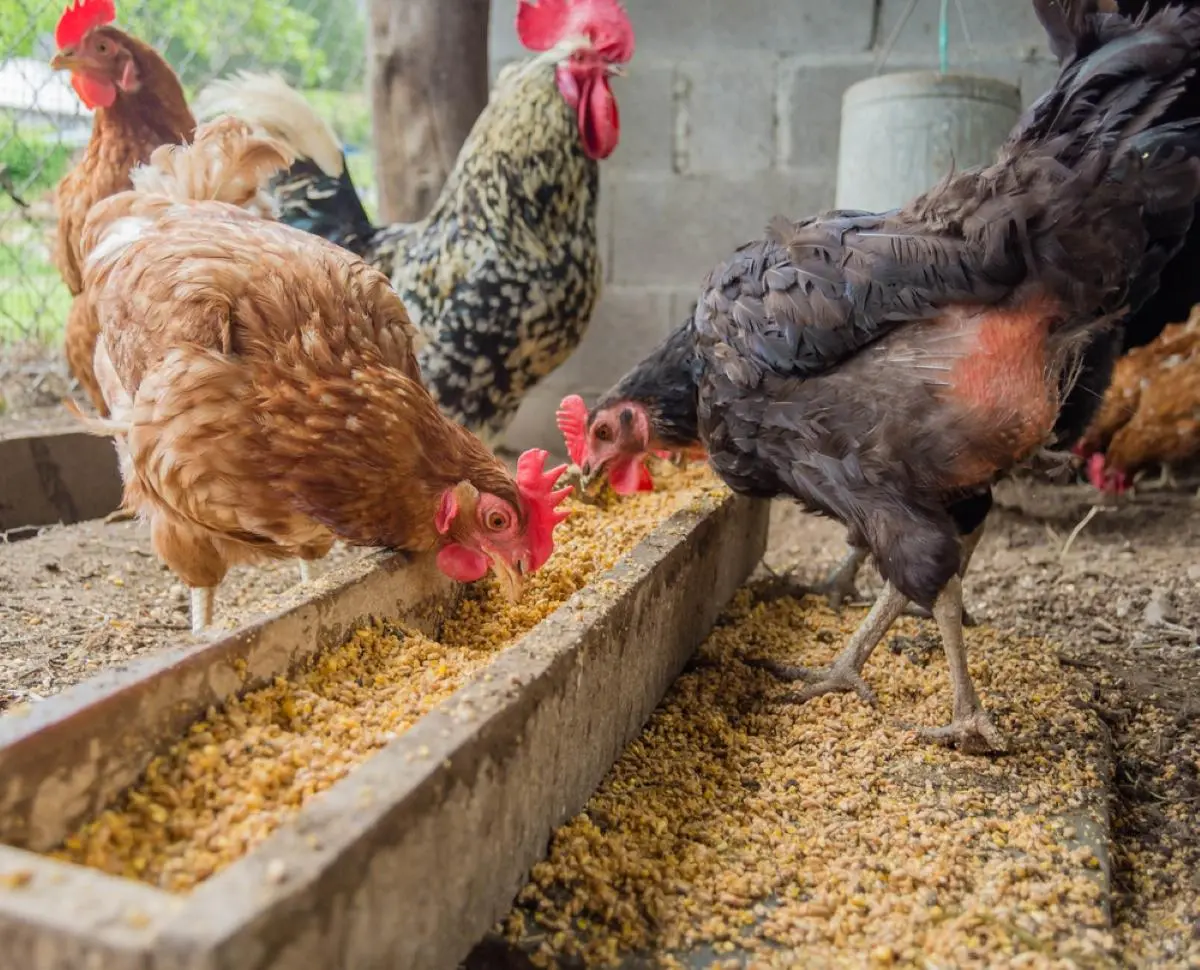
Slow growth in chicks and dull plumage in adult chickens are more often linked to a protein deficiency than to a lack of grain. Twenty protein-rich foods can help remedy the situation, but only as a supplement to a complete commercial feed and within the 90/10 rule, according to Mon Jardin Ma Maison.
Protein requirements depend on the bird’s age. Chicks up to eight weeks old need starter feed containing 18–20% protein. Young hens are given growth feed containing approximately 18% protein until they begin laying. Adult laying hens require about 16%, but during molting, it is advisable to provide 20%, since feathers consist of nearly 85% protein. Broilers are typically fed a diet containing 20–22%.
The publication warns that it is too early to switch pullets to layer feed: the excess calcium in it can damage the young birds’ kidneys.
Scientific data also confirms the upper limit for broilers. In a study of 936 Arbor Acres day-old chicks, diets containing 22–23% protein resulted in the greatest weight gain during the first 10 days; however, protein was absorbed less efficiently than at 20–21%. The authors recommend 22% protein at an energy value of 2,900–3,000 kcal/kg for this age group, according to a publication on PMC.
Nine-tenths—commercial feed
The 90/10 rule stipulates that about 90% of the diet consists of complete feed, while protein supplements account for no more than 10%. If chickens overeat treats, they will neglect the pellets containing balanced vitamins, minerals, and amino acids. Increasing the protein content also increases thirst, so the birds constantly need clean water and gravel to grind seeds and insects.
Purina nutritionist Patrick Biggs adheres to the same ratio and warns against overfeeding.
“Think of kitchen scraps and seed mixes as M&M’s for birds: they’re a fun treat that’s enjoyable to eat, but you wouldn’t want their entire diet to consist of them,” Biggs emphasizes in an interview with Tilly’s Nest.
According to the expert, a laying hen that doesn’t get enough commercial feed lacks calcium and begins to draw it from her own bones to form the eggshell. This can weaken her skeleton.
From Worms to Alfalfa
Dried crickets (up to 60%), mealworms (about 50%), and black soldier fly larvae (about 40%) contain the most protein. The list also includes pumpkin and hemp seeds (about 30%), lentils, duckweed, alfalfa, oatmeal, plain yogurt, and fish. Eggs should only be given boiled so that the chickens do not get into the habit of breaking the eggs they lay. Soybeans should only be given boiled or roasted, as they are indigestible and toxic when raw.
Supplements should be given in small amounts several times a week and scattered on the ground so that even the weaker birds get their share. Dry beans, salty and spicy leftovers, avocados, chocolate, coffee, and green potato skins are prohibited. Introduce new foods gradually, monitoring their droppings and the condition of their feathers. If growth problems persist, it is recommended to consult a veterinarian.