
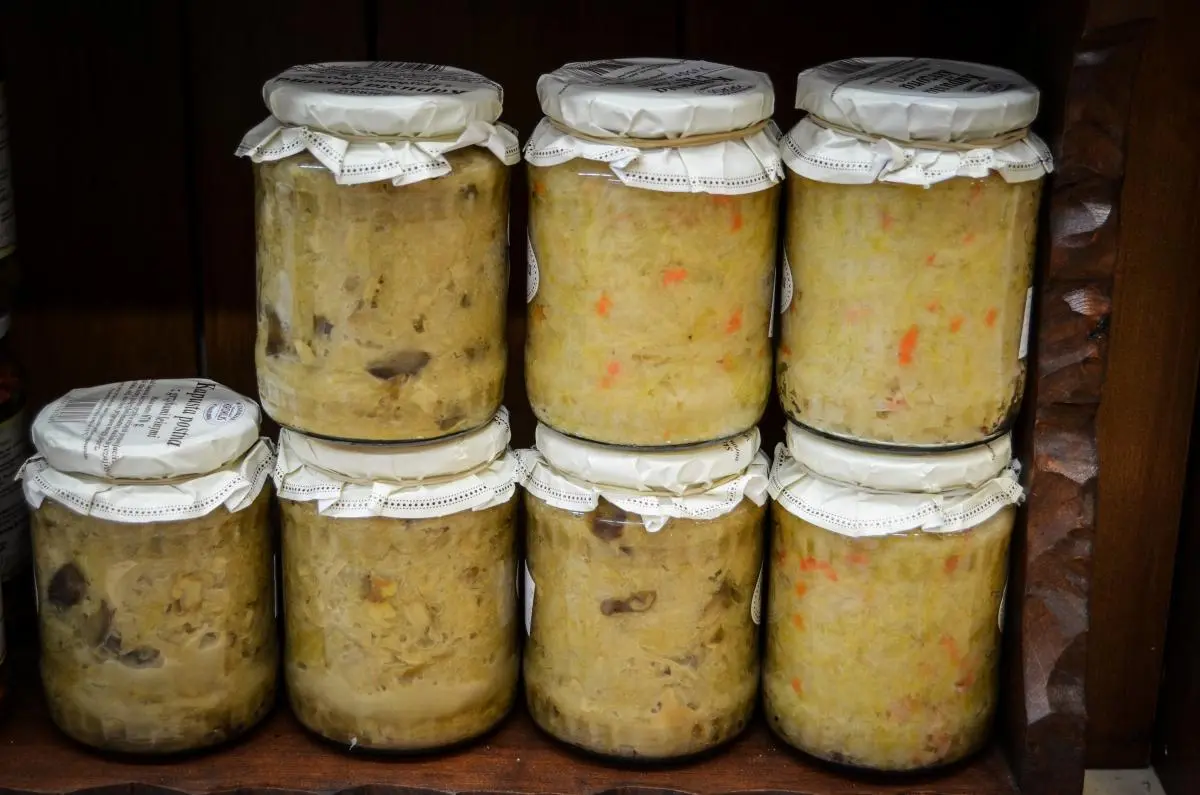
The blackening of sauerkraut is most often caused not by chance or an excess of chemicals in the garden, but by violations of simple rules: exposure to air, the wrong type of salt, metal in the barrel, excessive heat, hard water, or the wrong spices, according to Libertatea.
Cabbage ferments thanks to lactic acid bacteria that live on fresh leaves and convert natural sugars into lactic acid. This acid gives the cabbage its sour taste, keeps the leaves crisp, and protects against putrefactive microbes and mold. For this to happen, the bacteria need three conditions: a complete absence of air, the right amount of salt, and moderate coolness. If even one of these conditions is disrupted, fungi or mold will develop instead, or chemical reactions will occur that turn the cabbage gray, brown, or black.
According to the Food and Agriculture Organization of the United Nations (FAO), the fermentation of cabbage is initiated by the bacterium Leuconostoc mesenteroides. It releases carbon dioxide, which displaces oxygen and helps preserve the color of the vegetables. Most lactic acid bacteria work best at temperatures between 18–22°C.
From Iodized Salt to Rusty Wicks
Leaves that rise above the brine oxidize, just like a cut apple, and fungi and yeasts settle on the surface, consuming the protective acid. That is why the cabbage must be weighed down with a weight.
Fine table salt contains iodine, which oxidizes natural pigments, and anti-caking agents such as potassium ferrocyanide, which break down in an acidic environment and stain the leaves. Only coarse rock salt without iodine is suitable for pickling.
The brine dissolves iron and copper from rusty weights, nails, wire, or stones containing ore impurities. Iron, interacting with the tannins in the cabbage, forms iron tannate, and the leaves take on a bluish-black hue.
Heat is also dangerous: if the room temperature exceeds 20–22°C in the first few days, fermentation gets out of control, and the leaves become soft, turn yellow, and then brown. Well water with high iron and manganese content oxidizes the cabbage, and tap water containing chlorine should be allowed to stand for at least one night. The brine also darkens when exposed to walnut leaves or boards made of raw coniferous or oak wood. For the weight, it is recommended to use only dry, scalded beech or linden wood.
When the cabbage can still be saved
If only the edges exposed to the air have turned black, simply remove the outer leaves. The white-yellow, firm, and crisp cabbage underneath is fine. Small black spots along the thick veins are often signs of hail damage, so they can simply be cut out.
You should discard the barrel if the cabbage has become soft, slimy, or mushy; if the brine smells of hydrogen sulfide, ammonia, or rot; or if fluffy black or green mold has appeared on the surface. Its mycotoxins spread throughout the brine, so washing or boiling such cabbage is pointless.