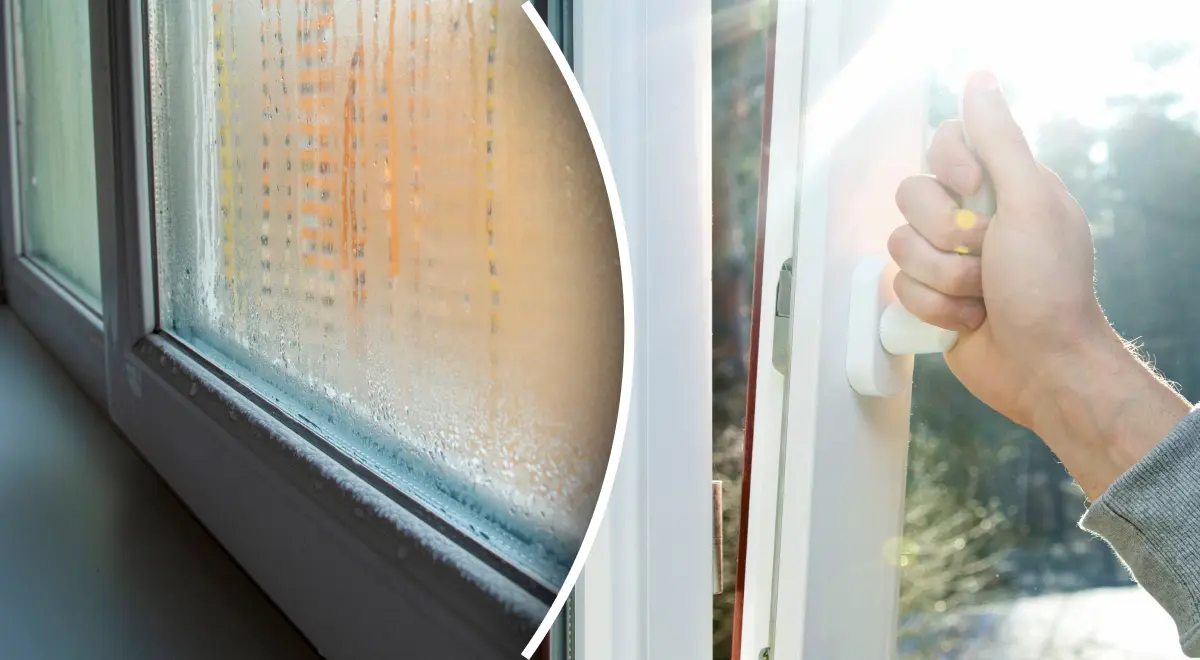
The German method known as “Stoßlüften,” or “shock ventilation,” allows you to quickly remove excess moisture from your home in the winter without significant heat loss. Instead of leaving windows ajar for a long time, you open them wide for a few minutes and then close them tightly, according to deccoria.pl.
This approach quickly removes excess water vapor, odors, and accumulated carbon dioxide from the room, replacing them with fresh air. In winter, 5–10 minutes is usually enough, and in severe frost or wind, the air is refreshed even faster. The process can be accelerated by opening windows and doors on opposite sides of the home.
A window left slightly ajar provides only minimal air exchange, but a lot of heat escapes through it. The heating system has to work harder, which affects your utility bills. In addition, cold bridges form on such windows, where moisture condenses and, over time, mold appears.
It’s recommended to ventilate when there’s more moisture in the home: in the morning after waking up, in the evening, and also after cooking or bathing. In the city, it’s important to consider the quality of the outside air: during the fall and winter, it’s best to open windows from about 11:00 a.m. to 3:00 p.m.
When This Method Doesn’t Work
Intensive ventilation requires consistency and adjustment based on the weather and humidity levels. If rooms are used heavily, two or three short sessions a day may not be enough. Excessive ventilation in winter can dry out the air, which may be a problem for people with hay fever or allergies.
This method won’t eliminate moisture caused by leaks or insulation defects. Therefore, it should be viewed as a way to regulate humidity and improve air quality, rather than as the sole defense against mold.
A Habit That Costs Energy
In Germany, ventilation—or “Lüften”—is an established daily ritual, and regular ventilation is sometimes even mandated in residential lease agreements. At the same time, frequently opening windows is not energy-efficient, which is why German authorities and ventilation experts prefer the short “shock” method, according to IFLScience.
A 2021 study showed that in Munich, expensive energy-saving solutions in modern buildings are negated by residents’ behavior.
“The buildings we studied were well-insulated, but the residents did not fully understand the specifics of the heating or the built-in air recovery systems. They stuck to their habits and continued to open windows for ventilation according to their own preferences,” Amelie Bauer, a co-author of the study and researcher at Ludwig Maximilian University of Munich, told Politico.