
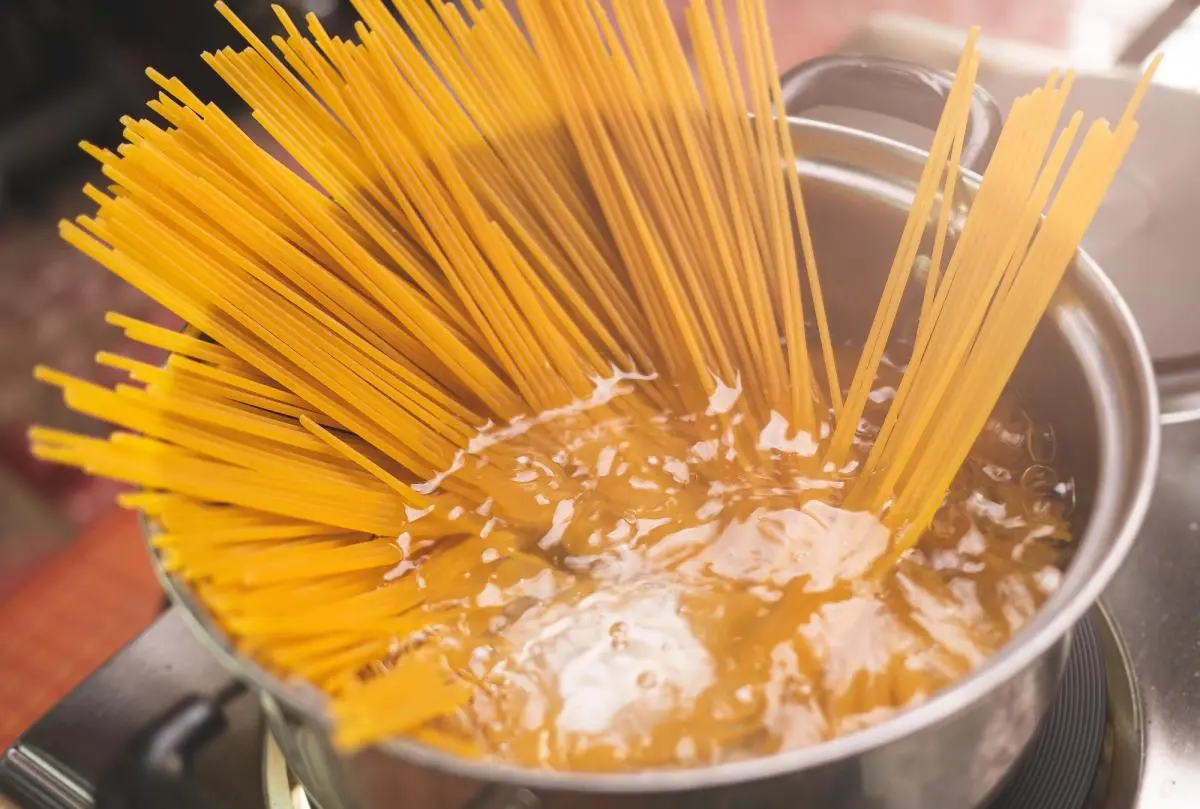
Italians don't break spaghetti before cooking because the length of the strands is part of the dish itself: they're wound around a fork, and whole strands make this process much easier. Matteo Bergamini, executive chef at Piccola Cucina, offered this explanation for the culinary taboo, according to Simply Recipes.
Bergamini considers this custom a combination of culture, tradition, and practicality. According to him, the shape of the pasta is important not only for its appearance but also for how it behaves on the plate.
“Their shape helps create the perfect bite together with the sauce. It’s not exactly a strict rule, but for Italians, it’s simply the right way to eat spaghetti!” the chef emphasizes.
A Whole Bundle into the Pot
To add the spaghetti without breaking it, Bergamini recommends using a large pot with plenty of boiling, salted water. The ends that are submerged soften quickly, and the rest of the bundle can be gently lowered into the water with a wooden spoon or tongs.
There’s another technique used by food photographer Linda Puliese. Hold the bundle vertically with both hands over the boiling water, twist it slightly, and let go. The strands fan out across the pot, cook evenly, and don’t stick together, so there’s no need to add oil to the water.
There’s also a physics behind breaking dry spaghetti: a strand usually breaks into more than two pieces, because after the first break, the vibrations cause further breaks. In 2018, mathematicians Vishal Patel and Ronald Geisser discovered that twisting helps break spaghetti cleanly in half, but the force required is beyond what human hands can generate, so the researchers built a special device. “When you twist it, you don’t have to bend it as much before it breaks,” Patel told NPR.
When Broken Pasta Is Appropriate
At the same time, Bergamini acknowledges that broken pasta has its place in Italian cuisine, though not in classic spaghetti dishes. In Campania, pasta spezzata is added to soups and broth-based dishes.
“Traditionally, families used leftovers of various pasta shapes, including broken spaghetti, rather than throwing them away,” the chef notes.
An example of such a dish is the Neapolitan “pasta e patate” with potatoes: short pieces of pasta work well in soup and allow you to use up leftovers.