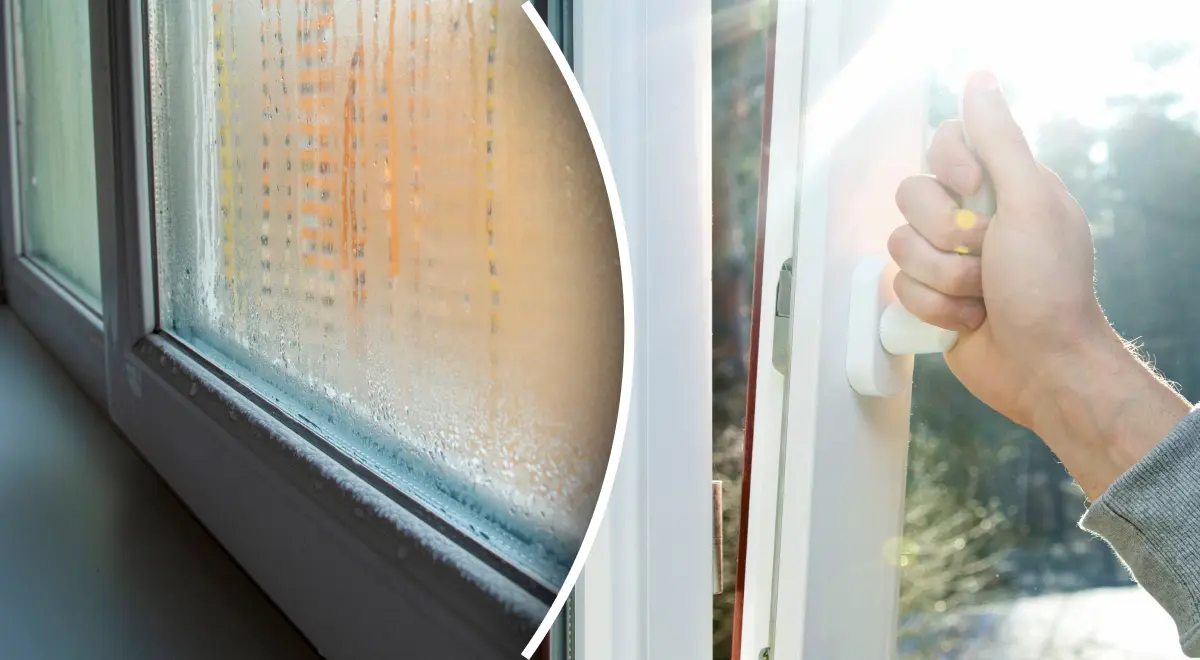
You can reduce condensation on bedroom windows in winter without a dehumidifier. To do this, simply open the windows fully for 5–10 minutes every morning to let the moist air out of the room, according to experts at the British window company Finesse Windows, as reported by the Mirror.
Following last week’s cold snap, droplets have been appearing on the glass every morning, especially in bedrooms, since people exhale moisture with every breath. You have to constantly wipe away the condensation, and over time, it can damage paint, soak carpets, and create conditions for mold.
Finesse Windows, which holds “Which?”-approved contractor status, explains why windows “sweat” from the inside of the home.
“This means there’s too much moisture in the room and not enough ventilation. The moisture needs to escape somewhere. The more fresh air that circulates, the less water ends up on your windows,” the company notes.
Experts also advise against closing interior doors so that dry air can circulate freely throughout the home, and to pay attention to small gaps at the top of window frames.
“Modern Class A windows are equipped with supply ventilation valves for a reason. They provide a small, controlled flow of fresh air, helping moisture escape without cooling the room. Keep them open year-round, especially in bedrooms at night,” experts emphasize.
Why brief ventilation doesn’t cool down the house
This method is similar to the German practice of “Stoßlüften”: intensive ventilation for a few minutes instead of keeping a window slightly open all the time. Elliot Anderson-Evans, a surveyor with the Royal Institution of Chartered Surveyors (RICS), advises doing this once or twice a day, preferably in the morning, after cooking, or after a shower. He is convinced that heat loss is minimal when doing so.
“It’s also inexpensive, because the walls, floor, and furniture retain heat, so the room warms up again quickly as soon as you close the windows. If you leave a window open all day, you lose significantly more heat,” Anderson-Evans notes in a comment to Ideal Home.
Darren Coates, a window expert at SolarFrame, warns that if condensation appears between the panes of a double-pane window, it usually means the seal has been compromised, and ventilation won’t help in this case.
According to the UK’s building regulations, updated in 2022, ventilation valves are mandatory for most new and replacement windows. They are needed above all in modern, well-insulated homes where natural air exchange is limited, according to the Federation of Building Contractors.
The Dangers of Humidity
Dampness and mold primarily affect the respiratory tract and lungs. According to British government estimates, in 2019 they were linked to approximately 5,000 cases of asthma and 8,500 lower respiratory tract infections in England. Children, the elderly, and people with chronic illnesses are at the highest risk of serious health consequences. In 2020, two-year-old Awab Ishaq died from a severe respiratory illness caused by prolonged exposure to mold in a poorly ventilated home, according to guidance on the GOV.UK website.