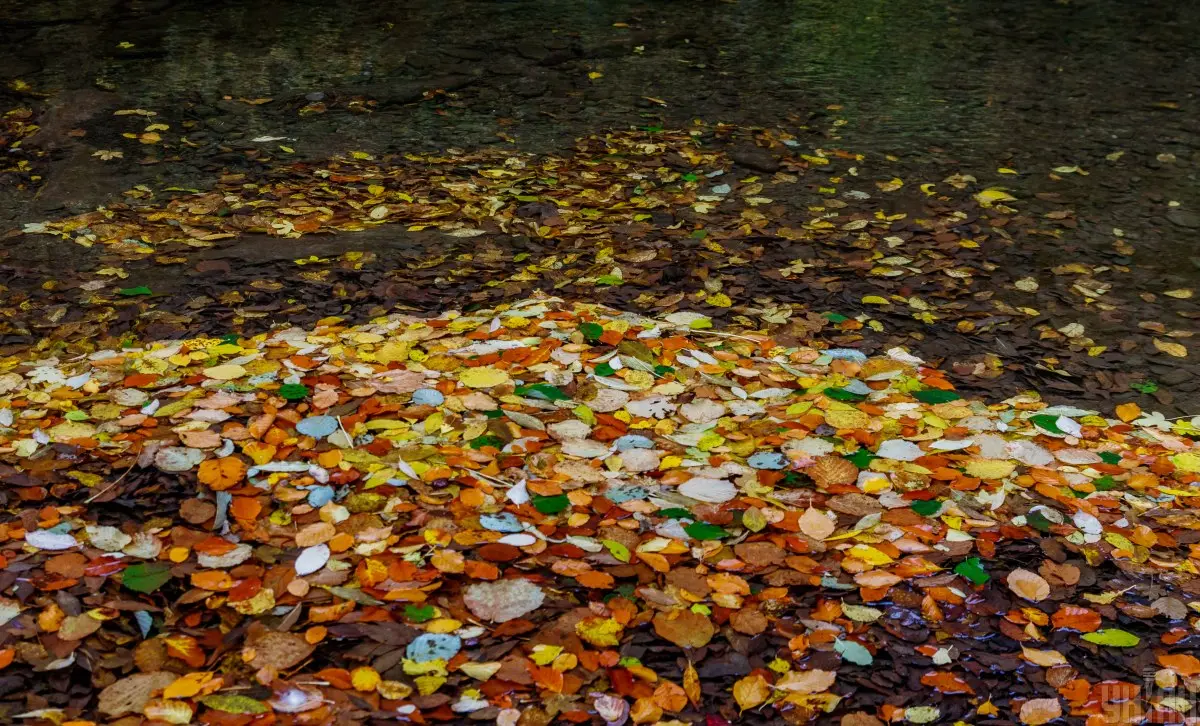
Fallen leaves, which are usually collected in bags and thrown away in the fall, can be turned into a valuable soil amendment. All you need is a sturdy plastic bag with a few holes: no compost bin is required, and the cost is practically zero, according to Agroinform.
Inside the bag, the leaves gradually decompose into a dark, crumbly, soil-like mass. This is called leaf compost or leaf humus. According to the British Royal Horticultural Society (RHS), the bulk of the work is done by fungi, which require moisture and air. That is why holes are made in the bag. This method is convenient for those who lack space for a conventional compost bin.
A bag, a pitchfork, and a little patience
It’s best to shred healthy leaves—for example, with a lawn mower—so they decompose faster, and then fill a large, sturdy bag with them. Dry leaves should be lightly watered: they should be moist but not waterlogged.
Next, use a garden fork to poke several small holes in the sides and bottom of the bag, tie it loosely, and place it in a cool, shaded spot. Experts at the University of Saskatchewan recommend adding a few handfuls of soil or ready-made compost among the leaves: this will introduce microorganisms into the bag that accelerate decomposition. There’s no need to turn the contents; just check from time to time to make sure the leaves haven’t dried out.
The main drawback of this method is the time it takes. Under favorable conditions, usable compost from shredded leaves forms in 6–12 months, while fully matured material can take up to two years to develop. Partially decomposed leaves that have already settled and begun to crumble can be used as mulch around trees, shrubs, and perennials. Mature compost, when mixed with soil, improves its structure and moisture-retention capacity. This is especially beneficial for sandy and heavy clay soils.
The best leaves to use are those from beech, birch, maple, and hornbeam trees, as well as healthy leaves from apple and cherry trees. Do not put diseased leaves in the bag: the pathogens that cause apple scab and cherry leaf spot overwinter on fallen leaves and may not die during slow, cold composting. The tough leaves of horse chestnut and sycamore decompose more slowly, so they should be shredded.
What Field Trials Showed
Scientists have also tested the effectiveness of leaf compost. In 2019 and 2020, researchers at Purdue University (U.S.) applied local leaf compost to degraded soil on a student farm and grew tomatoes there. In both seasons, the plots treated with compost showed a significant increase in the soil’s active organic matter content and the yield of marketable fruit, and in the second year, the plants were less susceptible to leaf diseases. This is described in an article published in the Wiley Online Library.
The authors note that leaf compost matures more slowly and at lower temperatures than conventional compost, and the process is driven primarily by fungi. At the same time, they caution that any compost should be tested for heavy metals and pathogens, and that excessive application can harm plants and the environment.