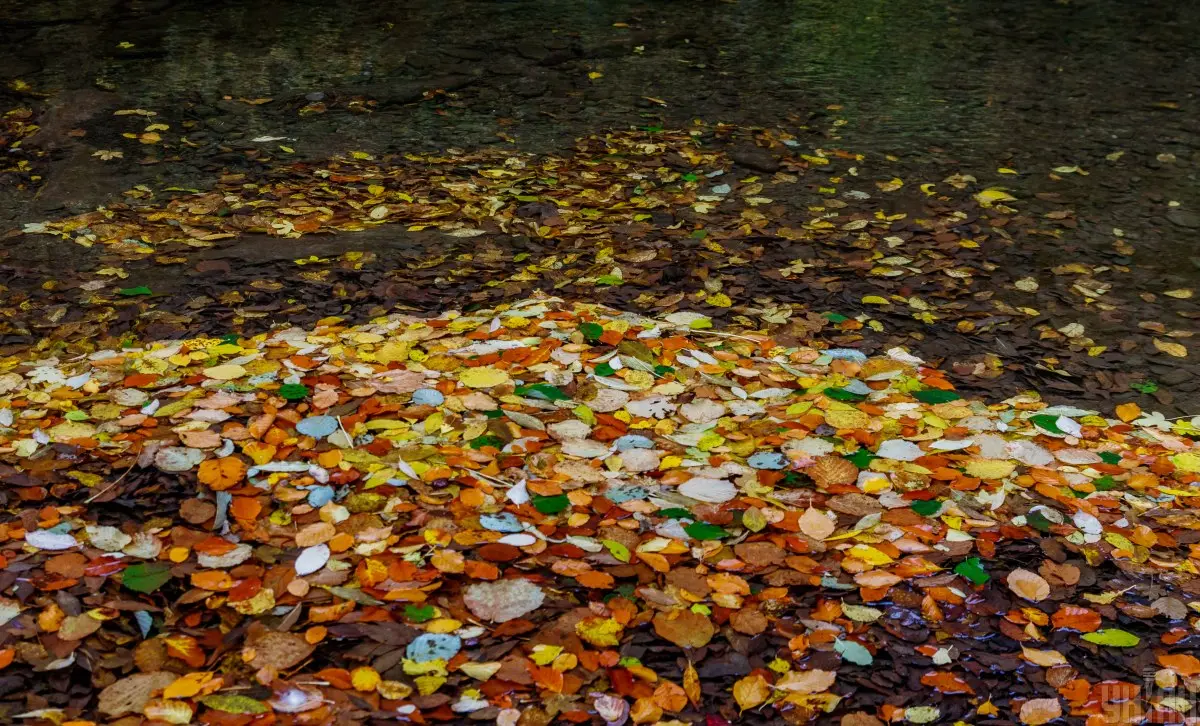
Gardening experts agree: as a rule, you shouldn’t rake up fallen leaves from flower beds and garden beds. They serve as natural mulch, improve soil health, protect roots in winter, and provide a haven for pollinators. They recommend removing it only when plants are diseased, the area is infested with pests, or it’s overgrown with low-growing plants or self-sown seedlings, according to The Spruce.
Unlike a lawn, which can suffocate under a thick layer of mulch, flower beds benefit from this “blanket”: it stabilizes soil temperature, retains moisture, and protects against erosion. Heather Zidak, a horticulture instructor at the University of Connecticut, also points out the long-term benefits.
“As leaves decompose, they add nutrients to the soil and promote a healthy soil microbiome,” Zidak emphasizes.
UF/IFAS Extension urban horticulture specialist Sarah Salgado McDonald notes that leaves protect roots during the cold months, especially for plants with shallow root systems. For those who don’t like the look of decaying leaves, Texas A&M University professor Joe Masabni advises simply covering them with fresh mulch, such as wood chips.
When You’ll Still Need a Rake
It’s best to remove leaves from diseased plants and replace them with other mulch: according to Zidak, this can reduce or even eliminate the need for fungicides in the following season. It’s also worth noting that not only beneficial insects but also mites, ants, and other pests overwinter in the leaves.
Low-growing, ground-hugging plants and self-sown annuals require special care: a dense layer of leaves can smother the seedlings.
“In the fall, you can leave a light, airy layer of leaves on flower beds, but don’t let it get too thick, especially around plant rosettes. Another good approach is to mix the leaves with other mulch, keeping the total layer thickness at about 2–3 inches,” advises Salgado McDonald.
Master gardener Jessica Damiano warns that the “Leave the Leaves” movement does not apply to lawns: under the snow, a thick layer of leaves traps moisture on the grass and promotes the growth of mold and fungal diseases. She recommends raking leaves from the lawn into flower beds, but not leaving large, dense leaves—such as oak leaves—there, as they decompose poorly and block light and water, according to CT Public.
What Research Shows
An experiment in private yards in Maryland (U.S.), where no pesticides were used, showed that raking leaves reduces the number of arthropods emerging from hibernation in the spring by an average of 17%. For moths and butterflies, the decline reached 45%; for beetles, 24%; for spiders, up to 67%; and the diversity of Lepidoptera decreased by approximately 40%, according to a study published on PubMed.
The study’s author, Maryland State Entomologist Max Ferlauto, also found that in yards where leaves had been raked up for years, soil carbon content had decreased and organic matter decomposition had slowed—and two years without raking did not reverse this trend. In an experimental forest, shredding leaves proved to be just as harmful to insects as complete removal, whereas piling leaves or leaving them in place had a positive effect, according to the University of Maryland.