
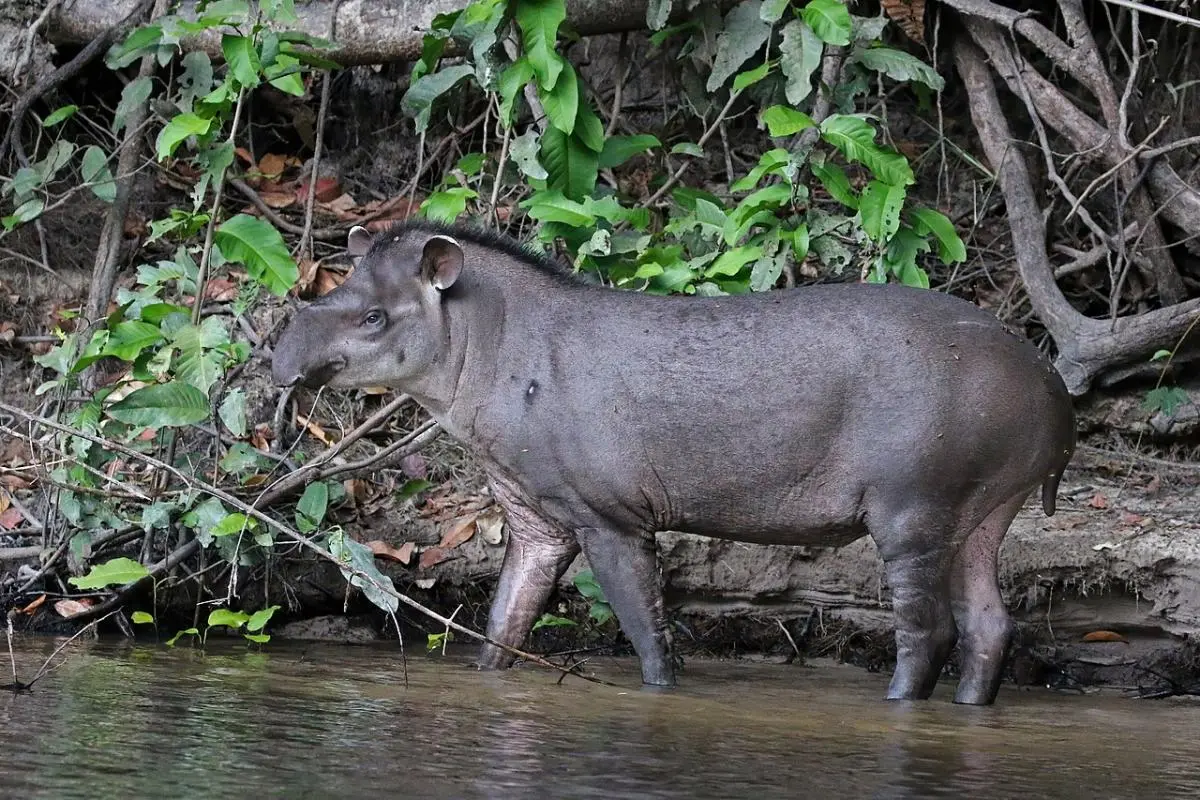
Wild tapirs are once again living on the site of a former farm in the Brazilian state of Rio de Janeiro, where more than a million trees have been planted over the past 16 years. These animals had disappeared from the state as far back as 1914. Currently, the nature reserve is monitoring 11 tapirs living in the wild and three cubs born in the wild, according to Observator.
According to the World Land Trust, approximately 840,000 trees were planted across 607 hectares during the first phase of the project. Subsequently, the number of saplings exceeded one million, and the restored area grew to 710 hectares. Experts also built earthen dams and redirected stream channels to transform former pastures into wetlands. Now, capybaras, caimans, herons, and other waterfowl live there.
The restored forest proved insufficient to bring back all the animals. Roads and farmland, which fragmented their habitat, prevented tapirs from reaching the region on their own. Therefore, in 2017, scientists launched a reintroduction program. Initially, three tapirs were released into the reserve and monitored using radio collars and camera traps. The tapirs settled in, began feeding on local plants, and spreading seeds. According to regional estimates, up to 25 tapirs may live in the reserve and surrounding areas.
From the Zoo to the Night Forest
All the animals in the program were born in captivity. From December 2017 to October 2021, 14 tapirs—seven males and seven females—were released into the 10,000-hectare Guapias Ecological Reserve from six Brazilian zoos and breeding centers. Before their release, the animals spent an average of about 88 days acclimating in a 0.88-hectare enclosure. There, they were supplemented with food while they learned to forage on their own. This is detailed in a study published in the journal Oryx on the Cambridge Core platform.
Wild lowland tapirs are active mainly at dusk and at night, whereas in captivity they become more active during the day. Researchers analyzed camera trap records and concluded that the released animals are regaining their natural activity patterns.
The Most Dangerous Part of the Journey
The lowland tapir is South America’s largest land mammal. Because of its important role in seed dispersal, it is called the “gardener of the forest.” In the Atlantic Forest, the species now occupies less than 2% of its historical range, and its populations are scattered across isolated fragments. Females typically become pregnant once every three years and, after a 14-month gestation period, give birth to a single calf; therefore, the loss of even a single animal can mean the local extinction of the species, according to Mongabay.
To find food, tapirs in small groups often have to leave their forest patches. Patricia Medici, who heads the International Union for Conservation of Nature (IUCN) tapir specialist group, is convinced that these crossing points must be protected through infrastructure measures.
“I say without any hesitation or doubt that the greatest threat to tapirs in our country today is cars on the highway. The road network will only continue to expand, and the problem will grow along with it. Our strategy is to develop mitigation plans, such as underpasses, fences, signs, and radar at critical locations where, as we know, many tapirs are killed,” Medici emphasizes.