
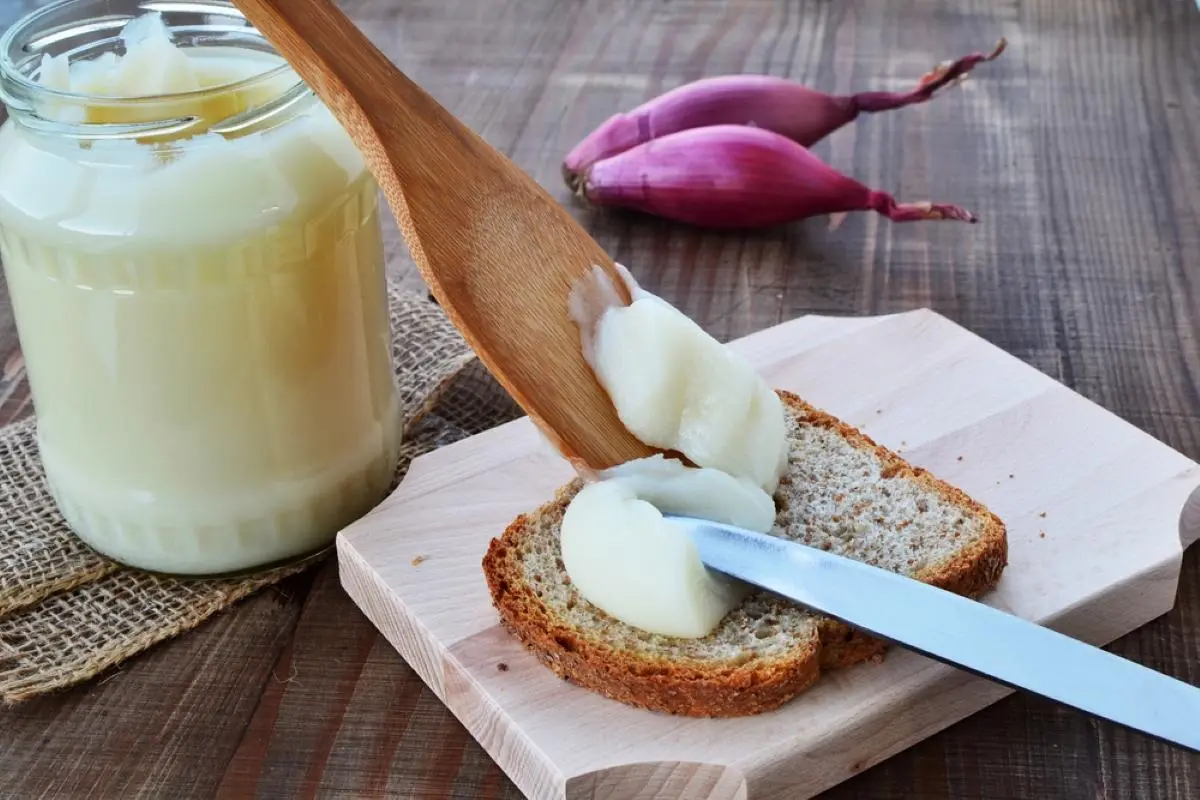
A cardiologist cited by the Czech publication *Spartanské Noviny* prefers rye bread with a thin layer of lard rather than a slice generously spread with butter. However, official recommendations from cardiologists do not confirm that lard is healthier than butter, according to NLC.
The main difference between these products lies in their fatty acid composition. According to the British Heart Foundation, lard contains about 40% saturated and 43% monounsaturated fatty acids, including oleic acid, which is also found in olive oil. In butter, the proportion of saturated fatty acids reaches nearly 52%, while monounsaturated fatty acids account for about 21%.
However, lard also remains a significant source of saturated fats. Excessive consumption of these fats can raise LDL cholesterol levels, which is a major risk factor for cardiovascular disease.
Why a doctor chooses lard
According to the cardiologist, it’s not just the type of fat that matters, but also the amount, the choice of bread, and the rest of the day’s diet. He believes that a product with a more pronounced flavor encourages people to use less of it, whereas the mild flavor of butter encourages people to spread a thicker layer.
The doctor also warns that the nutritional value of a sandwich is significantly influenced by what is placed on top. A large portion of salami, sausage, or other salty and fatty meat products noticeably alters the composition of such a meal.
It is worth noting that the Czech publication does not name the cardiologist or cite any clinical studies that would confirm the benefits of lard. Therefore, this advice should be viewed as a personal approach to nutrition rather than a general medical recommendation.
What the Official Guidelines Say
In its 2026 updated guidelines, the American Heart Association recommends replacing some saturated fats with unsaturated fats: olive and canola oil, nuts, and seeds. The association emphasizes that overall diet—not any single food—is important for heart health. Butter and lard do not necessarily need to be completely eliminated, but neither is an ideal fat that can be consumed without restriction. The British Heart Foundation also lists butter, lard, and clarified butter as significant sources of saturated fat.
Lard is no less caloric than butter. It consists almost entirely of fat, so 100 g contains about 900 kcal. Butter with a fat content of 80–82% provides approximately 720–750 kcal per 100 g.
The British Heart Foundation defines one serving of butter as one teaspoon. People with high cholesterol or cardiovascular disease are advised to pay particular attention to their intake of saturated fats and to consult a doctor or dietitian for personalized dietary recommendations.