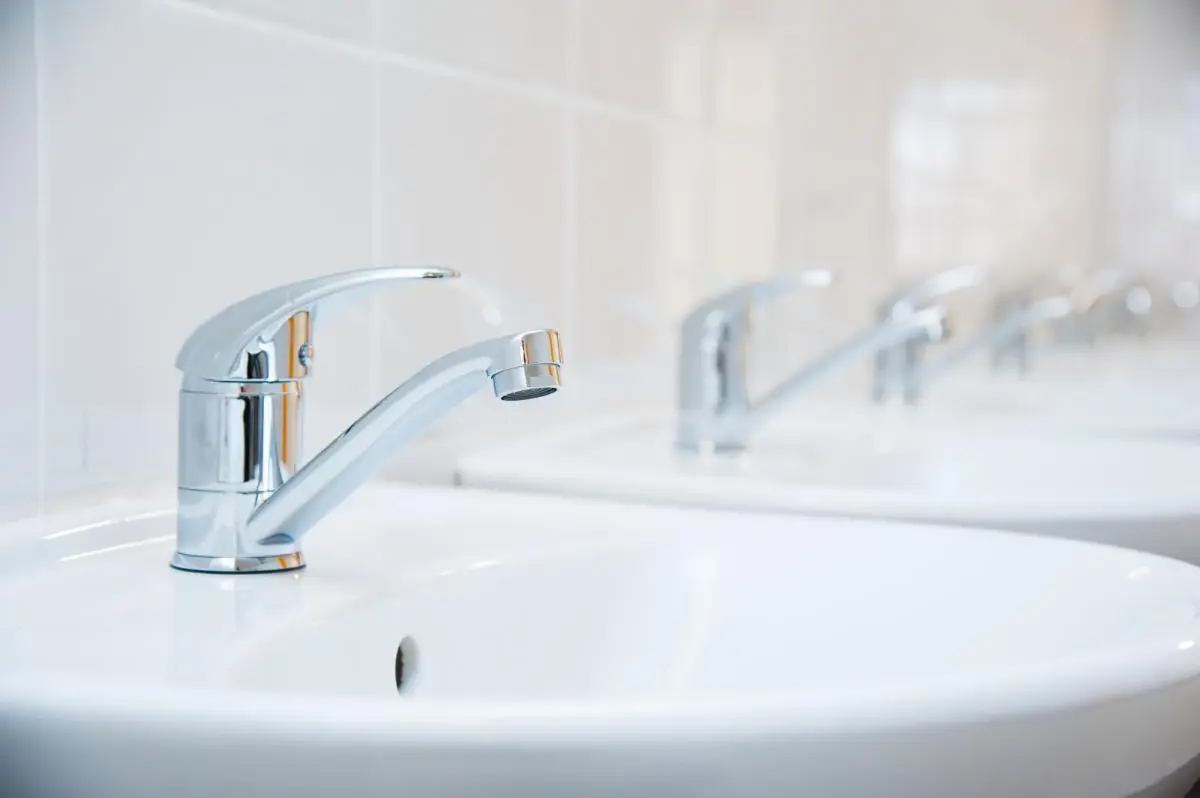
To clean limescale from a chrome faucet, it’s better to use citric acid rather than vinegar: it dissolves the limescale and is much gentler on the faucet’s shiny finish, according to Femina.
Chrome-plated faucets are the most common. They are mostly made of brass, which is coated with a layer of nickel to protect against corrosion, and then plated with chrome. It is this outer layer that gives the faucet its characteristic shine and protects it from rust, so it’s important not to damage it.
Limescale consists mainly of calcium and magnesium carbonates and is alkaline in nature, so acids are the most effective way to remove it. However, acids should be used with caution on chrome-plated surfaces, as an improperly chosen product can leave stains or scratches.
A teaspoon of acid and 15 minutes
To make the solution, you’ll need 125 ml of water and 2 g of citric acid—about a teaspoon. Shake the mixture well in the bottle until the crystals are completely dissolved, apply it to the faucet, wipe the surface, and let it sit for 5–15 minutes.
Do not leave the solution on for longer than that, as it may damage the finish. Afterward, rinse the faucet thoroughly with clean water and polish it to a shine with a dry cloth.
What Manufacturers Advise Avoiding
The plumbing fixture manufacturer Hansgrohe also recommends citric acid-based products as the best way to remove scale from faucets. At the same time, the company warns against using products containing chlorine bleach, formic acid, acetic acid, or hydrochloric acid, as well as abrasive cleaners and sponges, according to Hansgrohe.
Unlike the home remedy, the manufacturer advises against spraying the cleaner directly onto the faucet. Instead, apply it to a soft, lint-free cotton cloth and use that to wipe down the faucet. Do not mix different cleaning agents, and be sure to follow the instructions regarding dosage and contact time. The company emphasizes that damage caused by improper care is not covered by the warranty.
Limescale not only spoils the faucet’s appearance but can also impair its function, particularly the shape of the water stream. For a more thorough cleaning, the aerator—that is, the spout attachment—can be unscrewed and soaked in a citric acid-based solution for no more than 10 minutes, after which it should be thoroughly rinsed with clean water.