
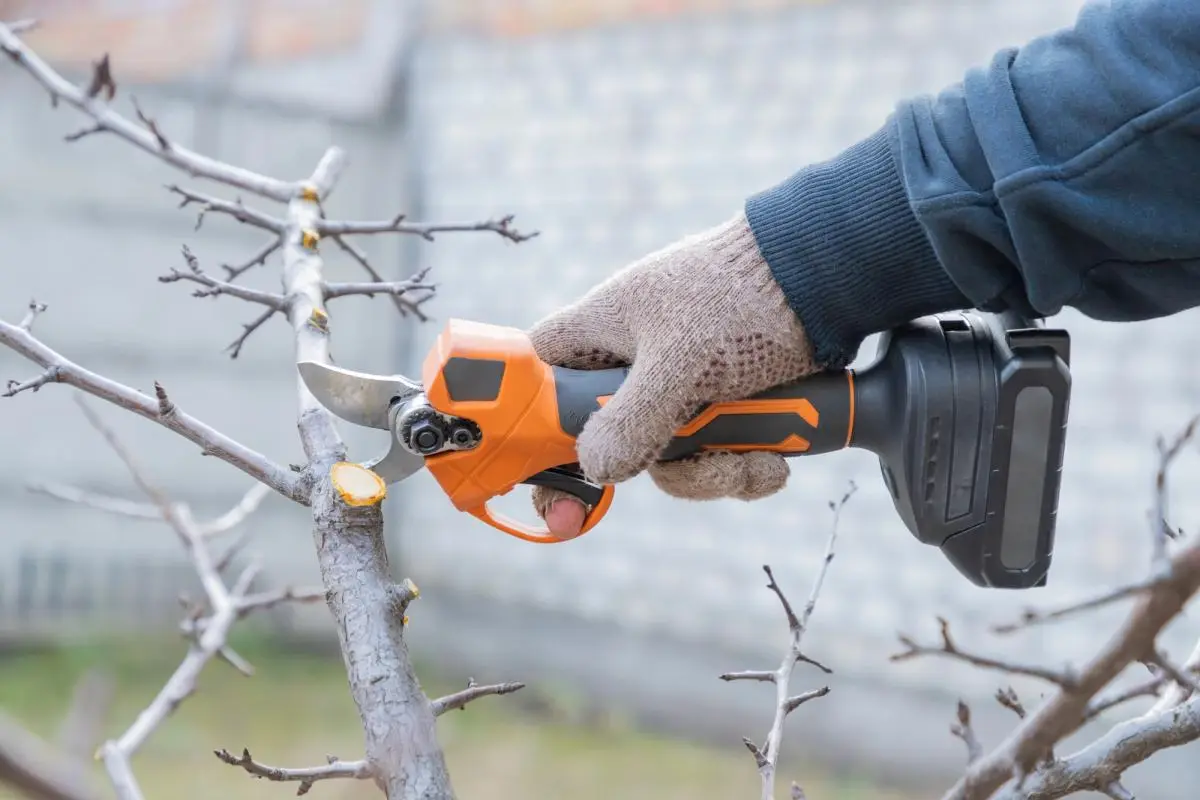
You shouldn’t prune all fruit trees immediately after the leaves fall: different varieties require different timing, and choosing the wrong time can harm the tree’s health and the next harvest. Apple and pear trees are pruned during dormancy, from late winter to early spring. In continental regions, this is most often in February and March, after the harshest frosts but before active bud break, according to Lika Club, citing the YouTube channel Proizvodnja voća i povrća.
When pruning apple and pear trees, dry, damaged, and crossing branches are removed, and the canopy is thinned out so that light and air can reach all parts of the tree. At the same time, the video’s creators warn against excessive pruning: cutting back too much triggers vigorous growth of young shoots that do not bear fruit.
Dampness Harms Plums and Cherries
Plum trees are more sensitive to pruning in cold and damp weather, as this increases the risk of infections through the cuts, particularly those affecting the wood and branches. It is recommended to perform major pruning in late winter or spring, once the threat of severe frosts has passed. The optimal time is March, and depending on the variety and region, April as well, before the start of active growth. In summer, plum trees can be pruned if the canopy is too dense and has many young, upright branches.
It is recommended to prune sweet cherries and sour cherries after harvest, in warm and dry weather, when wounds heal more quickly. You should not postpone this procedure until late fall or rainy winter days, as sweet cherries are susceptible to a number of diseases affecting the wood and branches.
British experts also caution against pruning plums, cherries, apricots, and peaches in the winter. “It’s important to remember that stone fruits should only be pruned in the spring or summer and only in dry weather to reduce the risk of infection by milky blight (a fungal disease) or bacterial canker,” — emphasizes Jim Arbery, an expert with the Royal Horticultural Society (RHS), as quoted by the RHS.
Why You Shouldn’t Rush
Experts at the University of Nebraska recommend doing most pruning during the dormant season, from February through early April. Apple, pear, cherry, and plum trees should be pruned first, while less frost-hardy varieties such as peach, apricot, and sweet cherry should be pruned in late March, before the buds swell. Regardless of the species, pruning trees before January is not recommended, as it increases the risk of winter damage. Additionally, Nebraska Extension notes that no more than two or three large branches should be removed per season, since excessive pruning stimulates the growth of so-called “wolf shoots.”