
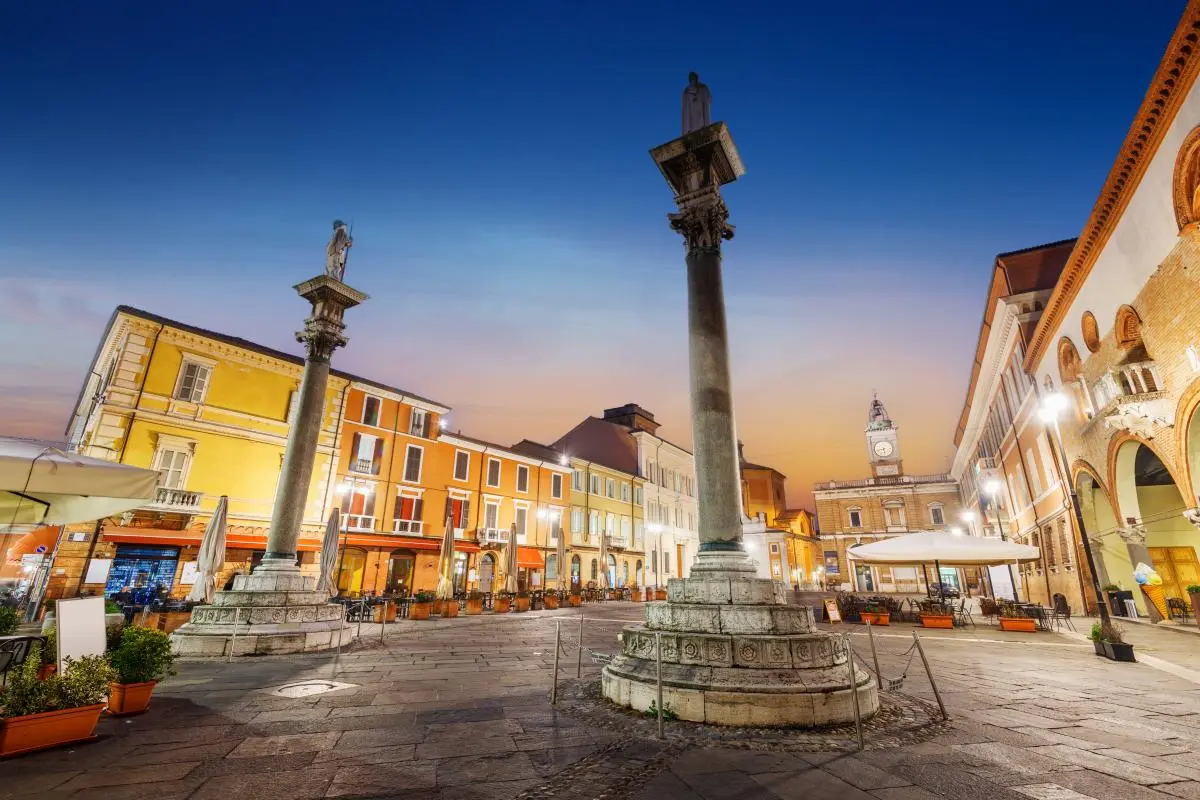
Ravenna, in northern Italy, is breaking tourism records. Last year, more than 300,000 visitors stayed overnight in the city’s historic district, and by August of 2026, the number of visitors had increased by another 9.1%, according to Travel Off Path.
Despite this growth, the city is still considered underrated. It is home to eight UNESCO World Heritage Sites, and Ravenna itself was once the capital of the Western Roman Empire, the Ostrogothic Kingdom, and Byzantine Italy. At the same time, it remains a compact city with a population of about 156,000, which is easy to explore on foot.
Tourists are also drawn by the reasonable prices. A serving of homemade cappelletti pasta with ragù at a small trattoria costs about $14, and a room at a three-star hotel is approximately $105 per night. In terms of the number of reported crimes per capita in 2025, Ravenna ranks 16th in Italy, while Milan, Florence, and Rome top the list.
Mosaics Under Threat
Eight early Christian monuments in Ravenna, including the Basilica of San Vitale and the Mausoleum of Galla Placidia, were built in the 5th and 6th centuries. Their mosaics are among the best-preserved examples of this art form in Europe. According to the UNESCO website, the main threats to these UNESCO sites include soil subsidence, pollution, and condensation—which is primarily caused by the flow of tourists.
A Focus on Regenerative Tourism
To avoid suffering the same fate as overcrowded Venice and Rome, Ravenna launched the three-year FOOTPRINTS project in December 2024. The project involves investing in accessible infrastructure, helping hotels and businesses obtain “green” certifications, and involving residents in the decision-making process. Travelers are encouraged to make eco-friendly choices through a gamified system that rewards them with discounts. By way of comparison: in 2024, Italy welcomed more than 68.4 million foreign tourists, an 11% increase from the previous year, according to USA Today.
Ravenna’s Director of Tourism, Maria Grazia Marini, describes how the city envisions its ideal guest.
“At FOOTPRINTS, we view visitors as temporary citizens. We want them to feel at home and feel a sense of belonging to the city. Being a citizen means enjoying the place, but also taking responsibility for it,” Marinelli emphasizes.