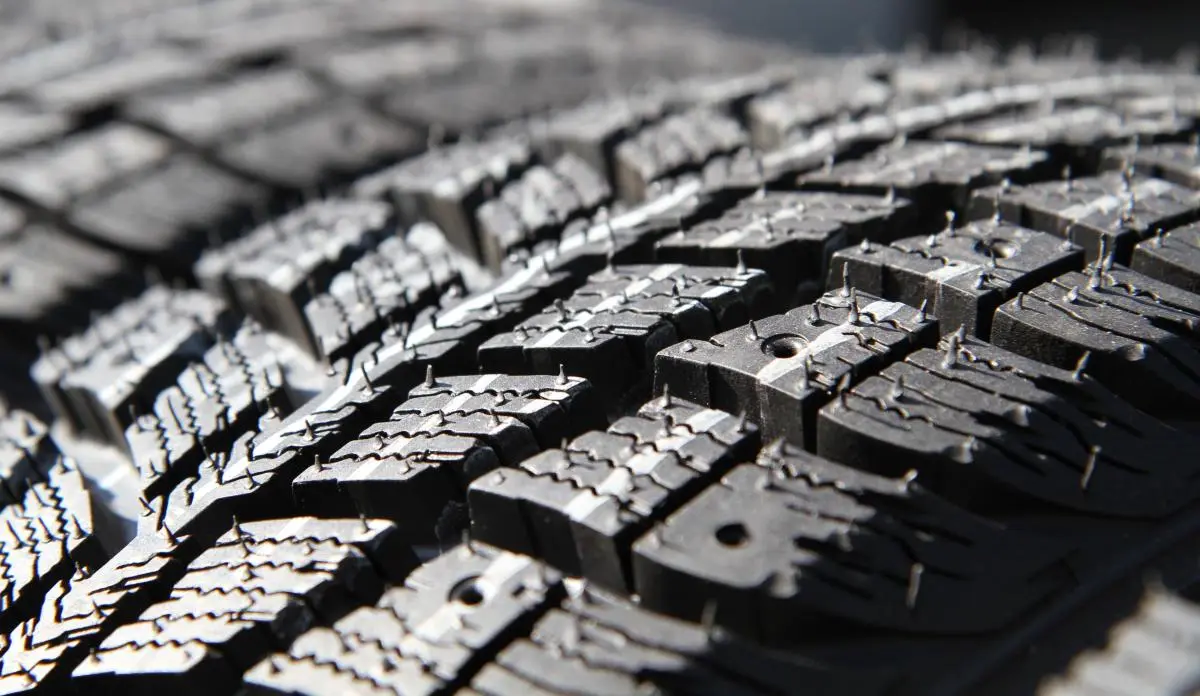
The patrol police are urging drivers to switch from summer tires to winter tires before the cold weather sets in. According to law enforcement officials, winter tires provide better traction and help prevent accidents and fines, TrueUA reports.
Kyiv patrol officers emphasize that winter tires provide significantly better traction on the road surface. They also reduce the risk of skidding and help avoid dangerous situations during icy conditions.
What the Traffic Rules Prohibit
Police advise regularly checking the condition of tires and wheels. Section 31.4.5 of the Traffic Rules prohibits operating a vehicle if the remaining tread depth is below the standard:
- 1.6 mm for passenger cars and trucks weighing up to 3.5 metric tons;
- 1.0 mm for trucks weighing more than 3.5 metric tons;
- 2.0 mm for buses;
- 0.8 mm for motorcycles and mopeds.
You cannot mount tires of different models or with different tread patterns on the same axle. It is also prohibited to drive on damaged tires or with cracked wheel rims.
Winter tires can be identified by the markings on the sidewall. The rules for the technical operation of wheels and pneumatic tires, approved by the Ministry of Infrastructure, classify winter tires as those marked “M+S,” “M.S,” “M&S,” “MS,” or “DP.” All-season tires are marked “All Seasons,” according to the Ministry of Infrastructure’s order.
Why Legal Standards Are Not Enough
Compliance with the legal standard does not guarantee safety. The German organization DEKRA tested vehicles equipped with tires having a tread depth of 2–3 mm. On wet pavement, the braking distance from 100 km/h was 16–18% longer than with new tires. The maximum speed when cornering on a wet road was 10–18% lower, according to DEKRA.
Peter Rüker, head of DEKRA’s accident research division, explained what these percentages mean on the road.
“At the point where a car with new tires comes to a complete stop, a car with 2–3 mm of tread is still moving at a speed of about 30 km/h. If you crash at that speed—for example, into the back of a truck—it can lead to serious injuries,” warns Rüker.
DEKRA tire expert Christian Koch believes that drivers should not let their tread wear down to the legal limit.
“Our tests have once again confirmed that the legally mandated minimum tread depth is an absolute lower limit. For their own safety, drivers should replace their tires before they wear down to that level,” Koch emphasizes.
During the tests, the tread was worn down mechanically, so the rubber remained new. According to Koch, rubber hardens over the years, so old, worn-out tires would perform even worse under real-world conditions.