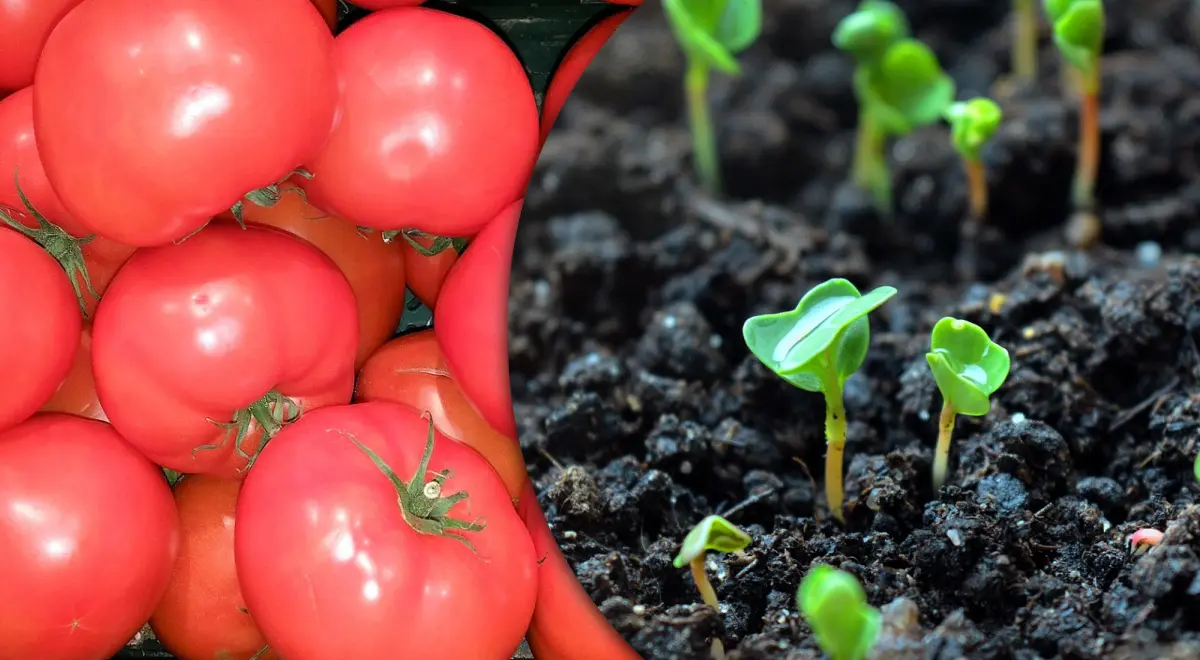
Seeds in an overripe tomato can sprout while still inside the fruit: if you cut it open, instead of the usual seeds, you’ll see white and green shoots, tiny roots, and sometimes even small leaves. This natural biological phenomenon is called vivipary, according to KertVár.
Normally, germination inside the fruit is prevented by seed dormancy, which is maintained, in part, by the plant hormone abscisic acid. When this mechanism weakens, there is enough moisture inside the tomato for the seed coat to crack, allowing a root and shoot to emerge. The likelihood of this phenomenon is increased by overripeness, prolonged storage, temperature fluctuations, and the plant’s physiological condition, although seeds do not germinate in every overripe fruit.
Germination does not make a tomato poisonous or spoiled. However, a fruit with mold, rot, an unpleasant odor, or slime should not be eaten. If the tomato is intact and looks fresh, the sprouts should be removed, and the tomato should not be consumed.
Why This Happens to Tomatoes
The Latin word “vivipary” means “live birth.” For mangrove trees, this is an important reproductive strategy, but for most plants, this process is considered a physiological disorder. Highly domesticated crops are prone to this: tomatoes, peppers, strawberries, wheat, and corn. Seed dormancy is maintained as long as the level of abscisic acid remains higher than that of gibberellin, and is disrupted when the balance shifts. To reduce the risk, it is recommended to harvest tomatoes before they are fully ripe, consume them quickly, and store them at room temperature rather than in the refrigerator, as low temperatures can promote germination, according to the University of Connecticut’s Center for Horticultural Education.
Nick Holtz, a specialist at the university’s plant diagnostic laboratory, urges people not to worry if such a tomato accidentally ends up in their mouth.
“The next time you come across a tomato filled with sprouted seeds, don’t worry! The taste and texture may not be what you expected, but they are completely harmless,” Holtz emphasizes.
From the Kitchen to the Garden
Carol Quish, a horticulturist at the University of Connecticut, notes that vivipary most often occurs in fruits that have been sitting on the kitchen counter for a long time. The warm, moist flesh becomes an ideal environment for germination, and over time, the sprouts can break through the skin of the tomato. Such a fruit can be planted in the ground, and a new plant may grow from it that will bear its own fruit, according to The Kitchn.
Sprouted seeds should be carefully transferred to loose, moist seedling soil without damaging the roots, and kept in a bright, warm place. However, not all sprouts will take root, and plants grown from the seeds of store-bought hybrid tomatoes may produce fruit that differs from the original.