
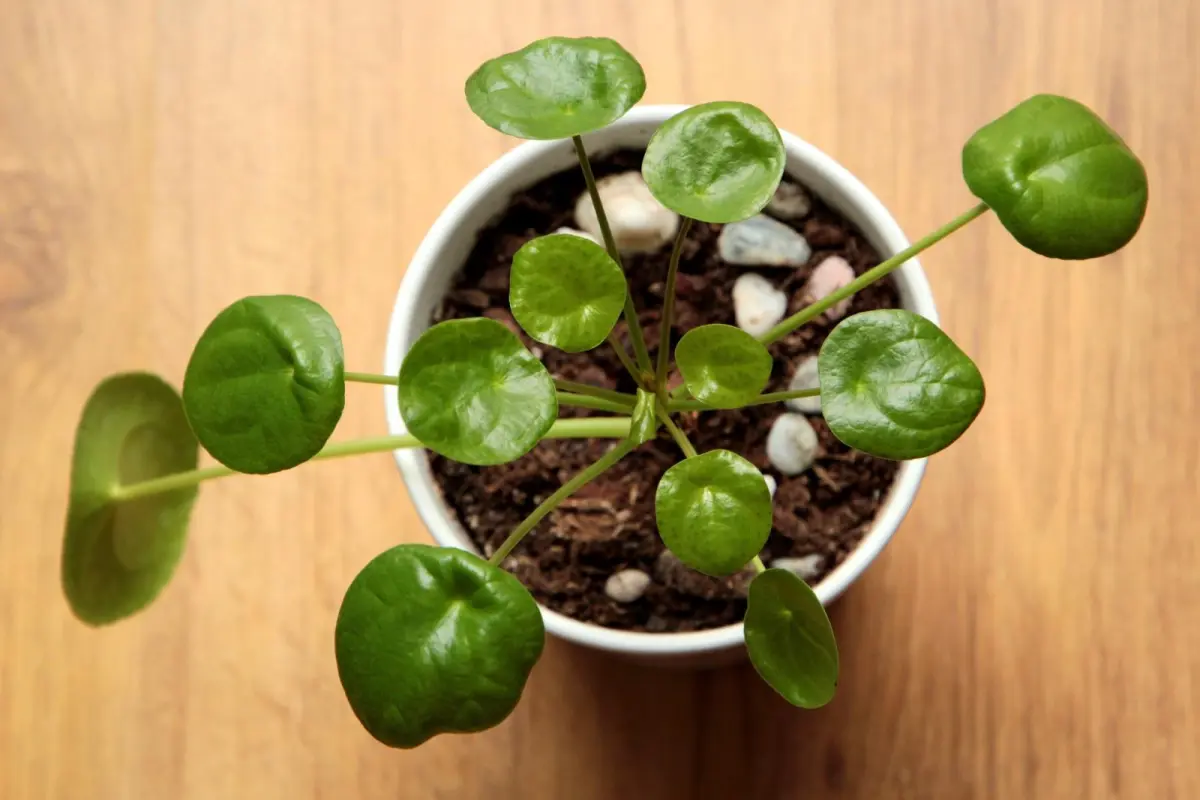
Pilea peperomioides, often called the money tree, requires less water in the winter and needs no fertilizer at all. Overwatering is the main threat to it during this period. The plant also does not tolerate drafts or sudden temperature changes well, and temperatures below 10 °C can harm it, according to 24.hu, citing agroforum.hu.
Pilea is native to China and belongs to the nettle family. It is prized for its nearly perfectly round leaves and compact size, making it suitable even for small apartments and for beginners. With proper care, the plant can live for years and produces shoots at its base, from which new plants can be grown.
Water based on soil conditions, not a schedule
The Pilea’s roots are sensitive to soil that’s constantly damp and lacks air, so you shouldn’t water it on the same day every week just out of habit. Before watering, check the soil with your finger: if the top 2–3 cm are already dry, water the plant thoroughly, let the excess water drain, and be sure to pour it out of the saucer. In winter, the Pilea grows more slowly, so it needs less water.
The potting mix should be loose and well-draining, and the pot must have a drainage hole. It is recommended to fertilize the plant with liquid houseplant fertilizer only from April through September, once every one to two months. An excess of nutrients does not speed up growth and can damage the roots.
Pilea prefers bright but indirect light. The best spot for it is near an east-facing window; it also thrives near a north-facing window if the room is well-lit. Move the pot away from a south-facing window or shade it with a curtain. When there isn’t enough light, the stems stretch out, the leaves become sparse, and the plant leans toward the window. To ensure even growth, rotate the pot from time to time.
What the Leaves Indicate
Yellowing leaves most often indicate overwatering, especially if the soil is constantly wet and the leaves are falling off. However, a lack of nutrients can also be the cause. Wilted leaves can be a sign of either thirst or roots damaged by excess water, so check the soil before watering. Curled or deformed leaves indicate problems with light or watering, or the presence of pests: spider mites, scale insects, and mealybugs may settle on the underside of the leaves.
The money tree is also known as the jade plant (Crassula), and it requires completely different conditions. Unlike the Pilea, which suffers from direct sunlight, this South African succulent requires as much light as possible. American houseplant expert Lisa Eldred Steinkopf warns that it loses its shape in the shade.
“Give the jade plant as much sun as possible for the best results. If there isn’t enough light, it will stretch toward the sun. As a result, the plant will also become spindly and won’t stand as straight and sturdy as it should,” Eldred Steinkopf emphasized in a comment to Veranda.