
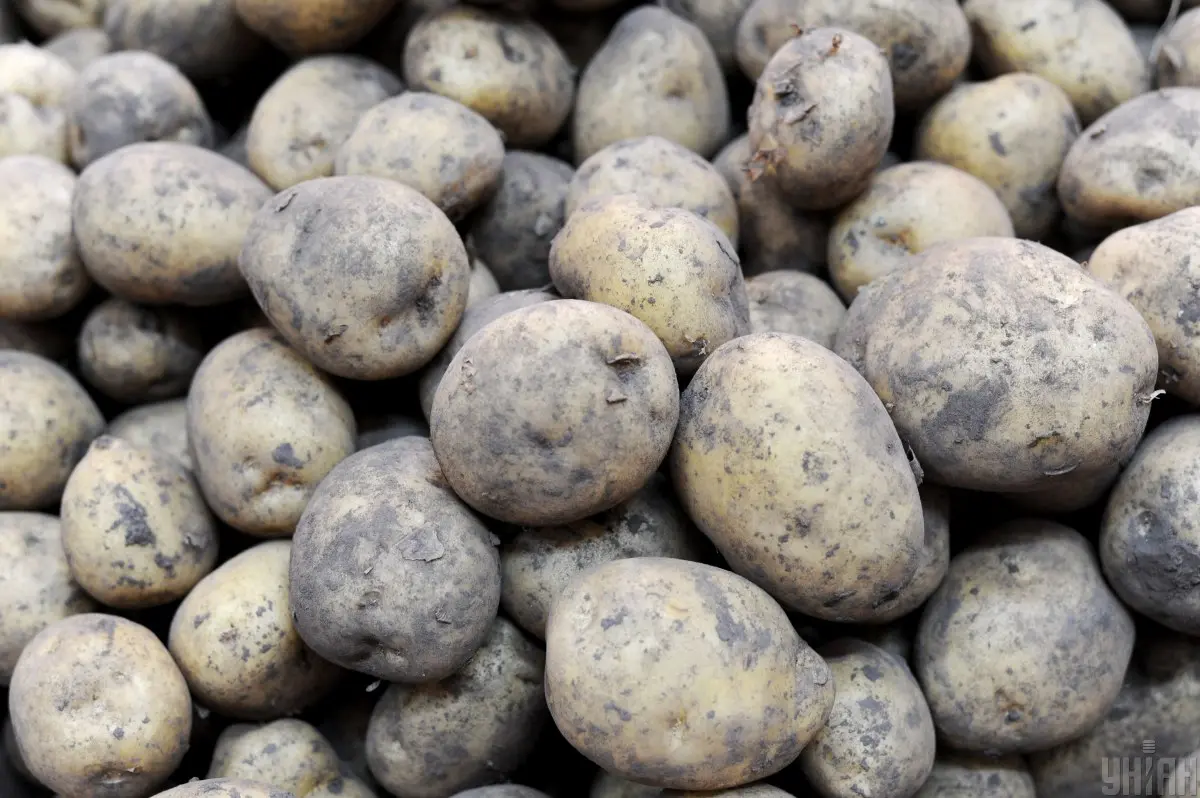
Potatoes stored in a cellar or pantry will sprout, wither, or develop mold if the temperature and humidity levels are not maintained properly. To keep the tubers firm and prevent sprouting, they should be stored at a temperature of +4 to +8 °C and a humidity level of 85–95%, according to Interia.
A room that is too cold affects the taste: enzymes break down starch into simple sugars, making the potatoes noticeably sweeter and causing them to darken when fried. A temperature above +8 °C, on the other hand, stimulates sprouting.
Humidity below 80% leads to excessive water evaporation: the tubers wilt, shrivel, and become spongy. If the humidity exceeds 95%, the risk of mold, fungi, and bacterial diseases increases.
Containers, Light, and Green Spots
It is equally important for the vegetables to have access to fresh air. Experts from the Polish agricultural portal farmer.pl advise paying close attention to the choice of location and packaging.
“Wooden crates with ventilation holes, breathable jute bags, or cardboard boxes that allow for free air circulation are best suited. However, potatoes should not be stored in tightly sealed plastic bags, where moisture easily accumulates and the quality of the tubers deteriorates,” the experts emphasize.
Excessive daylight or artificial lighting is also harmful: under its influence, chlorophyll and toxic solanine form in the tubers.
Potatoes with a few small sprouts are safe to eat if they are firm: simply remove the sprouts and cut off a thick slice of the skin. It is safer to discard heavily sprouted tubers, as well as those with a green color under the skin, since they contain solanine.
Why Do Sprouts Grow Nonstop?
Sprouting is a natural characteristic of potatoes, and tubers “wake up” most actively in mid-March and early April, notes Paul Betke, a scientist with the U.S. Department of Agriculture and an associate professor at the University of Wisconsin. According to him, cold temperatures slow down this process, whereas in warmth and darkness, sprouts can grow to enormous sizes, writes TODAY.
“Once the sprouts started growing, they behaved as if they were underground and searching for sunlight,” Betke says, describing an instance where potatoes left in a dark apartment produced long shoots within three months.
Unable to find light, the sprouts continue to grow as long as there is enough water in the tuber, while the potato itself shrinks. Betke advises buying only as many potatoes as you can use within a few weeks if storing them at room temperature, and keeping them in the cold for longer storage.