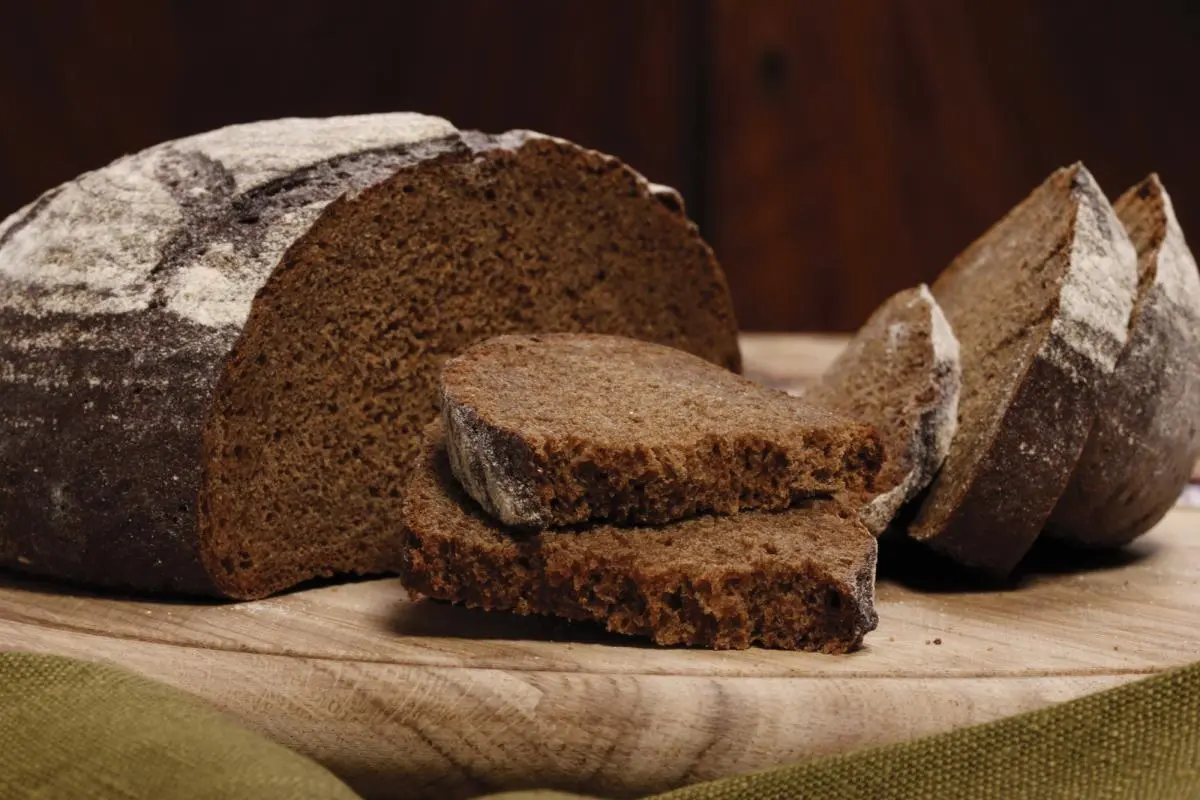
To prevent bread in the bread box from getting moldy in just two days, you should wash it once a week with a solution of vinegar and water. This removes crumbs and mold spores that remain inside even after the spoiled loaf has long been thrown out, according to Deccoria.
The high temperature in the oven kills any spores that were in the flour, so there are none on freshly baked bread. New spores land on the crust from the air, a knife, or the walls of the bread box. They’re invisible, so the bread box may look clean, even though every subsequent loaf comes into contact with them right away. Mold thrives in a moist environment, and most moisture gets inside along with bread that hasn’t cooled yet or bread in a plastic bag.
To make the solution, you’ll need 2 tablespoons of white vinegar per glass of water. Vinegar is a food product, so it’s safe to wipe down the inside of the bread box with it. First, shake out the crumbs, then wipe down the bottom, sides, and lid with a well-wrung-out cloth; clean the corners separately, for example, with a brush; wipe everything dry; and leave the bread box open until it is completely dry.
It’s recommended to shake out the crumbs every few days. If the bread does get moldy, wash the bread box immediately, and before throwing away the spoiled loaf, wrap it tightly in a bag, since mold grows in trash as well and can spread throughout the kitchen.
What Kind of Bread Box to Use and Does the Refrigerator Help?
Bread stays fresh the longest in containers where excess moisture can escape: in a wooden, ceramic, or clay bread box with an unglazed lid, or in a metal one with ventilation holes. Mold appears more quickly in an airtight plastic container. The refrigerator is not suitable for storing bread: in the cold, it goes stale up to six times faster than at room temperature. The exception is on hot and humid days, when white wheat or toast bread can be briefly cooled.
American experts share this view. Charlene Van Buiten, an associate professor of food science at Colorado State University, confirms that the refrigerator can delay the appearance of mold but at the same time accelerates staling, since starch crystallizes and pushes water out of the crumb, TODAY reports.
“Lower temperatures promote faster starch crystallization, while lower relative humidity, as Paul Hollywood notes, helps draw moisture out of the bread,” Van Buiten emphasizes.
Gadi Peleg, founder of the New York bakery Breads Bakery, also doesn’t trust the cold and suggests a simpler storage method.
“I think the best way is to keep it in the bag it came in—the paper one—in a bread box at room temperature,” Peleg advises.