
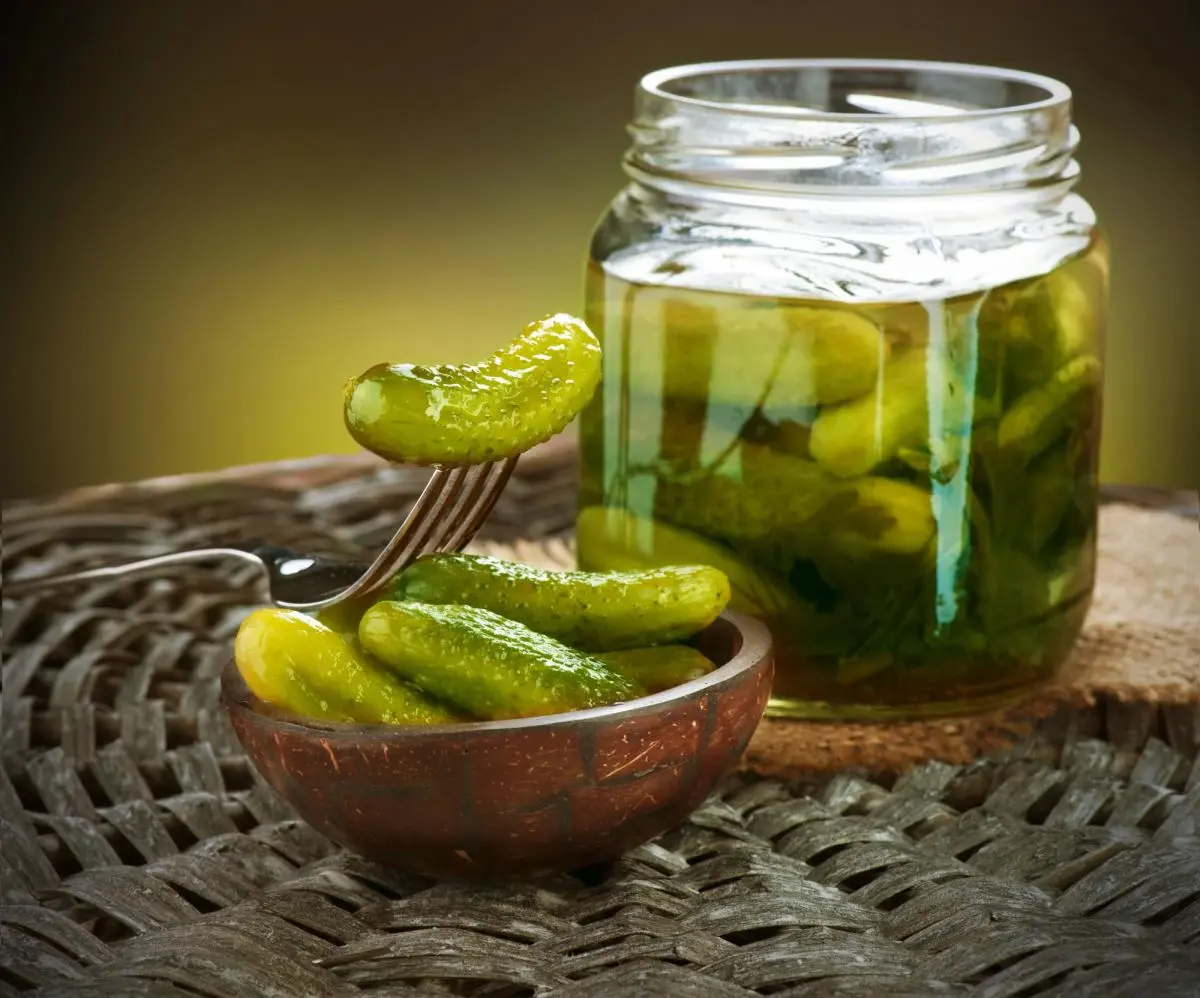
The bitter aftertaste of pickled cucumbers and other vegetables is often caused by the raw ingredients themselves: cucurbitacins—natural compounds—can accumulate in the fruits, and their levels increase if the plants were grown under stressful conditions. According to EVZ, the pickles can also be ruined by using the wrong amount of salt, storing them in a place that’s too warm, or adding too many spices.
For pickling, it is recommended to use fresh, healthy vegetables without bruises or damage, as well as coarse, non-iodized salt. The recipe’s proportions should be followed: a brine that is too weak promotes the growth of unwanted microorganisms, while too much salt spoils the taste. Jars should be kept in a cool place, protected from direct sunlight, because fermentation occurs too quickly in warm conditions. The vegetables must be constantly covered with brine, and the water used for the brine must be potable, without any foreign odors or aftertastes.
The publication specifically emphasizes that bitterness should not be confused with signs of spoilage. Preserves with mold, an unpleasant odor, or a slimy texture should not even be tasted.
Where Does the Bitterness Come From?
Cucurbitacins are produced by cucumbers and other plants in the gourd family. Their levels increase when the plant suffers from a lack of water or extreme heat. These compounds are most concentrated in the skin and at the tips of the fruit, so Epicurious recommends cutting off about 1 cm from the ends before peeling the cucumber to prevent spreading the bitterness throughout the fruit.
Jonathan Deutsch, a professor of culinary arts and food science at Drexel University, considers this trait to be an evolutionary adaptation of the plant.
“Bitterness is a good defense against animals that might eat them, including humans,” says Deutsch.
Salt, Water, and Temperature
Food safety experts explain that the salt used for pickling must be iodine-free, as iodine can interfere with fermentation. If there is too much salt in the brine, fermentation will not start at all. The optimal temperature is 20–22 °C: above 25 °C, the product will overferment and spoil, and below 15 °C, the process slows down, according to the University of Minnesota Extension.
They also recommend using soft or distilled water, as the minerals in hard water can alter the color and texture of the vegetables. Metal containers should be avoided: metal reacts with the lactic acid produced during fermentation.