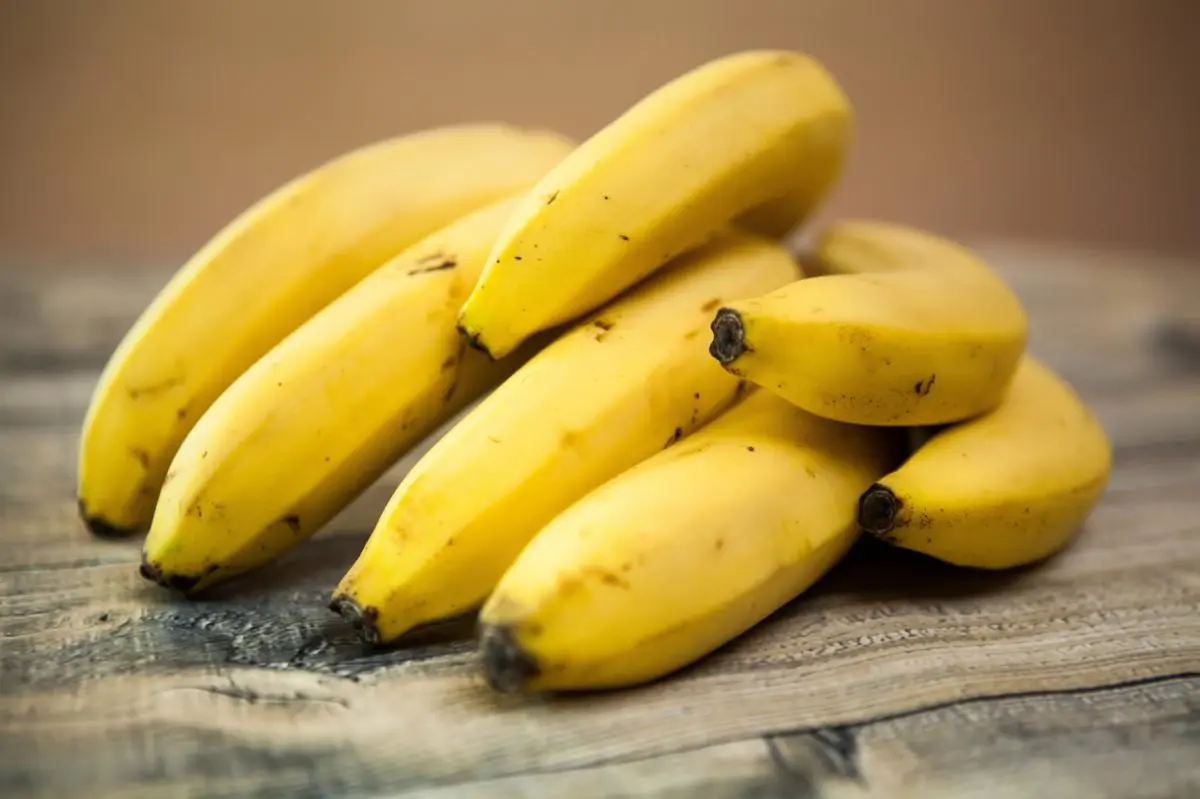
Bananas can remain edible for up to two weeks if stored at room temperature in a dry, well-ventilated place—not in a bag or in the refrigerator. However, a lot depends on how ripe the fruit was at the time of purchase, according to Vince.hu, citing the Mirror.
Even slightly green bananas often ripen quickly at home, and brown spots appear on the peel within a few days. As they ripen, the fruits release ethylene gas, which accelerates the process. In a plastic bag, the gas accumulates around the fruit, causing it to soften and darken more quickly. This problem persists even in perforated packaging, so it’s best to choose unpackaged bananas at the store.
Bananas should not be kept in direct sunlight, near an oven, or near other kitchen appliances that emit heat, as high temperatures accelerate ripening. It’s recommended to put them in the refrigerator only after they’ve fully ripened. A darkened peel does not mean the fruit has gone bad: the flesh underneath may still be perfectly edible, and overripe bananas can be used to make baked goods, smoothies, or banana bread.
Bananas are climacteric fruits that continue to ripen after harvest. Ethylene causes the fruit to soften, accelerates spoilage, and shortens shelf life. In commercial practice, optimal storage conditions are considered to be a temperature above 15 °C and a relative humidity of 92%, according to a study published on PMC.
Cold, neighboring fruits in the bin, and plastic wrap on the stems
Amanda Diring, an associate professor at Purdue University who specializes in fresh produce safety, notes that ripe bananas release more ethylene, thereby accelerating the ripening of neighboring fruits. She highlights another factor that influences the speed of the process.
“In addition, if bananas are stored at a warm temperature, this will cause them to ripen faster,” Diring emphasizes in a comment to Martha Stewart.
Refrigeration has a side effect: banana peels are sensitive to low temperatures and darken in the refrigerator before the flesh does.
“The fruit inside should remain edible for several days. You can extend the shelf life of bananas by a few days if you store them in the refrigerator after they’ve ripened, although they won’t look as appetizing,” the expert warns.
Diring also advises keeping bananas separate from apples, avocados, and tomatoes, which also release ethylene, and not placing ripe bananas next to unripe ones. In addition, it’s a good idea to separate the bunch and wrap the stems in plastic wrap or foil: this slows down the release of gas and keeps the bananas fresh for a few more days.