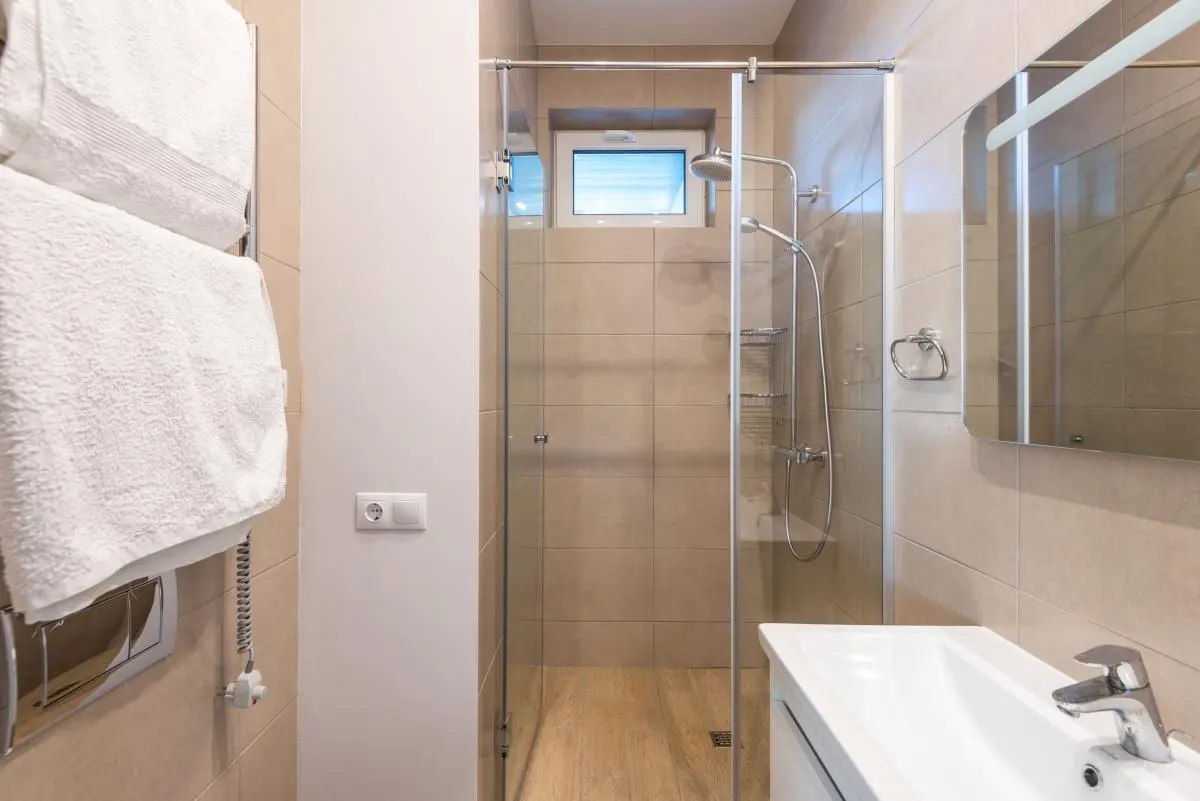
You can renovate a bathroom without removing the old tiles: it’s acceptable to cover them with new tiles, wall panels, self-adhesive coverings, or drywall, according to Onet. This type of renovation is cheaper and cleaner: there’s no dust, no construction debris, and no need to level the walls after removal.
Before starting work, the surface must be thoroughly prepared. The old tiles must be washed and degreased; otherwise, the new material won’t adhere properly. Chips and other damage should be filled with mortar.
For walls, it’s recommended to choose thin tiles, which take up less space and adhere better to the old surface. An alternative is self-adhesive tiles made of vinyl or a special film. The floor can be covered with vinyl panels that are resistant to water and moisture, but only if the subfloor is level. Drywall and wooden elements are also suitable if they are moisture-resistant or well-treated; otherwise, the next renovation will be needed much sooner.
Will the new tiles hold?
The North American Tile Council notes that installing tiles over existing tiles is a common practice if the floor height or wall thickness allows it, and the existing covering is firmly bonded to the subfloor. However, not every adhesive is capable of bonding reliably with the tiles, so it’s advisable to consult with manufacturers. Sometimes the old surface must be mechanically sanded, and the necessity of this is determined by an adhesion test. The organization warns: grinding can release fine harmful particles, so it is advisable to analyze the composition of the tile and glaze in advance and wear protective gear while working, according to TCNA.
Painting: Quick, but Not Permanent
Another way to refresh a bathroom is to paint the tiles with epoxy or two-part paint; latex paint is not used for this purpose. The surface is first cleaned, repaired, and sanded with 120-grit sandpaper to remove the glaze, writes Martha Stewart.
However, this option isn’t suitable for every room, emphasizes Lowe’s store manager Gary McCoy.
“We recommend painting tiles as a temporary solution, perhaps in a bathroom that isn’t used very often. Paint on tiles won’t hold up in areas with high humidity or contact with water, so homeowners should especially avoid this in areas like the shower,” McCoy noted.
For bathrooms used daily, the expert recommends self-adhesive tiles: they’re easy to remove if you want to change the style. Painted tiles are also not recommended for floors, as they can become slippery.