
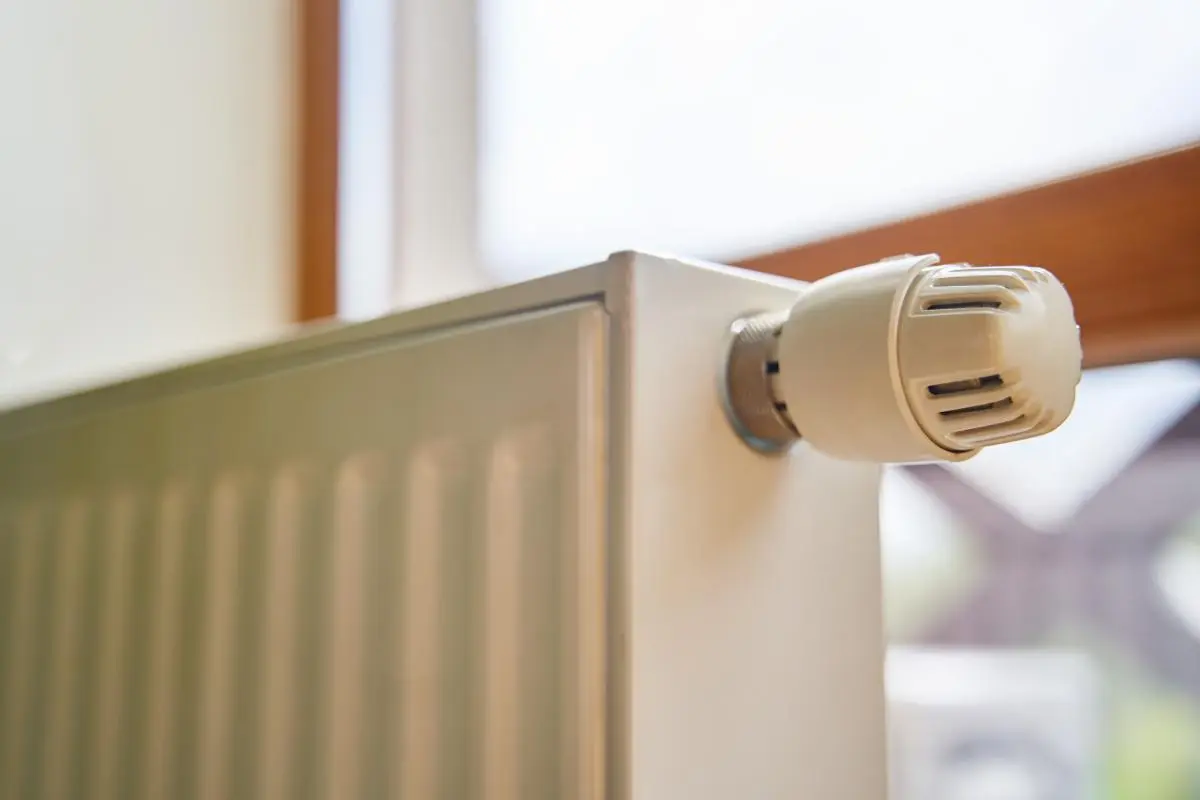
The so-called Japanese trick involving a “mirror” behind the radiator can be recreated using ordinary aluminum foil: a reflective layer placed behind the radiator helps raise the room temperature by about one degree, according to Maison Travaux.
Despite the name, you don’t actually need a mirror for this. A sheet of aluminum foil is attached to the wall with the shiny side facing the radiator. It should not touch the radiator or obstruct air circulation. Experts recommend using a special reflector.
The effect is explained by the fact that the radiator heats not only the air: some of the heat is absorbed by the wall behind it. If the wall is exterior and the insulation is poor, some of this energy is lost. A shiny surface reflects some of the infrared radiation back toward the radiator and into the room.
An alternative to foil is heat-reflective film available at home improvement stores. It is sold in rolls or panels that can be cut to fit the size of the radiator, and some models also feature an insulating layer. Such products cost anywhere from a few to several dozen euros.
A Financial Expert’s Verdict
British financial expert Martin Lewis confirmed the effectiveness of this method on the November 10 broadcast of *The Martin Lewis Money Show Live* on ITV1. He advised installing the special foil only behind radiators on exterior walls, not on interior walls, according to the *Express*.
Viewers of the show had long doubted whether this trick actually worked. The host addressed these doubts unequivocally.
“People ask if this is a myth. It’s not a myth. It really works. It means the heat is reflected back into the house instead of escaping through the exterior walls,” Lewis emphasized.
The expert also advises moving large pieces of furniture away from radiators so you don’t pay to heat their back sides. For Britons, such advice is particularly relevant right now: the regulator Ofgem raised energy bills by 4% in October, and forecasts indicate they could rise by another 24% or more in January.
What the measurements showed
The effect of foil behind a radiator was measured as early as 1995 by researchers at Heriot-Watt University in a climate chamber. The room’s total energy consumption dropped by 6%, and heat loss through the section of wall directly behind the radiator decreased to less than 30% of the initial level. The results were published in the journal Applied Energy, according to Heriot-Watt University’s research portal.