
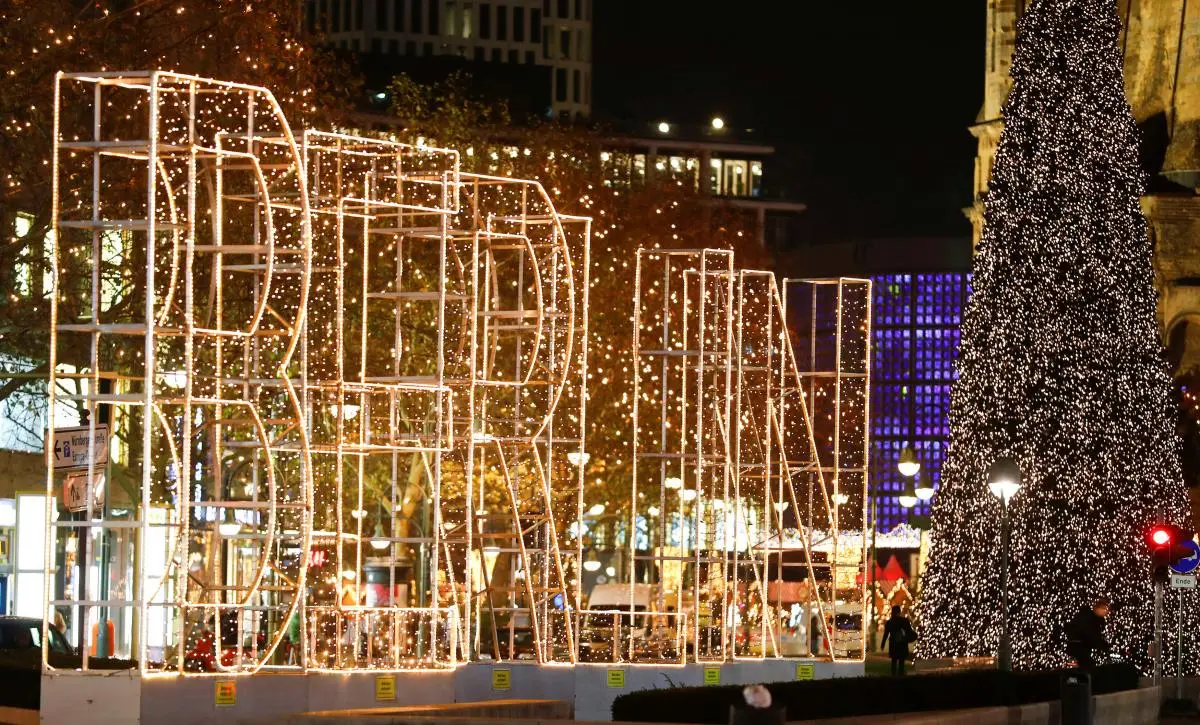
Every winter, Berlin hosts more than 100 Christmas markets. That’s more than in any other German city, where there are usually just one or two holiday markets. The formats vary: from small neighborhood pop-ups with street food to large markets near the Humboldt Forum, at Gendarmenmarkt, Potsdamer Platz, and Alexanderplatz. The latter two feature ice rinks, while Christmas concerts are held at Berlin Cathedral and the Konzerthaus, according to The Guardian.
The author of this article has lived in Berlin since 2008 and has experienced 17 winters there. He says that locals immediately warned him about the biting winds and temperatures as low as minus 15 degrees. However, in his opinion, these warnings are only partially true.
“Although some winter days in Berlin are cold, gloomy, and gray, they can also be magical, cheerful, and full of possibilities,” the author notes.
He sees another advantage of the winter season in the smaller number of visitors to museums, galleries, and theaters. The exceptions are major events: the Berlinale film festival, which will run from February 10 to 21, 2027, and the CTM Festival from January 22 to 31.
What Gives Germans the Strength to Endure the Darkness
Traditionally, German Christmas markets begin in late November, around the 24th. They hold symbolic significance for Germans, and security at these events has been tightened following fatal vehicle attacks in Berlin in 2016 and in Magdeburg in 2024. Some markets had to be canceled because organizers could not cover the costs of security. The Berlin market near Charlottenburg Palace, for example, is surrounded by a fence made of concrete blocks, according to the BBC.
Katarina Karker, a researcher at the University of Birmingham, emphasizes that the fairs also have religious undertones. However, that is not their only significance: “They are what help people get through the dark time of year,” Karker believes.
From 50 stalls to 3,000 markets
The Berlin tradition has a long history. In 1750, the city issued a separate decree establishing the location and dates of the fair: from December 11 to January 6. The number of stalls grew from about 50 in 1650 to around 600 in 1840. Today, there are about 3,000 Christmas markets in Germany each year, according to Smithsonian Magazine.
Researchers analyzed reviews of the markets in Dresden, Nuremberg, and Vienna on TripAdvisor. Most often, tourists mentioned visual and gustatory experiences. The more sensations a visitor described, the higher the rating they gave. The study’s authors believe that such a multisensory experience should be preserved as intangible cultural heritage, according to an article in the Journal of Heritage Tourism.