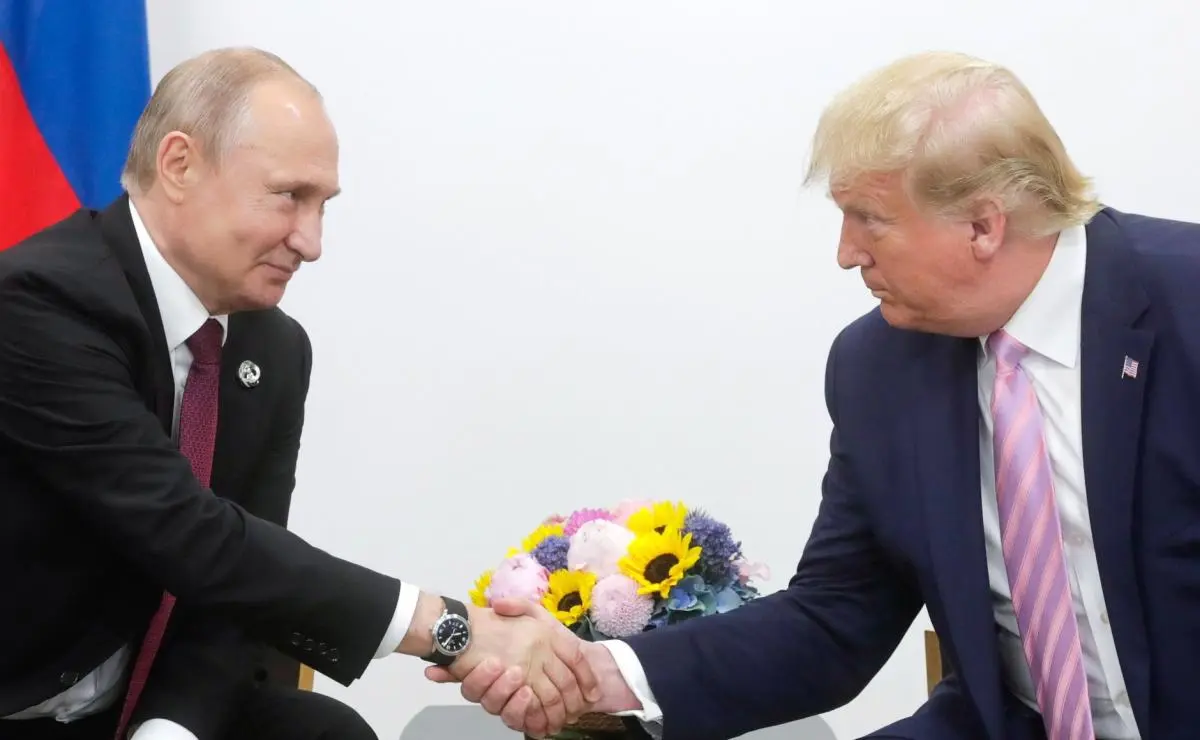
The idea of a new “European security architecture,” which the Donald Trump administration proposes to include in peace agreements regarding Ukraine, essentially mirrors the draft treaty put forward by Moscow in December 2021. The fourth clause of this document would prohibit NATO from stationing “armed forces and weapons” in any of the 16 countries that joined the Alliance after May 27, 1997. As a result, the membership of Poland, the Czech Republic, the Baltic states, and other allies east of Germany would instantly lose its meaning, according to Onet.
Russia already considers this a strategic victory, although a new round of negotiations to end the war will not begin until Tuesday, November 10, in Abu Dhabi. The U.S. delegation is led by Special Envoy Steve Witkoff and the president’s son-in-law, Jared Kushner. Kushner stated that the U.S. seeks ongoing security consultations, reliable crisis communication channels, greater military transparency, and a “long-term framework” for European stability, with full respect for the sovereignty and territorial integrity of each country, according to The Philadelphia Inquirer.
Former U.S. officials point out that such mechanisms were already provided for in the 1997 Russia–NATO Founding Act, before Moscow attacked Georgia and Ukraine. Eric Charamella, who previously served as the U.S. National Security Council’s director for Europe and Russia, is skeptical of Kushner’s promises.
“It sounds great. The problem is that this is precisely the security architecture that Russia has been trying to dismantle,” Charamella emphasizes.
Former Assistant Secretary of State Daniel Fried recalls that in 2021, Moscow demanded that NATO roll back to its 1997 borders. According to him, the Kremlin’s goal is to restore the “Iron Curtain” line as the boundary of its own sphere of influence.
“The problem isn’t that there is no security architecture. The problem is that the Russians have undermined it and are trying to rewrite it,” Fried notes.
Europe Demands a Seat at the Table
The European Union (EU) insists that Russia must first end the war against Ukraine. EU High Representative Kaja Kallas points to NATO and the European Union as the continent’s existing security pillars.
“The problem remains that Russia constantly violates the treaties on which it is based,” Kallas stated.
According to French Foreign Minister Jean-Noël Barrot, Europeans, fearing agreements made behind their backs, are demanding that their representatives participate in the meeting in Abu Dhabi. Meanwhile, Trump said in an interview with CBS that the parties are “very close to a deal,” and that Ukraine will likely have “a slightly different shape” after the war.