
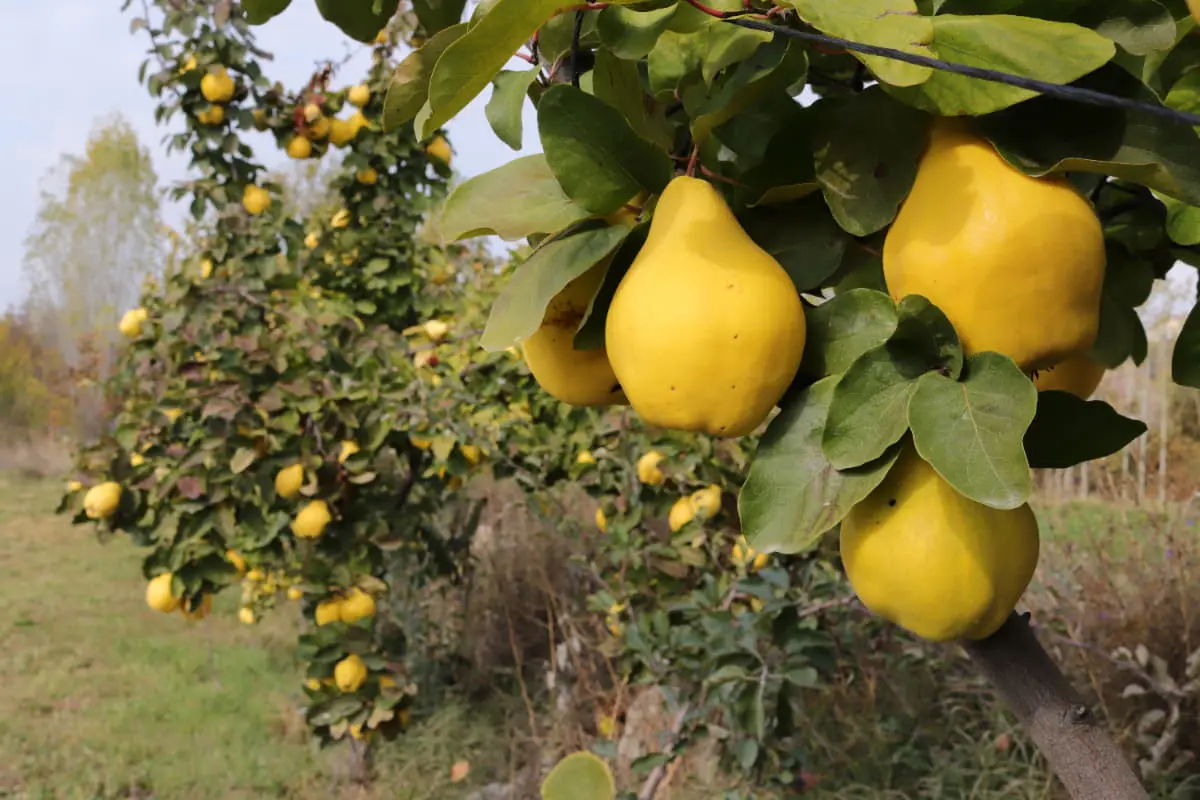
Over the past decade, quince has become one of the most prized fruits in global cuisine, yet from May through September, it virtually disappears from the market. This was reported by Romanian produce grower and director of TeamFresh HoReCa, Lucian Dragomir, according to g4food.
The paradox is that when simply refrigerated, this fruit keeps several times longer than apples and pears. China remains the largest producer, but South American countries are quickly catching up. So why is quince absent from store shelves for half the year?
“This is due to production still failing to keep up with demand, as well as a curious coincidence: no matter where it’s grown, the harvest period is roughly the same!” Dragomir emphasizes.
From Tajine to Sarmy
According to the expert, quince has become a star ingredient in various cuisines: quitro in Spain and Portugal, Romanian porridge that successfully mimics cheese, Iranian khoresh, Moroccan lamb tagine, and Turkish quince stuffed with ground lamb. In Oltenia, chicken with quince and leeks is popular, while in Transylvania, they prepare a vegetarian dish made with quince, onions, and peppers. However, the fruit is most widely used in desserts: from jams and tarte Tatin to ice cream and festive cakes.
In addition to its flavor, quince plays a purely practical role in Romanian home cooking.
“Quince is a staple ingredient in pickled vegetable assortments, especially sauerkraut for sarmale; its astringent effect helps clarify the brine, and it’s also an excellent natural preservative,” notes Dragomir.
Low in sugar, high in vitamin C
Dragomir points out that quince is very low in calories, rich in vitamin C and fiber, and contains twice as many minerals as apples. It has anti-inflammatory properties and aids digestion, and the tree’s leaves are used to make tea, particularly to regulate blood pressure. The fruit contains little sugar, and the sugar develops very late, long after harvest.
Nutritionists at the Anadolu Medical Center in Turkey note that 100 grams of quince contain 52–57 kcal and provide 25% of the daily requirement for vitamin C, and the fruit itself is 80% water. It contains more polyphenols and antioxidants than apples and pears.