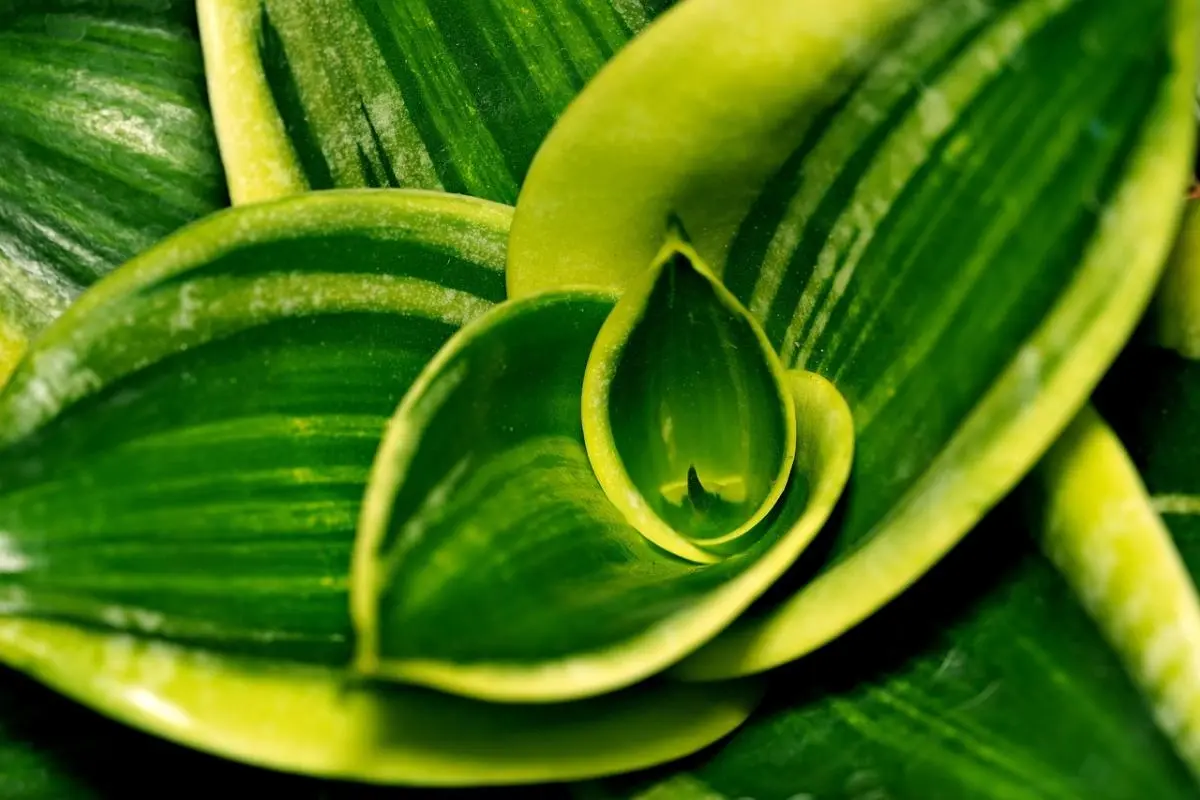
The best place for a sansevieria—also known as snake plant or “mother-in-law’s tongue”—is an east- or west-facing windowsill. Both options received the highest rating of 5 out of 5: the plant gets plenty of light there, grows denser more quickly, and produces more new leaves, according to Deccoria.
A south-facing window received a score of 4: the snake plant will thrive there if protected from the scorching sun. The back of the room deserves only 2 points, as growth slows down there. A dark entryway gets 1 point and is suitable only as a last resort. On a west-facing windowsill in the summer, be mindful of the intense afternoon sun.
The plant has no special temperature requirements and thrives within a range of 18–27°C. Just avoid placing it near a cold window or in a draft.
Why does the snake plant “stagnate” in the shade?
In partial shade, the snake plant will survive, but it may go a long time without producing any new leaves. The variety also matters. Solid dark-green plants tolerate low light better. Specimens with yellow edges or light-colored patterns need more diffused light; otherwise, new leaves will gradually turn green, and the pattern will fade.
Excessive sunlight is also harmful: direct rays can cause light spots and sunburn on the leaves. During hot weather, it’s recommended to move the pot away from the glass on a south-facing windowsill or to shade the window with a curtain.
For a dark room, it’s best to choose a dark-green variety, such as Sansevieria trifasciata 'Zeylanica,' and keep variegated varieties on the windowsill or near it. If the plant hasn’t produced new leaves for a long time, it should be moved closer to the window.
Florist: Plants Are Not Just Decor
Sarah Chapman, who has been growing houseplants for over 50 years and teaches plant care courses, warns: without sufficient light, sansevieria cannot absorb water, so even minor mistakes with watering quickly lead to root rot, according to Pacific Horticulture.
The florist is annoyed by how plants are arranged in the media and in advertisements.
“Dark corners or spots to the side of a window aren’t the best places for most houseplants. Unfortunately, in many social media posts, TV shows, and advertisements, plants are placed where none of them could thrive for long,” Chapman emphasizes.
According to her, the snake plant can tolerate average light, but it thrives best in bright light and, under favorable conditions, may even bloom with fragrant flowers.
“Even a little direct sunlight is fine, as long as you acclimate the plant to it gradually to avoid sunburn. In most cases, you can safely increase the exposure by one hour per day,” advises Chapman.
If your home lacks light, she recommends inexpensive daylight-spectrum LED lamps placed low above the plant. It’s best to turn them on for 12 hours a day, synchronizing them with daylight hours.