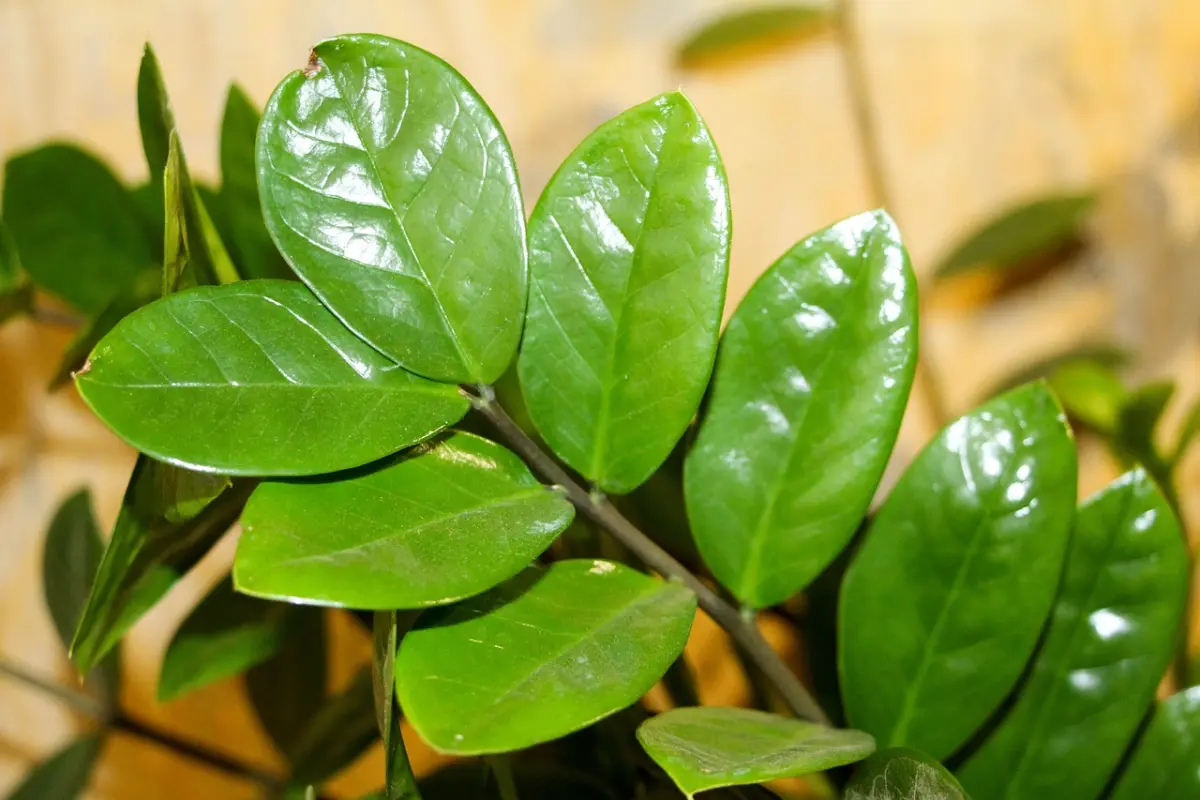
The best spot for a zamioculcas in an apartment is toward the back of the room, 1.5–2 meters away from a west- or east-facing window, where the plant is protected from direct sunlight. At this distance, it gets enough light without the risk of leaf burn, according to Deccoria.
In nature, the Zamioculcas grows in shady tropical forests, so it does not tolerate full sun well. On a south-facing windowsill, dark spots may appear on its leaves. At the same time, the plant needs at least minimal access to light for photosynthesis, so in a dark, windowless room, it will gradually die: first, the leaves will turn pale and become leggy, and once its reserves are depleted, the plant will die.
If there are no windows in the room, you’ll need to supplement the Zamioculcas’s light with special LED plant lamps that provide the correct ratio of red and blue light for at least 8–10 hours a day. Another option is to keep two plants and swap their places about once every two weeks: the thick, leathery leaves allow the zamioculcas to build up reserves.
A north-facing window is suitable, but a windowsill is not
The Zamioculcas is one of the few plants that can grow on a north-facing windowsill. However, there should be no radiator under the windowsill, and the window shouldn’t be opened frequently: sudden temperature changes are harmful to the plant, especially during the heating season. For the same reason, it shouldn’t be placed near a fireplace or air conditioner.
The optimal temperature for Zamioculcas is 20–25 °C; in winter, during dormancy, 18–20 °C is sufficient. Below 15 °C, the plant begins to shed its leaves, and its roots may rot. It tolerates heat up to 30 °C better than cold.
To prevent the stems from growing in only one direction and the pot from losing its balance, it’s recommended to rotate it every 2–3 weeks. Leave some free space around the plant, as it grows unevenly when placed near a wall or furniture.
The plant’s location and watering needs also vary
Experts at North Carolina State University note that Zamioculcas can grow even under very dim lighting—including fluorescent lighting—but thrives best in bright, diffused light. In direct sunlight, its leaves get scorched and turn brown, according to NC State Extension.
How often you water it also depends on where the pot is placed. Justin Hancock, a horticulturist at Costa Farms, advises watering the soil when the top half of the potting mix has dried out and taking the plant’s location into account. “Light provides the plant with all the energy it needs to grow, so the more light it gets, the faster it grows and the more water it drinks to support that growth. In lower light, the plant will grow more slowly, so it will use less water from the soil,” emphasizes Hancock, as quoted by Martha Stewart.