
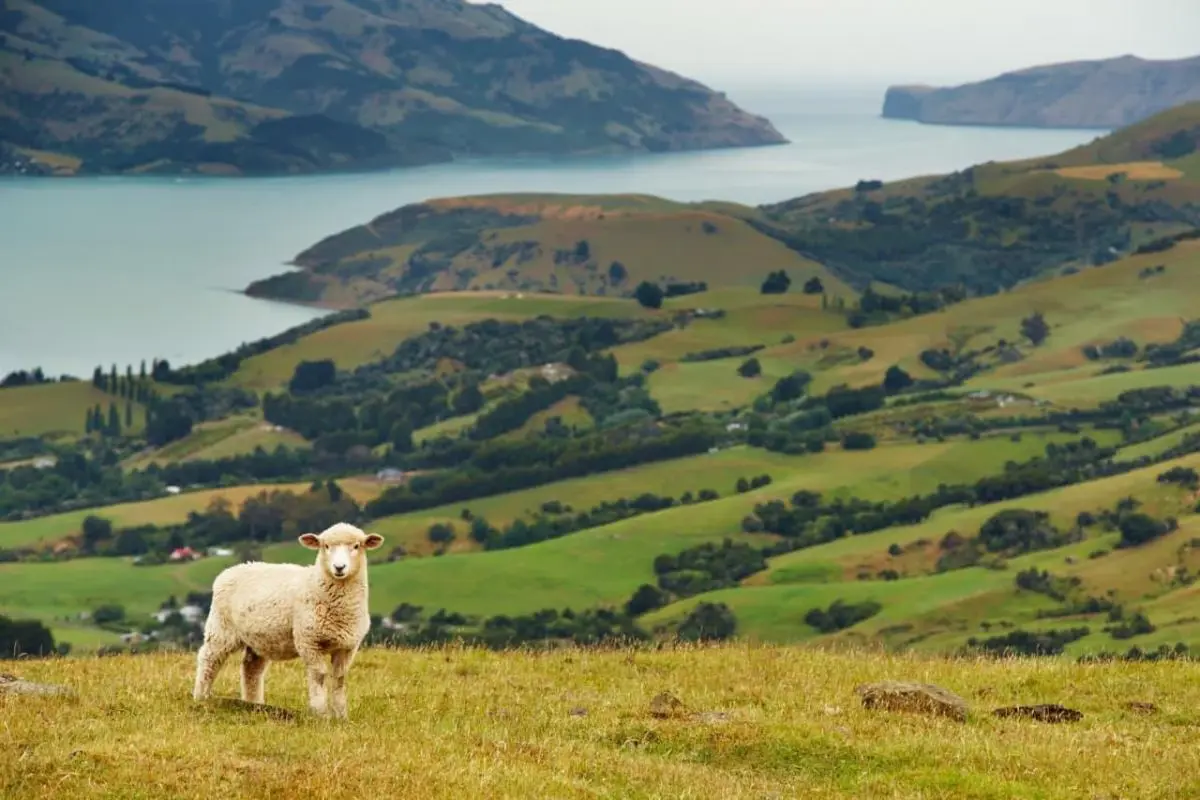
The main danger for tourists in New Zealand isn’t the wilderness, but the unpredictable weather, high UV levels, and strict biosecurity rules. You can be fined 400 New Zealand dollars on the spot at the border for an undeclared sandwich in your carry-on luggage. Travel writer Kerry King, who was born in the country and has lived on both of its islands, warns of this, according to Business Insider.
Unlike neighboring Australia, New Zealand has no land snakes or highly venomous insects. At the same time, King sees news stories every year about tourists who have to be rescued in the mountains and along the coast, where conditions can change very quickly.
Before setting out on a hike, the author advises checking the forecast, packing appropriate clothing and gear, and be sure to tell someone your route. “Never assume it’s safe to hike the entire trail just because the weather seems nice when you set out,” King emphasizes.
She also reminds readers that even on a cool or cloudy day, you can quickly get sunburned, so it’s important to use SPF 50+ sunscreen and wear a hat and sunglasses.
Cars, Prices, and Early Closures
Public transportation outside major cities is poorly developed, so the most convenient way to travel is by car. The country drives on the left; rural roads are narrow and winding, with some unpaved sections, and mountain passes may be closed suddenly due to snow or heavy rain.
Eating out is not cheap: a flat white will cost 5–7 New Zealand dollars, and lunch at an inexpensive restaurant will cost 30–50 dollars, not including drinks. In rural towns, shops and restaurants often close as early as 6:00 p.m. The government’s accident compensation system partially covers medical treatment for foreigners, but it is no substitute for travel insurance.
The authors of the new Frommer’s New Zealand guidebook also warn against underestimating distances. According to Naomi Arnold, the biggest mistake travelers make is expecting to get around the country quickly, since most roads are two-lane and very winding, and mountain roads are often closed due to landslides, Frommer’s reports.
“So driving can be quite frustrating for people who aren’t used to it. You should almost double the time you think you’ll need—especially since you’ll want to stop and take pictures,” Arnold advises.
Not Just the South Island
King urges travelers not to limit themselves to the South Island with its Alps, glaciers, and fjords. The North Island offers geothermal landscapes and Māori cultural experiences in the Rotorua area, as well as the nearly subtropical Northland. It’s worth learning a few phrases in Māori, such as “kia ora,” and choosing tours led by Māori themselves.
Her colleague Kate Evans also champions the North Island, especially the volcanoes of the Central Plateau and Tongariro National Park. “If you’re coming from a place without volcanoes, the North Island is exactly where you should go,” Evans says.